1950s beauty Lee Grant looks very different today
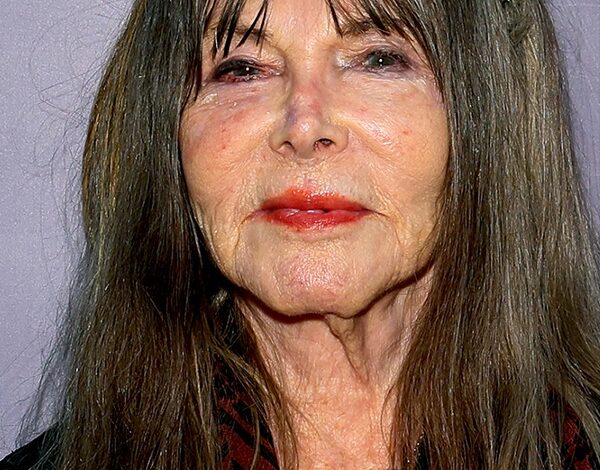
The Hollywood of the early 1950s was a landscape of stark contrasts—a gilded age of unparalleled glamour underpinned by a ruthless, iron-fisted studio system. In this era, an actor’s trajectory wasn’t just determined by their box office draw, but by their compliance with the political whims of the powerful.
Among the constellation of rising stars, one actress seemed destined for the pantheon of greats. Lee Grant possessed the kind of luminous beauty and raw, versatile talent that made producers salivate. Yet, at the very moment she reached the threshold of superstardom, the doors of the industry didn’t just close—they were slammed shut and bolted.
A Meteoric Rise and a Sudden Silence
In 1951, Lee Grant was the “it” girl of serious cinema. Making her film debut in the big-screen adaptation of Detective Story alongside Kirk Douglas, she didn’t just hold her own; she dominated. Her performance earned her an Academy Award nomination for Best Supporting Actress and the prestigious Best Actress honors at the Cannes Film Festival.
Critics were enamored. Audiences were captivated. By all accounts, the 1950s should have belonged to her. But beneath the surface of her rapid ascent, a political storm was brewing that would soon render her unhirable.
The Eulogy That Cost Twelve Years
The “mysterious” fall from grace that left the public confused was, in reality, a calculated punishment. In an industry governed by fear and the House Un-American Activities Committee (HUAC), Grant made a choice that was as courageous as it was career-ending.
At the 1951 memorial service for actor J. Edward Bromberg, Grant delivered a searing, impassioned eulogy. She didn’t mince words, suggesting that Bromberg’s death was the direct result of the immense stress caused by being summoned before HUAC.
The backlash was instantaneous. In the hyper-paranoid climate of the McCarthy era, Grant’s refusal to conform—and her vocal defense of a colleague—placed her squarely on the industry’s dreaded blacklist. For the next 12 years, during what should have been her most productive decade, her name was poison to major studios.
The Ruthless Reality of the Blacklist
During the Golden Age, a studio blacklist wasn’t a suggestion; it was an exile. Hollywood was notorious for tightly controlling the images and political leanings of its stars. If a performer defied the unwritten rules of the industry or the political status quo, their contracts were shredded, and their careers were dismantled overnight.
Grant became a living casualty of these power struggles. While her contemporaries were gracing magazine covers and headlining blockbusters, Grant was fighting to find work in the shadows of the industry. The headlines faded, and the offers vanished. She became a “ghost” in the town she had briefly conquered.
Resilience and the Return of a Legend
It wasn’t until the mid-1960s that the frost of the blacklist began to thaw. Grant eventually staged one of the most remarkable comebacks in Hollywood history. She appeared in culturally significant projects like Valley of the Dolls, Columbo, and Mulholland Drive.
In 1976, she finally secured the Oscar that had been deferred two decades earlier, winning Best Supporting Actress for her role in Shampoo.
Despite this later success, one cannot help but mourn the “lost years.” Her story is a poignant testament to what could have been. While Hollywood eventually moved on, movie historians and enthusiasts remember her not just as a striking beauty, but as an underrated star who survived a system designed to break her.
Today, in an age where actors enjoy a level of autonomy and political freedom that was unthinkable in 1951, Lee Grant’s struggles serve as a sobering reminder of the dark side of the Silver Screen—a world where talent was often secondary to the harsh politics of the time.