Can People Over 70 Still Drive? What the Rules Really Say and the Signs You Should Never Ignore
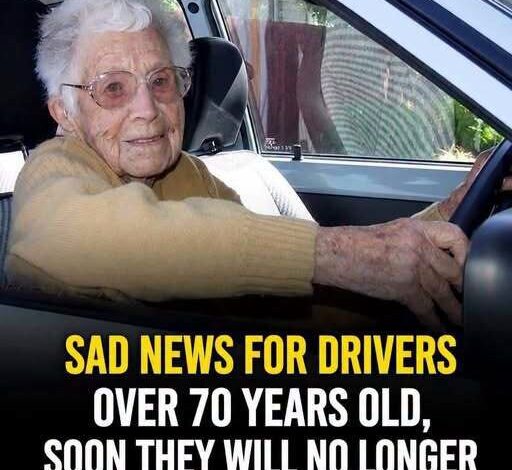
The fear can arrive quickly.
One headline about older drivers. One comment from a doctor. One concerned question from a family member. Suddenly, something that once felt completely ordinary—getting behind the wheel—can become a source of uncertainty.
You may begin asking yourself questions you never expected to consider.
Will someone decide I’m too old to drive?
Will they judge my age instead of my abilities?
Could one bad day change everything?
Could a new medication, a health problem, or a slower reaction time eventually determine whether I can keep my keys?
For many older adults, driving represents far more than transportation.
It represents independence.
It means being able to visit family without asking for a ride. It means going grocery shopping when you want. It means getting to appointments, meeting friends, attending community events, and maintaining control over everyday decisions.
That’s why conversations about driving and aging can feel deeply personal.
But independence isn’t defined by a number printed on a driver’s license.
Aging does not automatically make someone an unsafe driver.
People age differently, and chronological age alone cannot tell you how well someone sees, reacts, thinks, moves, or handles a vehicle.
What matters is function.
Can you see clearly enough to recognize hazards?
Can you turn your head comfortably to check traffic?
Can you react quickly when another driver suddenly brakes?
Can you stay focused?
Can you control the vehicle confidently?
Can you make safe decisions under pressure?
Those are much more useful questions than simply asking how old someone is.
At the same time, pretending that nothing changes with age isn’t helpful either.
Some physical and cognitive abilities can gradually change over time.
Reaction speed may become slower.
Vision may become more difficult, particularly in low light or when dealing with glare.
Hearing may decline.
Neck or shoulder stiffness can make checking blind spots harder.
Balance problems can affect movement in and around the vehicle.
Fatigue can become more noticeable.
And certain medications can cause drowsiness, dizziness, blurred vision, or difficulty concentrating.
None of these changes automatically mean a person should stop driving.
They are signals that deserve attention.
The earlier they are recognized, the more options a person may have.
For example, someone experiencing difficulty seeing clearly at night might choose to limit driving after dark rather than immediately giving up driving altogether.
Someone uncomfortable in heavy traffic might choose familiar roads and quieter times of day.
A driver who struggles with glare may benefit from addressing vision problems with an eye-care professional.
Small adjustments can sometimes make a major difference.
That is why planning is much more useful than panicking.
Instead of waiting for a crisis, older drivers can periodically evaluate how comfortable and capable they feel behind the wheel.
Pay attention to close calls.
Notice whether familiar routes suddenly feel confusing.
Consider whether parking has become significantly more difficult.
Think about whether you are avoiding certain roads because they feel overwhelming.
These observations are not admissions of failure.
They are information.
Your body can also provide important clues.
If you frequently experience dizziness, unusual weakness, blurred vision, or problems with balance, speak with a healthcare professional rather than simply assuming those symptoms are a normal part of aging.
Medication deserves particular attention.
Some medications can affect alertness or coordination, especially when a prescription is new or the dosage has changed.
If you notice that a medication makes you unusually sleepy, dizzy, or mentally foggy, don’t stop taking it on your own. Instead, ask your doctor or pharmacist whether it could affect your ability to drive and whether adjustments are possible.
Regular eye examinations are also important.
Vision changes can happen gradually, making them difficult to notice because the brain adapts to them.
You may not realize how much your night vision has changed until driving in darkness suddenly becomes uncomfortable.
An eye examination can identify problems that may be treatable or correctable.
Physical activity can also support mobility and function.
Maintaining strength, flexibility, and balance can make everyday movements easier, including getting in and out of a vehicle, turning to check surroundings, and responding physically when driving.
The goal isn’t to become an athlete.
It’s to keep your body capable of doing the things that support independence.
Driving habits can also be adjusted.
Daylight is often easier than darkness.
Familiar roads may be less stressful than unfamiliar ones.
Lower-traffic periods can reduce pressure.
Avoiding severe weather can eliminate unnecessary risks.
Leaving additional space between vehicles can give you more time to react.
These decisions aren’t signs of weakness.
They are examples of smart risk management.
One of the most important things an older driver can do is remain honest about changing circumstances.
Sometimes pride can make that difficult.
Nobody wants to hear that something they have done independently for decades may now require modification.
But acknowledging a limitation doesn’t erase everything you can still do.
In fact, it can help preserve independence.
If you can safely drive during the day but not at night, that may be a workable adjustment.
If highways are uncomfortable but local roads feel manageable, change your routes.
If certain weather conditions make driving difficult, wait until conditions improve.
If a vehicle’s technology or design makes driving harder than it needs to be, consider whether another vehicle or adaptive equipment could help.
There are often more choices between “drive exactly as before” and “never drive again.”
That middle ground matters.
Eventually, however, some people may reach a point where driving is no longer safe.
If that happens, the decision can feel like a profound loss.
But giving up the keys does not have to mean giving up independence.
It may mean redefining what independence looks like.
Family members may help with transportation.
Public transportation may become part of the routine.
Rideshare services, community transportation programs, friends, or neighbors may provide alternatives depending on where someone lives.
Planning those options before an emergency can make the transition much less frightening.
The most important thing is to avoid waiting until a serious crash forces the decision.
A thoughtful conversation about driving can be an act of responsibility, not surrender.
Family members also have a role to play.
Approaching the subject with accusations or embarrassment can make someone defensive.
A better conversation focuses on specific observations.
Instead of saying, “You’re too old to drive,” talk about what you’ve actually noticed.
Maybe there have been several recent near-misses.
Maybe the person has become uncomfortable driving at night.
Maybe medication changes are affecting alertness.
Specific concerns are easier to discuss than judgments about age.
The same principle applies to healthcare professionals.
A doctor should be part of the conversation when medical conditions or medications may affect driving, but the discussion should focus on actual abilities and risks.
The objective is not to take away someone’s independence unnecessarily.
It is to help them remain safe for as long as possible.
And sometimes, the safest decision is also the most courageous one.
There is no shame in recognizing that circumstances have changed.
Every driver has limitations.
Younger drivers can be distracted, impatient, inexperienced, or impaired.
Older drivers may face different challenges.
Safety isn’t about belonging to a particular age group.
It’s about recognizing your individual abilities and limitations.
So don’t let a number frighten you into giving up something you can still do safely.
But don’t let pride prevent you from making changes when your body is asking for them either.
Pay attention to your vision.
Notice changes in reaction time.
Review your medications.
Stay physically active.
Talk openly with your healthcare team.
Choose driving conditions that support your abilities.
And remain willing to adapt.
Independence is not simply the ability to hold a set of car keys.
It is the ability to make thoughtful decisions about how you live your life.
Sometimes those decisions mean continuing to drive.
Sometimes they mean changing how and when you drive.
And sometimes they mean finding a new way to get where you need to go.
None of those choices makes you less capable.
The goal isn’t to prove that you can drive forever.
The goal is to remain safe, connected, and in control of your life for as long as possible.
Because true independence isn’t about refusing to change.
It’s having the wisdom and courage to change when change protects the life you’re trying to preserve.