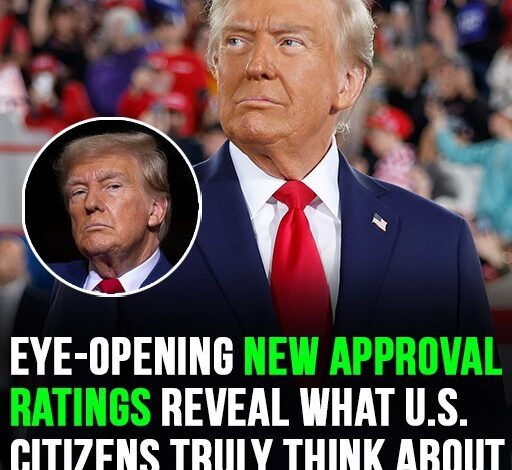
Newly released approval ratings offer a revealing look at how Americans feel about Trump’s second term.
Public debate over presidential performance in the United States has always involved a degree of contrast between how leaders describe their records and how voters ultimately judge them.
In the case of Donald Trump, that contrast has been especially pronounced. Over the course of his political career, Trump has consistently portrayed his leadership in expansive and confident terms.
Frequently describing his policies as transformative, historic, and unmatched by previous administrations. Supporters often echo that assessment, crediting him with reshaping debates on trade, immigration, taxation, regulation, and foreign policy.
Critics, meanwhile, argue that his rhetoric often exceeds measurable outcomes and that his governing style has deepened national divisions.
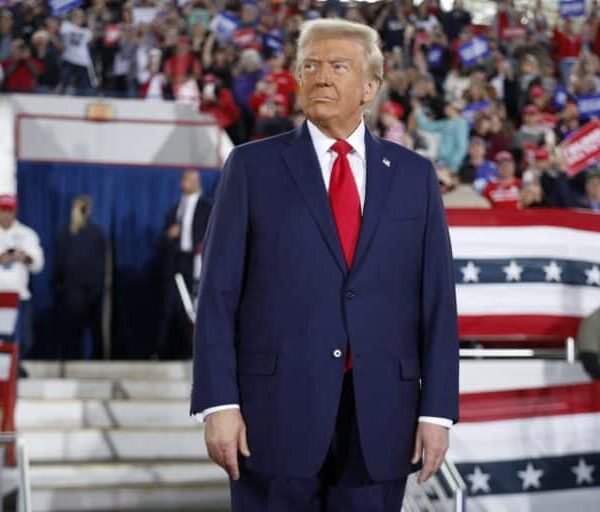
Understanding this dynamic requires separating political messaging from independently verifiable information. Trump has long emphasized economic performance as a central pillar of his case to voters.
During his first term (2017–2021), the United States experienced a period of economic expansion prior to the COVID-19 pandemic, including low unemployment rates and rising stock markets.
His administration enacted the Tax Cuts and Jobs Act of 2017, reduced certain federal regulations, and pursued an assertive trade strategy that included tariffs on imports from China and other countries.
Supporters argue these policies encouraged domestic investment and job growth, while critics contend they increased deficits and contributed to trade tensions without resolving structural imbalances.
Tariffs, in particular, became a defining feature of Trump’s economic agenda. He has frequently described tariff revenue as a financial benefit to the United States.
Economists generally note, however, that tariffs are paid by importers and can raise costs for businesses and consumers, even if they generate federal revenue.
The broader economic effects of tariffs depend on multiple factors, including global supply chains, retaliatory measures by other nations, and domestic production capacity. As with many policy debates, assessments vary along partisan and ideological lines.
Energy policy has also been central to Trump’s messaging. He has often framed his approach as promoting American “energy dominance,” citing expanded oil and natural gas production during his first term.
It is true that U.S. energy production increased significantly in the late 2010s, continuing trends that began before his presidency due to technological advances in hydraulic fracturing and horizontal drilling.
Gasoline prices, meanwhile, fluctuate in response to global oil markets, supply disruptions, seasonal demand, and geopolitical developments. While presidents can influence energy policy, retail fuel prices are largely determined by global market forces.
Beyond economics, Trump has consistently presented his broader agenda as strengthening national security and restoring what he describes as American sovereignty.
His first term included efforts to renegotiate trade agreements, such as replacing NAFTA with the United States-Mexico-Canada Agreement (USMCA).
His administration also withdrew from certain international agreements, including the Paris climate accord and the Iran nuclear deal, arguing that these arrangements disadvantaged U.S. interests.
Supporters viewed these moves as assertive and corrective; critics viewed them as destabilizing or diplomatically costly.
Trump’s leadership style has remained one of the most discussed aspects of his presidency. His communication approach—often direct, confrontational, and amplified through social media—has energized supporters who value his willingness to challenge political norms.
At the same time, it has drawn criticism from opponents who argue that it contributes to polarization and undermines institutional trust.
Political scientists frequently describe his tenure as reshaping party dynamics, strengthening populist currents within the Republican Party, and altering the tone of national political discourse.
Public opinion data offer a measurable counterpoint to political messaging. Surveys conducted by established, nonpartisan polling organizations typically show that the United States remains deeply divided along partisan lines regarding Trump’s performance.
Polling methodology varies by organization, but reputable surveys use representative samples and transparent statistical methods to capture national sentiment.
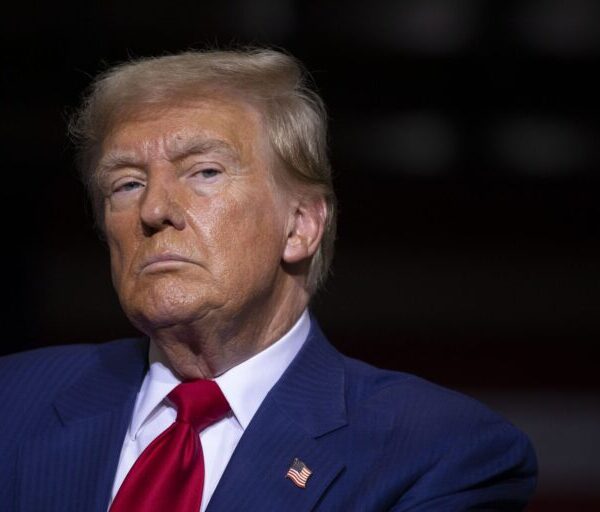
Historically, Trump’s approval ratings during his first term were relatively stable compared to some previous presidents, often hovering in the low-to-mid 40 percent range, with disapproval ratings exceeding approval in many national polls.
This stability reflected a highly polarized electorate in which partisan loyalty strongly influenced perceptions of presidential performance.
Approval ratings by policy area often reveal additional nuance. Economic performance has frequently been one of Trump’s stronger areas among his supporters, particularly before the COVID-19 pandemic.
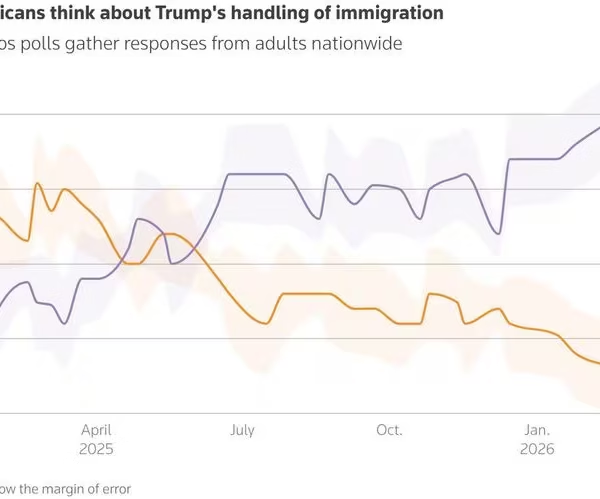
However, broader national samples have shown mixed or divided views, depending on economic conditions at the time of polling. Immigration has been another defining issue.
Trump’s advocacy for stricter border enforcement, including construction of physical barriers and expanded deportation authority, has been popular among segments of the electorate concerned about border security.
At the same time, these policies have faced legal challenges and criticism from those who argue for more comprehensive immigration reform and humanitarian protections.
Foreign policy evaluations similarly vary. During his first term, Trump emphasized burden-sharing within NATO, pursued direct engagement with North Korean leader Kim Jong-un, and brokered normalization agreements between Israel and several Arab states, known as the Abraham Accords.
Supporters cite these developments as evidence of pragmatic diplomacy. Critics counter that relationships with traditional allies were strained and that long-term strategic goals were not consistently advanced. As with domestic policy, assessments often reflect broader partisan perspectives.
The role of media coverage further shapes how presidential leadership is perceived. Supporters of Trump frequently argue that mainstream media outlets portray his actions in a disproportionately negative light, while critics assert that his statements sometimes contain exaggerations or inaccuracies that warrant scrutiny.
Independent fact-checking organizations have documented instances in which Trump made claims that were partially accurate, misleading, or false, particularly regarding crowd sizes, election processes, and specific policy impacts.
At the same time, political rhetoric across administrations commonly involves selective emphasis on favorable data.
Another element influencing public opinion is the broader social and institutional climate. Trust in government institutions has declined over several decades, and political polarization has intensified.
In this environment, presidential approval ratings often reflect entrenched partisan identities more than short-term policy shifts.
Voters aligned with a president’s party are more likely to express approval, while those aligned with the opposing party are more likely to express disapproval.
This pattern was evident throughout Trump’s first term and has continued to characterize political opinion in the United States more broadly.

Controversies have also shaped perceptions. During and after his first term, Trump faced two impeachments by the U.S. House of Representatives—first in 2019 related to Ukraine, and second in 2021 following the January 6 attack on the U.S. Capitol. In both cases, he was acquitted by the Senate.
Legal proceedings in subsequent years have involved additional investigations and indictments.
These events have influenced how different segments of the public assess his leadership, though opinions often align with existing partisan commitments.
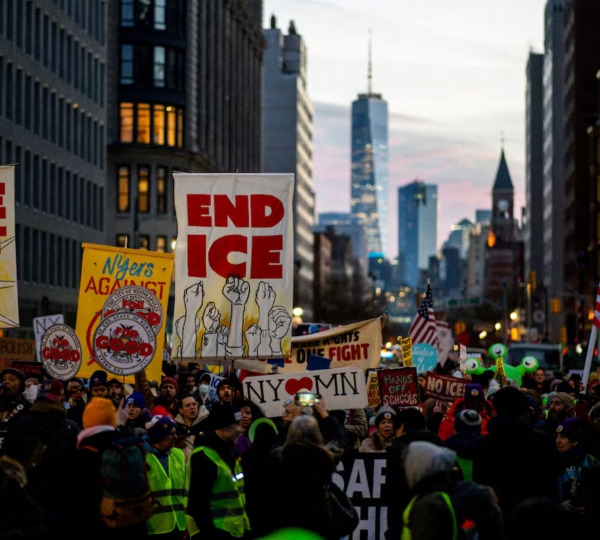
Immigration enforcement has remained one of the most visible and debated policy areas associated with Trump.
Proposals for expanded border barriers, increased interior enforcement, and revisions to asylum processes have generated sustained legal and political debate.
Supporters argue these measures prioritize national security and rule of law. Critics emphasize humanitarian concerns and advocate for legislative solutions that balance enforcement with pathways to legal status.
The complexity of immigration law means that durable reform typically requires congressional action, which has proven difficult amid partisan divisions.
Trade policy similarly continues to generate discussion. The strategic use of tariffs, renegotiated trade agreements, and efforts to rebalance supply chains are framed by supporters as protective of American workers and industries.
Opponents often highlight increased costs for certain sectors and consumers. Economists generally emphasize that trade outcomes depend on global economic conditions, domestic productivity, and long-term competitiveness.
In evaluating presidential performance, it is important to consider both measurable indicators and broader qualitative factors.
Economic growth rates, unemployment figures, inflation trends, and fiscal balances provide objective data points.
Diplomatic agreements, military engagements, and legislative achievements offer additional benchmarks. Yet perceptions of leadership, tone, and institutional stewardship also play a significant role in shaping public opinion.
Ultimately, polling data underscore that the American electorate remains divided in its assessment of Trump’s leadership.
While he maintains a dedicated base of supporters who view his approach as decisive and necessary, substantial portions of the public express skepticism or disapproval.
This pattern reflects not only individual policy preferences but also broader cultural and political alignments that define contemporary American politics.
The gap between presidential self-presentation and public evaluation is not unique to Trump, but it has been particularly visible in his case due to his distinctive communication style and the intensity of partisan polarization.
As with any presidency, long-term historical judgment will depend on a combination of economic outcomes, institutional resilience, legislative accomplishments, and the durability of policy changes.
For now, the available evidence suggests a political landscape characterized less by consensus than by enduring division.
Supporters and critics alike interpret the same set of events through markedly different lenses. Whether future developments shift that balance remains uncertain.
What is clear is that the interplay between political narrative and measurable public opinion will continue to shape the national conversation surrounding Trump’s leadership and legacy.