My Brother Took This Photo Just 21 km from O
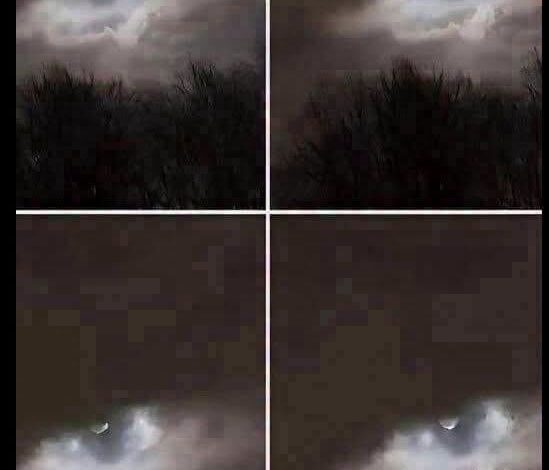
A photograph taken only 21 kilometers from home transformed an ordinary sky into a source of argument. The image showed an unusual cloud formation that seemed too carefully shaped to some viewers and strangely familiar to others. For the person behind the camera, it was a brief atmospheric sight. For everyone who later studied the photograph, it became a question: what exactly were they looking at?
The cloud did not remain for long. It formed, changed, and dissolved within minutes, as clouds often do. The photograph preserved one instant from that movement. By freezing the shape, the camera made it appear more stable and deliberate than it may have looked across the full sequence in the sky.
Some local residents turned to meteorology. They discussed airflow, moisture, light, and the conditions that can sculpt vapor into dramatic shapes. From that perspective, the image recorded an elegant but natural event. Unusual did not mean impossible, and resemblance did not prove design.
Other people saw something more. They suggested hidden technology, a veiled warning, or an object concealed behind the cloud. Online viewers zoomed into the photograph, circled ambiguous areas, and claimed to recognize eyes, wings, or signals. Each annotation encouraged another interpretation, even though magnification could not recover details absent from the original image.
The source describes the town dividing between skeptics and believers, but the disagreement was not only about weather. It was about certainty. Scientific explanations offered calm mechanisms for how clouds form, while mysterious explanations offered purpose. A random shape can feel unsatisfying; a message or concealed object gives the event a story.
Human perception naturally searches for recognizable patterns. Faces appear in rock formations, animals emerge from shadows, and familiar symbols take shape in clouds. This ability is useful in daily life because it helps people interpret incomplete visual information quickly. It can also make coincidence feel intentional.
The photograph became a mirror for private beliefs. Someone already worried about secret technology could see confirmation. A religious viewer might perceive a sign. A person fascinated by unidentified aerial phenomena could imagine a craft. A meteorologist could see atmospheric physics. The pixels stayed the same while the meaning changed with the observer.
Arguments spread through social feeds because the image allowed many readings without definitively proving any of them. Friends disagreed, neighbors defended their interpretations, and children incorporated the shape into drawings. The cloud itself had vanished, yet the fixed photograph allowed the debate to continue indefinitely.
Nothing in the source establishes that the formation was a spacecraft, signal, or break in reality. The most grounded explanation remains that it was a cloud photographed at the exact moment its shape looked extraordinary. That does not make the picture boring. Timing, light, and natural motion can produce images more striking than anything planned.
The distance—just 21 kilometers from the family’s house—made the sight feel personal. A strange image from another country might be treated as an internet curiosity. Seeing it close to home turned the familiar landscape into something briefly uncertain. The ordinary town became the setting for a mystery because one person looked up at the right moment.
What changed that day was not the sky itself but the town’s sense of confidence in what it saw. People discovered that visual evidence does not always settle a question. A photograph can document a shape accurately while leaving its interpretation open.
The cloud did not deliver a confirmed message. It dissolved without explanation, following the temporary nature of weather. The town supplied the messages afterward, projecting fear, wonder, belief, and skepticism onto vapor.
In the end, the image remains compelling because it occupies the gap between seeing and knowing. It shows a real formation, captured near home, whose appearance invited extraordinary ideas. Science can explain how dramatic clouds occur, while psychology explains why people find meaning in them. The sky changed for a few minutes; the photograph ensured that the questions lasted much longer.