My 7-Year-Old’s Chess Buddy Disappeared from the Park—Then a Ranger Gave Me Arthur’s Last Message
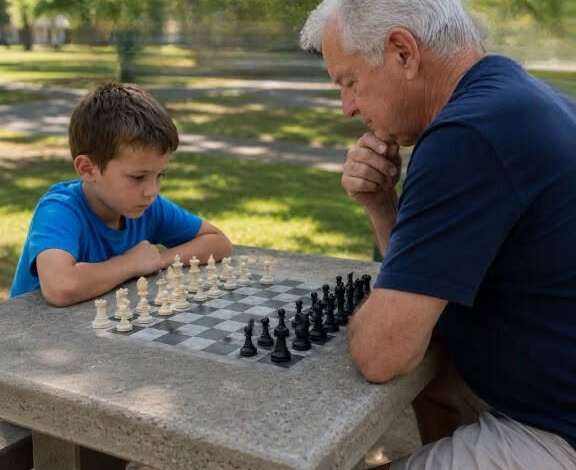
For months, my seven-year-old son, Miles, met a retired man named Arthur at the park to play chess.
Arthur always had a cup of coffee and a new puzzle waiting. He called Miles “Soldier,” a nickname my son pretended to hate.
I usually sat nearby working on my laptop while they argued about knights, pawns, and whether Arthur was cheating.
Arthur even saved the white pawns Miles successfully promoted, joking that they were “evidence” of his progress.
Then one afternoon, Arthur’s chair was empty.
At 4:10, a park ranger approached me with a sealed envelope addressed to me.
Inside was a note from Arthur.
He explained that he wouldn’t be returning to the park, but he wanted Miles to finish the chess game they had started.
Beside the board were seven white pawns, each marked underneath.
The final pawn hid another note—with the address of an assisted-living facility only fifteen minutes away.
The message was simple:
“Come finish the game. They’re expecting you.”
Miles grabbed his chess set, tears filling his eyes.
“Mom, he left without saying goodbye.”
When we arrived, Arthur was sitting beside a window.
His health had deteriorated, and his family had moved him somewhere he could receive the care he needed.
There was no secret inheritance or shocking mystery.
Arthur simply hadn’t known how to tell a seven-year-old that their afternoons at the park were over.
Then I noticed a container beside his chair filled with sugar packets.
Miles had brought them to Arthur for months.
Arthur drank his coffee black.
When Miles asked why he had kept them, Arthur smiled.
“Because you gave them to me.”
That’s when I realized I’d misunderstood their friendship.
I thought Arthur was giving my son companionship.
Arthur gently corrected me.
“He was keeping me company.”
Arthur’s wife had died years earlier, and although his children cared for him, his days had become lonely and repetitive.
Then Miles came along.
Suddenly, Arthur had a reason to check the weather, prepare chess puzzles, and look forward to every afternoon.
That evening, they played their final game.
Miles pushed a pawn across the board but refused to turn it into a queen. Instead, he chose a knight and placed the old pawn in Arthur’s container.
“Keeping evidence,” he said. “You’re not finished teaching me.”
Arthur’s eyes filled with tears.
Before leaving, Miles slipped another pawn into his pocket.
Arthur asked why.
Miles smiled.
“He hasn’t reached the other side yet.”
The next afternoon, we returned to the park.
This time, my laptop stayed in the car.
And I finally understood that sometimes the people we think we’re helping are quietly saving us, too.