Community in Mourning After Tragic Loss of 37-Year-Old Woman in Road Accident
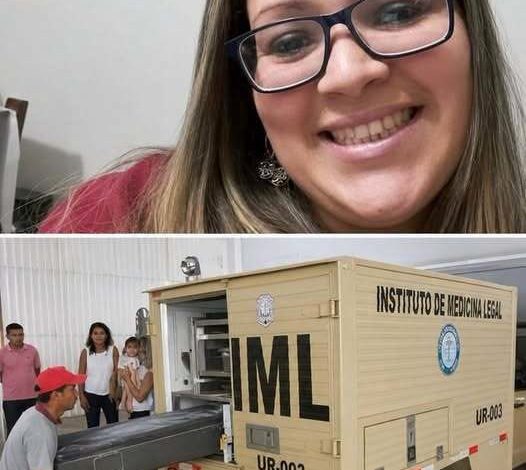
Her final walk home ended in silence.
Sirens cut through an ordinary day as Cynthia, only 37, lay gravely injured on a road she may have traveled countless times before.
Moments earlier, it had been just another familiar route.
People were going about their routines.
Cars were passing.
Neighbors were walking home.
Then, suddenly, everything changed.
A community watched helplessly as hope slowly gave way to fear.
For the people who knew Cynthia, the hardest part was not simply the shock of what had happened. It was trying to understand how an ordinary moment could become the final chapter of a life that still had so much ahead of it.
She was only 37.
There should have been more birthdays.
More conversations.
More ordinary evenings.
More memories that had not yet been made.
Instead, friends and family were suddenly being forced to remember her in the past tense.
In the days after the crash, the neighborhood seemed to move differently.
Everything continued, but nothing felt normal.
Cars still traveled the same roads.
People still walked the same sidewalks.
Doors still opened and closed.
But there was an emptiness hanging over familiar places.
Friends began replaying their last conversations with Cynthia, searching their memories for details they had never imagined would become so important.
They remembered her laughter.
Her warmth.
The way she could notice when someone was struggling, even when that person tried to hide it.
She had a way of making people feel seen.
And now those small qualities had become enormous memories.
Family members faced another kind of pain—the cruel practical responsibilities that arrive after a death.
There were arrangements to make.
Phone calls to answer.
People to notify.
Decisions that had to be made while the reality of the loss still felt impossible.
Grief does not wait until you are ready.
It arrives while there are still forms to fill out and questions to answer.
At vigils, people gathered quietly.
Some brought flowers.
Others brought photographs.
Some simply stood beside one another because there were no words capable of explaining what they were feeling.
Cynthia’s name was spoken softly.
Almost carefully.
As though saying it too loudly might make the reality of her absence even harder to accept.
People shared stories about her.
Little moments that might once have seemed insignificant suddenly became precious.
A conversation.
A laugh.
A kind gesture.
A familiar expression.
The ordinary pieces of a person’s life often become the most painful after they are gone.
But beneath the grief, something else began to emerge.
Resolve.
People started looking at the road differently.
A street that had once been just part of the neighborhood suddenly represented danger.
Parents began gripping their children’s hands more tightly near crossings.
Drivers became more conscious of their speed.
Residents started asking questions about lighting, crosswalks, traffic patterns, enforcement, and road design.
Could the street have been safer?
Was visibility adequate?
Were speeds too high?
Were there enough signs or crossings?
Could changes have prevented another tragedy?
Those questions matter.
Not because they can bring Cynthia back.
They cannot.
But because they may help prevent another family from experiencing the same devastation.
That is where grief can sometimes become action.
A tragedy can leave behind more than sorrow.
It can create pressure for change.
Residents can demand safer crossings.
They can push for better lighting.
They can ask authorities to review dangerous intersections.
They can advocate for lower speeds where appropriate and stronger enforcement where necessary.
And they can refuse to let the attention disappear once the headlines fade.
That last part is often the hardest.
Immediately after a tragedy, everyone is watching.
Officials make statements.
News organizations report the story.
People share photographs and memories.
But weeks later, the road looks ordinary again.
The flowers begin to fade.
The barricades disappear.
Traffic returns to normal.
And without sustained attention, the calls for change can disappear with them.
That is why Cynthia’s story has become more than a painful memory for the people who loved her.
It has become a reason to look at the environment around them.
To ask whether familiar roads are actually safe.
To recognize that a street can feel normal for years while still containing risks that people have simply learned to accept.
No safety improvement can undo what happened.
But preventing another tragedy can give meaning to the demands that followed.
For Cynthia’s family, however, none of that replaces her.
Safer streets cannot bring back her voice.
Better lighting cannot recreate her laughter.
Lower speeds cannot give her loved ones another conversation.
Those improvements matter because other families should not have to experience this kind of loss.
Her life was more than the circumstances of her death.
She was a daughter.
A friend.
A loved one.
A person who noticed when others were hurting.
A woman with routines, dreams, relationships, and an ordinary life that suddenly became extraordinary only because it ended.
That is what makes the story so painful.
She was not supposed to become a headline.
She was simply supposed to make it home.
And perhaps the strongest way to honor her is to make sure that other people can.
Let her name be remembered at the vigils.
Let her photographs remain with the people who loved her.
Let the stories of her kindness continue to be told.
But let her loss also force difficult conversations about safety.
Let parents feel safer when their children cross the street.
Let pedestrians feel visible.
Let drivers understand how much damage a moment of carelessness can cause.
And let the community continue asking what can be changed before another family is standing beneath the same terrible weight of grief.
Cynthia’s final walk home ended in silence.
But her story does not have to.
It can live in every safer crossing.
Every slower driver.
Every better-lit street.
Every person who reaches home safely because someone refused to accept that another tragedy was inevitable.
Her life cannot be returned.
But the community can choose what her loss will mean.
Not only a memory.
Not only a headline.
But a warning, a call to action, and perhaps, eventually, the reason someone else gets to walk home safely.