This morning he lost his the recognition See more
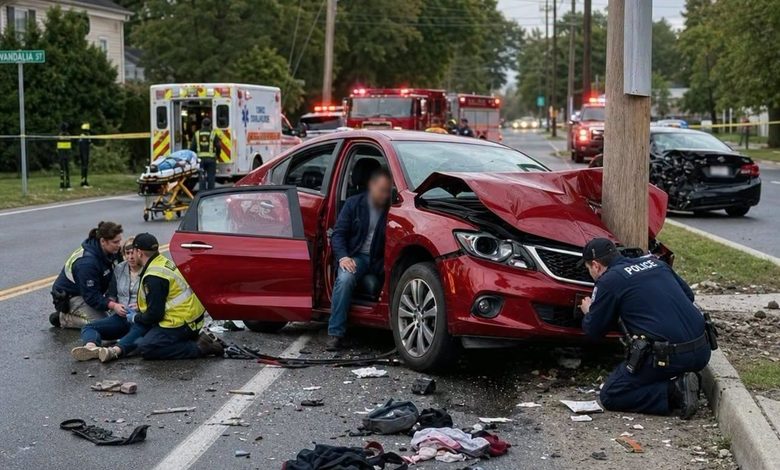
The first warning was a scream, followed by metal folding, glass breaking, and an abrupt silence. A red sedan had struck a utility pole with enough force to crush its front end. As sirens approached, neighbors stood in their doorways watching an ordinary evening become an emergency.
Responders found wreckage scattered across the road. Shoes, papers, plastic fragments, and the contents of a torn bag lay among the glass. These objects had been part of someone’s routine drive only moments earlier. Now they marked the distance between a normal trip and a scene investigators would spend hours measuring.
A second damaged car nearby suggested that the collision involved more than one vehicle. Its rear section was caved in, while tape and traffic cones separated the debris field from gathering witnesses. Officers photographed the roadway, studied skid marks, and recorded the final positions of both cars.
Emergency care comes before explanation
Paramedics focused on the people rather than the twisted vehicles. Survivors remained on the pavement while medical teams assessed breathing, bleeding, consciousness, and possible spinal injuries. A driver sat nearby staring into the distance, appearing to occupy the stunned space between what had happened and what it might mean.
At a crash scene, responders cannot safely rely on appearances. A person who is talking may still have internal injuries, while sudden movement can worsen damage to the neck or spine. That is why bystanders are generally safest calling emergency services, warning approaching traffic when possible, and following dispatch instructions instead of pulling someone from a vehicle unless there is an immediate threat such as fire.
The source account does not identify the people involved or provide a final medical outcome. It also does not establish a confirmed cause. Investigators can examine physical evidence and witness statements, but a dramatic photograph alone cannot prove whether speed, distraction, road conditions, mechanical failure, or another factor led to a collision.
A roadway can change in one moment
The scene nevertheless illustrates why routine driving requires constant attention. Looking away for a message, following too closely, entering an intersection too quickly, or adding a few reckless miles per hour can reduce the time available to react. The consequences arrive faster than most people imagine because vehicles travel a surprising distance during even a brief lapse.
Basic habits create additional safety margins. Seat belts should be worn by every occupant on every trip. Phones can be silenced or placed out of reach before the car moves. Drivers need space behind the vehicle ahead, especially in darkness or poor weather. Fatigue, alcohol, medication effects, and emotional distress should be treated as genuine reasons not to drive.
Passengers also have a role. They can handle navigation, messages, or music so the driver does not divide attention. If someone is driving aggressively or appears impaired, speaking up and arranging another way home is more important than avoiding an awkward conversation.
After the wreckage is removed
Eventually tow crews cleared the vehicles and traffic resumed. The street looked ordinary again, but that visual reset did not erase what happened. The people involved would still face medical appointments, police reports, insurance questions, damaged property, and the emotional shock that often follows a sudden collision.
Witnesses and responders can also carry difficult memories after seeing severe injuries. Support from family, trained counselors, peer programs, or medical professionals may be necessary when sleep, concentration, or anxiety is affected.
The lasting message is not to invent a verdict from a few images. It is to recognize how quickly familiar surroundings can change and how much responsibility comes with operating a vehicle. A moment of care before a trip, a seat belt clicked into place, a phone left alone, or a decision to slow down may seem small. On the road, those small choices can preserve the ordinary evening everyone expected to have.