Shelley Fabares, Beloved Actress and Wife of ‘MAS*H’ Star Mike Farrell, Dies at 82 After a Serious Health Battle
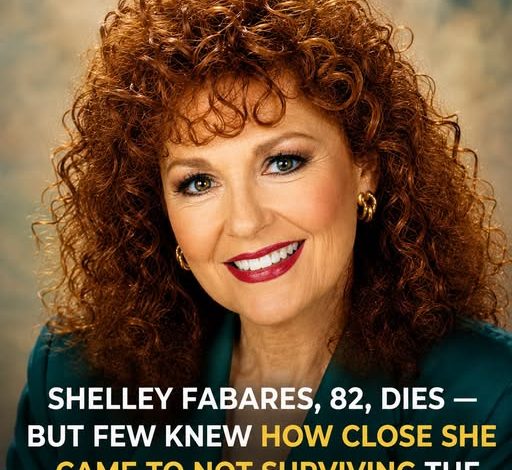
Shelley Fabares spent more than half a century as a familiar presence in American entertainment, first winning over television audiences as a teenager and later finding success with an entirely new generation of viewers. Her career included television, film and music, but some of the most significant experiences of her life unfolded away from cameras and studio sets. Years after becoming famous, Fabares faced a serious liver illness that eventually placed her life in danger and required a transplant. During those difficult years, her husband, actor Mike Farrell, remained closely involved in her care.
Fabares later said the experience transformed her outlook on life and strengthened a marriage that ultimately lasted more than four decades. Fabares died in Los Angeles on Saturday, August 22, 2026, at the age of 82, surrounded by people close to her. Her family announced her death and remembered her not only for her long entertainment career but also for the way she treated relatives and friends. They described a devoted wife and stepmother whose warmth, generosity, humor and grace had made a lasting impression on the people who knew her personally.
The family also emphasized her ability to make others feel welcome and valued. No cause of death was disclosed in the family’s announcement. For millions of viewers, Fabares will always be remembered first as Mary Stone on The Donna Reed Show. Born Michele Marie Fabares in Santa Monica, California, on January 19, 1944, she entered entertainment while still a child. Show business was already part of her extended family through her aunt, actress and singer Nanette Fabray, who enjoyed an acclaimed career of her own. Fabares began modeling when she was young and started appearing on television before reaching her teenage years. Those early opportunities eventually led to the role that would make her one of television’s best-known young performers.
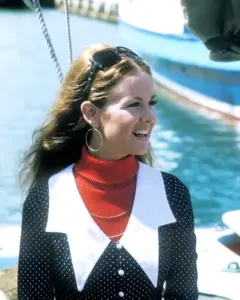
When The Donna Reed Show premiered in 1958, Fabares became part of one of television’s recognizable fictional families. She portrayed Mary Stone, daughter of Donna and Alex Stone, and her performance connected strongly with younger viewers. Fabares remained associated with the series during a formative period in her career, developing professionally in front of a national television audience. Donna Reed also became an important mentor to the young actress. The role gave Fabares a degree of recognition that few teenage performers experienced at the time and helped open opportunities in other areas of entertainment.
Music became one of those opportunities, even though acting would remain the central focus of her career. In 1962, Fabares recorded “Johnny Angel,” a romantic pop song that became an enormous commercial success. The single climbed to No. 1 on the Billboard Hot 100 and permanently associated Fabares with the early-1960s pop era. She released additional recordings and albums, although her music career was relatively brief compared with her decades of acting. Even so, “Johnny Angel” remained one of her defining achievements and continued to introduce listeners to her work many years after its original release.
Her growing popularity also created opportunities in movies. During the 1960s, Fabares appeared opposite Elvis Presley in three films: Girl Happy, Spinout and Clambake. Working alongside Presley connected her career with one of the biggest entertainment figures of the twentieth century and broadened her profile beyond television. She also appeared in other films during that period, including Ride the Wild Surf. Barbara Eden, who worked with Fabares on that film, remembered her warmly following her death in 2026, describing their time together and paying tribute to her talent and kindness.
Fabares continued working steadily after the period of teenage stardom that had first made her famous. Her résumé expanded through guest appearances and recurring roles in numerous television productions. She appeared in programs including One Day at a Time, The Love Boat and Murder, She Wrote, demonstrating an ability to adapt as television changed around her. Her involvement in the acclaimed television movie Brian’s Song added another important credit to an increasingly varied career. Rather than becoming permanently identified only as a former child or teenage star, Fabares managed to remain professionally active as an adult performer.
Another major chapter began in 1989 when she joined the ABC sitcom Coach. Fabares played Christine Armstrong, the love interest and eventual wife of Hayden Fox, portrayed by Craig T. Nelson. The role gave her an entirely new generation of fans who may have known little about Mary Stone or “Johnny Angel.” Coach became a long-running success, lasting nine seasons and 200 episodes, and Fabares’ work on the series earned her two Emmy nominations. She later remembered her years on the program as an especially positive period in her professional life.
Following Fabares’ death, Nelson described her as an important presence in his own life and remembered the friendship they developed while working together. Their professional partnership helped form the emotional center of Coach, particularly as Christine and Hayden’s relationship evolved over the series. For Fabares, the success was remarkable because it arrived decades after she first became a household name. Few performers manage to become recognizable television figures in two very different eras, but her career successfully bridged the family sitcoms of the late 1950s and the network comedies of the 1990s.
Away from work, another relationship became central to Fabares’ life. She and Mike Farrell first crossed paths years before they eventually became a couple. Farrell was an actor who would become particularly well known for portraying Captain B.J. Hunnicutt on MASH*. Fabares had previously been married to record producer Lou Adler, while Farrell had been married to actress Judy Farrell and had two children. Their eventual relationship therefore came after both had already experienced important personal and professional chapters of their lives.
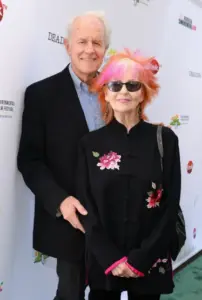
Accounts of exactly when their romantic relationship began have sometimes varied in retrospective profiles, but People reports that they reconnected in the early 1980s and ultimately married on December 31, 1984. Their wedding took place at the home of Fabares’ aunt Nanette Fabray. With the marriage, Fabares also became stepmother to Farrell’s children. She later acknowledged that creating a blended family required patience and effort rather than happening effortlessly. Over time, however, family relationships became an important part of the life she and Farrell built together.
Their marriage would eventually be tested by circumstances neither could have predicted. In 1994, Fabares suffered a serious accident while the couple’s home was under construction. She fell through exposed floor joists and broke all of the ribs on the left side of her body. The accident was painful and frightening on its own, but the medical evaluation that followed unexpectedly revealed something even more concerning. Routine follow-up testing showed extremely abnormal liver measurements, beginning a medical journey that would eventually become life-threatening.
At first, doctors did not identify a precise explanation for the abnormal liver results, according to a detailed 2003 account published by Cedars-Sinai through Newswise. Fabares took medication during the following years, and her liver measurements appeared to stabilize at levels that remained higher than normal. For a time, that relative stability offered hope that the condition could be managed. Later biographical reports have described her illness as autoimmune hepatitis, but the contemporaneous Cedars-Sinai account noted that the precise cause initially could not be determined. What was clear was that her liver function remained abnormal.
Then her condition changed dramatically. In early 1999, Fabares experienced a sudden esophageal bleed and was taken to the emergency department at Cedars-Sinai Medical Center. She later remembered being extremely ill during the episode. Once doctors had stabilized her, they explained that the bleeding was connected with progressive liver failure. The damage had reached a stage at which medication could no longer reverse the problem. Another severe bleed could potentially be fatal, making transplantation increasingly necessary rather than merely precautionary.
The diagnosis was initially difficult for Fabares and Farrell to absorb. Fabares later recalled that she first viewed transplantation almost as a backup measure, hoping she might never actually need it. Eventually, the seriousness of her condition became impossible to dismiss. Without a functioning donor liver, her doctors told her that the disease could kill her. In April 1999, she was placed on the liver-transplant waiting list and entered one of the most uncertain periods of her life.
Being placed on a transplant list did not mean a suitable liver would immediately become available. The demand for donor organs was much greater than the available supply, and patients could spend long periods waiting while their health deteriorated. Fabares was acutely aware of that reality. She later described herself as living on borrowed time and spoke about the physical, psychological and emotional strain of knowing that her survival depended on a donor organ becoming available before her illness progressed too far.
The transplant pager became a constant reminder of that uncertainty. Fabares carried a dedicated pager so that the medical team could contact her immediately if an appropriate donor organ became available. On several occasions, the device went off because someone had accidentally reached the wrong number. Each false alarm initially triggered an intense emotional reaction for Fabares and Farrell because every sound could potentially mean the wait was finally over. She later remembered that they eventually learned to control their reactions better whenever the pager sounded.
Meanwhile, Fabares’ physical strength continued declining. She recalled being overwhelmingly exhausted as her liver disease progressed. Sometimes, even getting up to obtain a glass of water felt more difficult than simply going back to sleep. The fatigue demonstrated how profoundly the illness was affecting ordinary life. She was not dealing only with a diagnosis written in a medical chart; the failure of her liver was increasingly determining what she could physically manage from one day to another.
Throughout this period, Farrell became deeply involved in his wife’s care. Fabares later said he accompanied her to every medical appointment and remained beside her as they tried to understand what was happening. Physicians including hepatologist John Vierling and transplant surgeon Steve Colquhoun worked closely with the couple, answering questions and explaining the process. Fabares credited both doctors with helping them remain informed and calmer during an exceptionally frightening period. She would later describe the medical team in deeply appreciative terms and credit them with saving her life.
Farrell’s support was especially meaningful because the illness lasted for years rather than days or weeks. Caregiving meant attending appointments, coping with uncertainty, helping with responsibilities Fabares sometimes lacked the strength to manage and confronting the possibility that the transplant might never happen. Fabares later made clear that she did not view her husband’s involvement as something ordinary or insignificant. She described him as indispensable to getting through the experience and expressed profound gratitude for the consistency of his support.
For a couple whose careers had revolved around scripts and controlled production schedules, their medical situation offered none of that predictability. Neither could know exactly when a donor organ would become available, whether another dangerous bleed would happen first or how Fabares’ health would change while they waited. Their daily lives were shaped by medical appointments and readiness for an emergency call. The emotional pressure became part of their marriage as much as the practical demands of caregiving.
Finally, the call they had been waiting for arrived. On October 23, 2000, the transplant pager sounded, and this time it was not a false alarm. A donor liver had become available for Fabares. After the long period of declining health and uncertainty, she underwent transplant surgery at Cedars-Sinai. The operation was successful, giving her the possibility of a future that had seemed increasingly uncertain during the previous months.
Fabares later spoke about the transplant not simply as a successful medical procedure but as the beginning of another life. She understood that transplantation carried a profound human dimension because another person’s donated organ had made her survival possible. Organ recipients must also continue with medical monitoring and anti-rejection treatment after surgery, meaning transplantation is an ongoing medical journey rather than a single event. For Fabares, however, the successful procedure gave her years of life she might otherwise never have experienced.
By 2003, nearly three years after the transplant, Fabares described herself as fundamentally changed by everything she had endured. Life had returned to a degree of normality, but her priorities and perspective were different. She said the experience changed what she considered important and altered how she approached everyday life. Her gratitude included her physicians, her survival and the lessons the illness taught her, but her comments repeatedly returned to the person who had remained beside her throughout the crisis: Mike Farrell.
Fabares said catastrophic illness can sometimes put enormous pressure on families, but she believed the opposite had happened in her marriage. Rather than pushing them apart, the years of uncertainty had brought them closer together. She described herself as extraordinarily fortunate to have Farrell as her husband and credited him with being present at every stage of the ordeal. The health crisis therefore became both one of the darkest periods of her life and one of the experiences that most clearly demonstrated the strength of their partnership.
After recovering, Fabares also became associated with advocacy surrounding organ donation. Her experience gave her personal knowledge of what it meant to wait for an organ while knowing time could run out. Transplantation depends on donors and donor families, and Fabares understood that her second chance had been made possible by someone else’s decision to donate. The experience added a new dimension to a public life that had previously been known almost entirely through television, movies and music.
Health advocacy was not limited to her own illness. Fabares also became involved in efforts related to Alzheimer’s disease after her mother was diagnosed with the condition. People noted that she supported Alzheimer’s awareness and research, demonstrating how personal experiences influenced some of the causes she chose to support. These activities represented another side of an entertainer whom audiences had first encountered decades earlier as a teenage sitcom star.
Farrell similarly maintained interests beyond acting, including involvement with humanitarian and human-rights organizations. Although both were public figures, many of the most important parts of their relationship unfolded outside entertainment coverage. Their marriage was built around family, professional work, personal causes and eventually the considerable demands created by Fabares’ health crisis. By the time of her death in 2026, they had been married for more than four decades.
Only months before Fabares died, Farrell publicly reflected on their relationship and recalled how their connection developed decades earlier. His memories emphasized the comfort and balance he found in her presence. Those remarks took on additional significance after her death because they offered a recent account of what their partnership had meant to him. Their marriage had survived career changes, family transitions, serious illness and the ordinary challenges that accumulate during decades together.
Fabares’ professional longevity was equally remarkable. She first became widely known while Dwight D. Eisenhower was president and network television itself was still relatively young. Decades later, she was receiving Emmy nominations for Coach and connecting with viewers who knew nothing about her early career. Her work therefore spanned several distinct periods of American entertainment history. She moved from black-and-white family television to movies, popular music, television dramas and eventually one of the successful sitcoms of the late twentieth century.
Her musical success was unusual within that broader career. Many actors release recordings, but relatively few score a No. 1 hit on the Billboard Hot 100. “Johnny Angel” accomplished exactly that and remained closely associated with Fabares for the rest of her life. Yet she did not allow that success to lock her permanently into music. Acting remained the foundation of her career, and she repeatedly found ways to transition into new types of roles as she grew older.
The three movies she made with Elvis Presley provided another enduring connection to popular culture. Presley was at the height of his film career when Fabares worked with him, and the pictures continued attracting interest from fans long after their original releases. Those films became part of a résumé that also contained respected television drama, sitcom work and guest appearances. The variety of her credits helps explain why different generations remembered Fabares for very different reasons.
For viewers of The Donna Reed Show, she remained Mary Stone, the teenage daughter in a television family that reflected the conventions of its era. For music listeners, she was the young singer behind “Johnny Angel.” Elvis fans knew her as one of Presley’s leading ladies, while viewers of Coach remembered the mature comedic performer opposite Craig T. Nelson. Each chapter represented a genuine part of her career, but none by itself captured the full extent of her professional life.
The story of her transplant adds an entirely different dimension. Fame offered no protection from a failing organ, and her television success could not shorten the uncertainty of waiting for a suitable donor. The experience reduced life to fundamental questions about health, family, time and survival. Fabares’ later comments indicate that those years permanently changed the way she understood what mattered most.
Her gratitude toward Farrell was particularly striking because she discussed specific actions rather than simply describing him as supportive. He accompanied her to medical appointments, stayed involved while doctors searched for answers and continued helping as her condition became more serious. That consistency became one of Fabares’ clearest memories of the experience. Years afterward, she still described her husband as central to her ability to endure it.
The experience also demonstrates why descriptions of Farrell as simply a celebrity husband miss much of their relationship. During the period when Fabares was seriously ill, he became part of the day-to-day support system surrounding a patient facing potentially fatal liver failure. It was not a television storyline or publicity exercise. According to Fabares’ own account, his presence provided emotional and practical support during a period when her future was uncertain.
Her eventual recovery allowed the couple to share more than two additional decades together. Those years included family life, advocacy, public appearances and opportunities to reflect on careers that had begun many decades earlier. The transplant therefore did more than allow Fabares to recover from a single medical emergency. It fundamentally extended the life she was able to build with Farrell and the people close to them.
When news of Fabares’ death arrived in August 2026, tributes understandably focused on her entertainment legacy. Craig T. Nelson remembered his former Coach colleague warmly, while Barbara Eden reflected on working with her decades earlier. Their comments demonstrated the unusual range of Fabares’ professional relationships, stretching from performers associated with the 1960s to colleagues from much later stages of television history.
Her family’s statement, however, emphasized something less visible than awards or ratings. They remembered a woman who made people feel cared for, welcomed and important. Those qualities cannot easily be measured by television ratings, record sales or award nominations, but the family made them central to its farewell. For those closest to Fabares, her public accomplishments were only one element of the person they were mourning.
That distinction matters when considering a career that began so early. Fabares spent much of her life being viewed through characters, publicity photographs and public appearances. Audiences knew versions of her shaped by television scripts or songs. Her health crisis, marriage and family relationships reveal parts of a life that did not depend on whether a camera was present.
Her transplant experience also carries a broader reminder about organ donation without requiring Fabares’ story to become a medical lesson. She survived because a suitable donor liver became available at a moment when her own liver could no longer sustain her indefinitely. Fabares recognized that reality and expressed gratitude for the life she received afterward. The extra years allowed her relationships and interests to continue long after the frightening period when she had described herself as living on borrowed time.
In the years after surgery, she could look at ordinary moments differently because she understood how close she had come to losing them. Her remarks from 2003 show someone focused less on professional milestones than on appreciation. She spoke about being grateful for life, for medical care, for what she had learned and especially for her husband. Those comments came from someone who had already experienced fame, hit records and successful television programs but had discovered a very different measure of what constituted good fortune.
Mike Farrell remained part of that life until its final chapter. Their marriage lasted from 1984 until Fabares’ death on August 22, 2026. Through that time they experienced the complexities of combining families, decades of work in entertainment and an illness that demanded long-term commitment from both partners. The longevity of the relationship became particularly meaningful because Fabares had openly credited Farrell with helping her through the period when her health was at its worst.
Fabares is therefore remembered through several overlapping legacies. She was a child performer who successfully transitioned into adult acting, a television star known across generations and a singer whose biggest recording reached the top of America’s principal pop chart. She was also a wife, stepmother, advocate and transplant recipient who spoke candidly about how serious illness changed her perspective.
Her death at 82 brought that remarkable story to a close, but it did not reduce her life to its final days. Her family did not disclose a cause of death, so claims connecting her passing to her earlier liver illness would go beyond the information currently available. What can be documented is that the transplant she received in 2000 was successful and gave her more than 25 additional years of life. Those years became part of a story that once seemed uncertain when she was waiting for a donor organ.
Looking back across Fabares’ career, the contrast is striking. Millions once watched her portraying a teenage daughter on television, and millions more later watched her as Christine Armstrong on Coach. Yet one of the most consequential events of her life involved no fictional character and no scripted ending. It involved a failing liver, a transplant waiting list, a medical team, an organ donor and a husband who, in Fabares’ own telling, remained beside her through the entire ordeal.
That is why the story of Shelley Fabares and Mike Farrell resonates beyond celebrity history. It is not simply a story about two actors who married. It is the documented account of a partnership confronted with a potentially fatal illness and a prolonged period of uncertainty. Fabares believed that experience brought them closer, and she continued expressing gratitude for Farrell’s support years after the immediate danger had passed.
Shelley Fabares leaves behind an entertainment career that crossed generations, from The Donna Reed Show and “Johnny Angel” to her films with Elvis Presley and her Emmy-nominated work on Coach. Alongside those accomplishments stands a deeply personal story of illness, survival and commitment. Her successful liver transplant offered a second chance when her health had deteriorated severely, while her marriage provided the support she said was essential during that period.
For audiences, her performances will remain the most visible part of her legacy. For those who knew her personally, the qualities emphasized after her death—warmth, humor, generosity and care for others—appear to have mattered just as much. Between those two worlds lies the extraordinary medical chapter Fabares herself chose to discuss publicly: a period when professional success became secondary to simply staying alive and when the person beside her proved, in her view, indispensable.
Her life ultimately stretched far beyond the teenage star viewers first encountered decades ago. She experienced early fame, musical success, Hollywood films, a television comeback, marriage, severe illness, transplantation, advocacy and more than two decades of life after doctors told her she needed a new liver. When viewed together, those chapters reveal a much fuller picture of Shelley Fabares—an entertainer whose public achievements were substantial, but whose private experiences with love, illness and gratitude became equally important to the story she left behind.