A Brief Exchange Between Donald and Melania Trump Sparks Online Theories
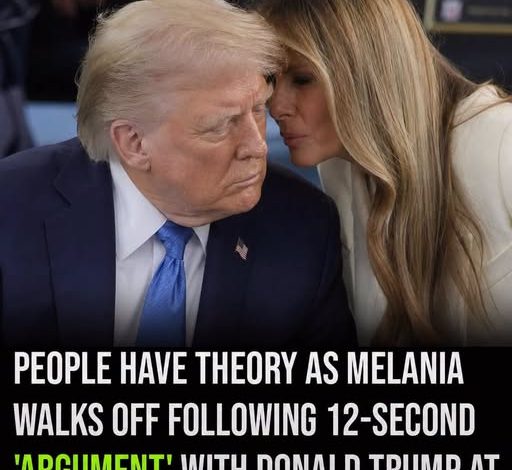
A short video from the Freedom 250 event showed Donald and Melania Trump speaking face to face before she turned and walked away. The exchange lasted only seconds, but tight expressions and the abrupt ending led viewers to describe it as an argument. The distinction between confirmed information and assumption is essential. An incomplete investigation may be frustrating, but repeating a theory does not make it a fact.
Online users slowed the footage, studied body language, and tried to reconstruct words that could not be heard. The patriotic setting and public prominence of the couple amplified interest, turning a private fragment into a widely debated clip. People closest to the event also deserve room to grieve without having every unanswered question turned into public accusation.
Some speculation involved White House Appointments Secretary Natalie Harp, who had appeared nearby shortly before Melania left. Her frequent proximity to Donald Trump made her an easy subject for theories, but the source offered no evidence that she caused or was even discussed in the exchange. Context restores proportion. One dramatic detail can dominate a headline even when it represents only a tiny part of a person’s life or an unfolding inquiry.
Body language can suggest tension without establishing its reason. A camera angle, missing audio, or events outside the frame can change how a moment appears. Neither Donald nor Melania publicly explained the conversation in the account. Patience is not the same as indifference. It allows evidence to guide the account while protecting people from claims that may never prove true.
The only reliable conclusion is that the footage captured a brief, visibly tense interaction followed by Melania’s departure. Everything beyond that remains interpretation. The clip demonstrates how quickly public curiosity can convert twelve seconds of incomplete evidence into confident stories about a marriage. The most responsible conclusion leaves uncertainty where uncertainty remains. It records what is known, acknowledges what is not, and avoids manufacturing an answer for emotional effect.
A developing account should be revisited when officials or directly involved people provide new information. Early reports are often incomplete, and later evidence can change the meaning of details that first appeared decisive. Responsible coverage makes room for that change. It distinguishes an update from a correction and does not quietly carry an unsupported theory forward after the facts no longer sustain it.
The same discipline applies to images and short video clips. A camera captures only what enters its frame and microphone, not every event that came before or after. Body language can invite a question, but it cannot supply missing dialogue or motive. Describing what is visible is legitimate; presenting a confident explanation without evidence is not.
Readers are best served by a clear boundary between fact, attribution, and interpretation. Confirmed details can be stated directly, claims should be linked to the person or source making them, and speculation should remain labeled or omitted. That structure may sound less dramatic, but it protects accuracy and gives future information somewhere honest to fit.
Reading the full sequence also guards against the distortion created by a short social caption. A caption can emphasize one surprise, image, or emotional phrase, while the underlying source supplies the circumstances needed to understand it. Preserving those circumstances keeps the account coherent and prevents unrelated material, page labels, advertisements, or promotional prompts from being mistaken for part of the story itself.
Taken together, these details explain the meaning of a brief exchange between donald and melania trump sparks online theories. The important point is not an unrelated teaser or a dramatic caption, but the sequence and facts described in the source. Keeping that focus preserves the people, relationships, and consequences that give the account its real significance.