She Promised to Stay Silent for 18 Years — Then My Son Opened the Letter His Mother Left Behind
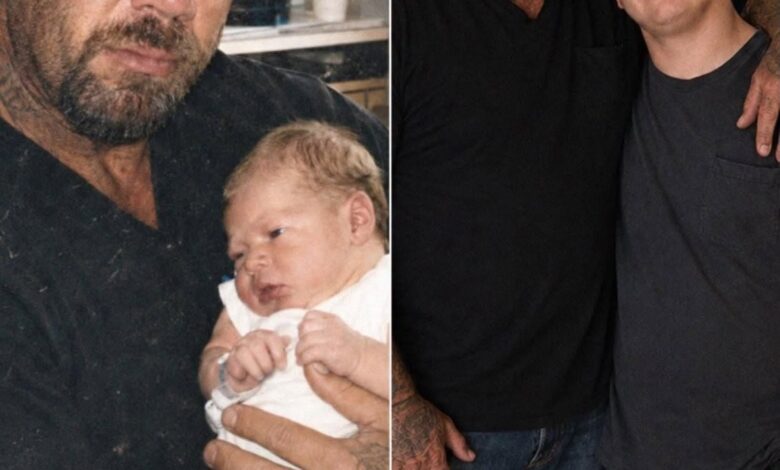
She kept shaking her head.
Two days later, she filed for divorce, gave up her parental rights, packed one suitcase, and walked away.
I was thirty years old, standing in our apartment with a three-day-old baby in my arms, unable to understand how someone could stop loving their own child in just forty-eight hours.
That week, I bought a Mother’s Day card in the hospital gift shop.
It stayed in the same drawer for eleven years.
I never mailed it.
I sold my truck when Leo needed speech therapy twice a week. I worked extra shifts and learned how to cook meals he would actually eat. I memorized the names of his teachers, therapists, and specialists.
Some nights, after Leo fell asleep, I sat alone in the kitchen and cried.
Not because I didn’t love my son.
Because I was terrified I wasn’t enough.
But Leo never saw that side of me.
As far as he knew, he was the greatest thing that had ever happened to me.
And he was.
Our neighbor, Mrs. Johnson, became family. She helped with appointments when I couldn’t leave work, attended school plays, and celebrated every small victory.
She loved Leo like her own grandson.
Then, yesterday, Leo turned eighteen.
We had a simple celebration: homemade dinner, chocolate cake, and far too many candles.
After blowing them out, Leo reached into his pocket and pulled out a small, yellowed envelope.
He slid it across the table.
“Buddy, it’s your birthday,” I said.
“I know, Dad.”
He glanced at Mrs. Johnson.
“She told me today was finally the right day.”
I looked at Mrs. Johnson.
She wasn’t smiling.
Her hands were trembling around her teacup.
The envelope was eighteen years old.
The handwriting was Goldi’s.
My heart stopped.
Mrs. Johnson wiped her eyes.
“Arthur,” she whispered, “she didn’t leave because she stopped loving either of you.”
I stared at her.
“What are you talking about?”
Leo placed his hand over mine.
“Dad. Please read it.”
I opened the envelope.
Inside were several pages.
The first line made the room disappear.
Arthur, if you are reading this, then our son is eighteen years old.
I kept reading.
And if Mrs. Johnson kept her promise, then you have spent eighteen years believing I left because I didn’t love you.
That wasn’t the truth. Not even close.
My hands went cold.
The letter explained that Goldi had been diagnosed with a serious heart condition years before Leo was born.
She had hidden how serious it was because she was afraid Arthur would leave her.
Then, after giving birth, her condition became worse.
Doctors told her she needed immediate treatment and warned that she might not survive without it.
When she said, “I can’t do this,” she wasn’t talking about Leo.
She was talking about dying.
I had spent eighteen years believing she had abandoned our son because of his Down syndrome.
But the truth was far more painful.
She had been terrified she wouldn’t live long enough to raise him.
Goldi had given the letter to Mrs. Johnson before leaving and asked her to keep it until Leo turned eighteen.
She believed disappearing would protect Arthur and their son from watching her become weaker.
Then I reached the sentence that changed everything:
Arthur, if I survived, I planned to come back.
I looked up.
“Where is she?”
Mrs. Johnson said nothing.
Leo looked toward the window.
Across the street, beside an old silver car, stood a woman.
Older.
Thinner.
Her hair streaked with gray.
But I knew her immediately.
Goldi.
For eighteen years, I had imagined what I would say if I ever saw her again.
But when I opened the door, all I could manage was:
“You should have told me.”
“I know.”
“You should have trusted me.”
“I know.”
“You took eighteen years from us.”
Her face crumpled.
“I know.”
Then Leo stepped behind me.
He looked at his mother.
She looked at him.
“Hi, Leo,” she whispered.
“Hi.”
She pulled a small box from her bag.
Inside was a silver bracelet with his name engraved on it.
“I’ve had it since you were born,” she said.
Leo stared at it.
“You kept it?”
“I kept everything.”
That night wasn’t about instant forgiveness.
It was about finally hearing the truth.
Goldi came inside and sat quietly across from Leo.
They talked.
They cried.
They laughed through some of the tears.
It was the first time in eighteen years that we were all in the same room.
A broken family.
An unfinished story.
But maybe not the end.
Later, Leo asked me if I was okay.
“No,” I admitted.
He nodded.
“Me neither.”
I put my arm around him.
“But maybe we’ll get there.”
That night, I went upstairs and opened the drawer where I had kept the old Mother’s Day card.
The envelope was faded and bent.
On the front, I had written only two words:
For Goldi.
I still didn’t know if I could completely forgive her.
I didn’t know what place she would have in Leo’s life.
But for the first time in eighteen years, I realized something important:
The story wasn’t necessarily over.
Sometimes the truth doesn’t erase the pain.
It simply changes what comes next.