I was taking my dog for a walk in the park when he suddenly discovered something unusual in the grass…
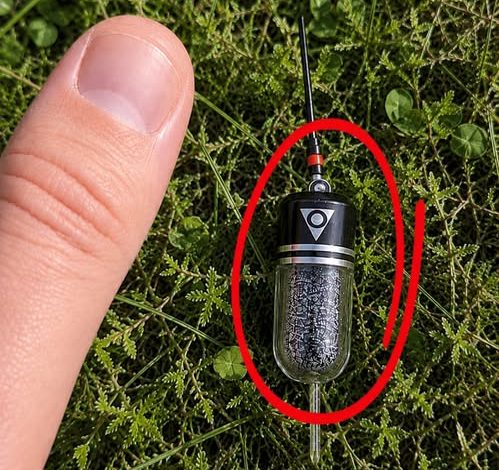
A published online account describes what seemed, at first, like a completely ordinary walk with a dog. There was no dramatic event expected, no planned discovery, and nothing obviously unusual about the surroundings. The dog was reportedly walking normally beside the person holding its leash when its behavior suddenly changed. Instead of continuing forward, the animal stopped and focused intensely on a small patch of grass. According to the account, the dog became alert and remained interested in something the walker had not yet noticed.
What appeared to be an uneventful moment quickly became a reason to look more carefully at the ground. The object described in the account was unusually small and difficult to distinguish from the surrounding vegetation. It reportedly resembled a tiny capsule with a narrow wire or antenna extending from it. Because an unfamiliar electronic-looking object can be difficult to identify without context, the walker initially did not know what it was. The original account describes uncertainty rather than evidence that the device was dangerous.
That distinction is important, because unfamiliar technology should not automatically be interpreted as a threat. An object can appear mysterious simply because the observer does not yet understand its purpose. Rather than immediately handling the object, the account says that the walker examined it from a short distance. Using a phone camera to obtain a closer view was described as one way of seeing its details without immediately picking it up.
The enlarged view reportedly made the object easier to examine. Its shape and antenna-like component suggested that it might belong to a category of very small tracking equipment. That interpretation is scientifically plausible because miniature radio transmitters are genuinely used in wildlife research. However, without identifying markings, a manufacturer, a researcher, or a laboratory examination, a photograph alone may not always establish the exact model or origin of an unknown device.
Radio telemetry has been used by wildlife researchers for decades to study the movements of animals. In a typical system, a small transmitter sends a radio signal that researchers can detect using suitable receiving equipment and an antenna. Smithsonian’s National Zoo and Conservation Biology Institute explains that scientists have used radio telemetry since the 1960s to locate animals and follow their movements. The transmitter is carried by the animal, while researchers use a receiver and antenna to detect its signal. As researchers move closer to some types of transmitters, the received signal can help them determine the animal’s approximate location. This technology allows scientists to study animals that would otherwise be difficult to observe continuously.
Miniaturization has made tracking technology useful for increasingly small species. Scientific literature describes transmitters weighing well under a gram, although reducing size creates limitations involving battery life, transmission range, power, and other technical factors. A 2025 scientific review examined miniature transmitters designed for tracking free-ranging wildlife and discussed their use for small birds, bats, rodents, and insects. Researchers continue working to make devices smaller while still producing usable signals. The goal is generally to collect useful movement data while limiting the burden that equipment places on the animal. The specific type of transmitter chosen depends heavily on the species and research question.
The technology can sometimes be surprisingly tiny. One peer-reviewed study described experimental radio-frequency transmitters weighing approximately 152 to 160 milligrams and measuring only a few millimeters across and a little more than a centimeter in length. Those dimensions help explain why genuine scientific equipment can occasionally look unfamiliar or almost insignificant when removed from its normal context. A miniature transmitter lying among grass can easily look very different from the larger electronic devices people encounter every day. Small size by itself is therefore not evidence of a secret or suspicious purpose. In wildlife research, compact dimensions can be necessary because the animal carrying the equipment may itself be extremely small.
The Motus Wildlife Tracking System provides another real-world example of this technology. Motus is an international collaborative research network that uses automated radio telemetry to study the movements and behavior of small animals. According to the organization, its research includes birds, bats, and insects. Animals fitted with compatible tags can be detected when they move within range of participating receiving stations. Those detections can help researchers examine migration routes, stopover locations, habitat use, survival, and other aspects of animal movement. The network illustrates how a transmitter that looks insignificant to a passerby can form one small part of a much larger scientific system.
Researchers have even explored radio telemetry for animals as small as bumble bees. In August 2026, the U.S. Fish and Wildlife Service described research in which tiny transmitters were fitted to bumble bees to investigate how they moved through habitat while searching for food, nesting areas, and cover. The agency explained that radio telemetry is more commonly associated with birds and mammals but can also provide information about much smaller animals when the technology is sufficiently lightweight. Such research demonstrates how quickly tracking equipment has continued to develop. A tiny tag does not necessarily need GPS, a camera, or continuous internet connectivity to be useful. A radio signal alone can provide valuable information when researchers have the appropriate receiving infrastructure.
When people hear the word “tracking,” it can sometimes produce an unnecessarily dramatic mental image. Scientific wildlife tracking is generally concerned with questions about animal movement, habitat, behavior, migration, survival, and conservation. A radio transmitter designed for an animal is not automatically a camera, microphone, or device for monitoring nearby people. Different technologies perform different functions, and their capabilities should not be confused. A simple radio tag may do little more than emit an identifying signal that specialized equipment can detect. Describing it accurately is more informative than imagining capabilities for which there is no evidence.
The original account says that no visible camera was identified on the object. That observation matters because an antenna-like component alone does not establish that something can record images or sound. Radio transmitters require antennas because they communicate through radio signals. The presence of a wire or antenna can therefore be completely consistent with ordinary telemetry equipment. Without technical identification, it would be irresponsible to claim that an unknown object was conducting surveillance of people. The most cautious conclusion is simply that its appearance was described as consistent with a small transmitter, while its exact identity and history were not independently established.
The dog’s reaction is another part of the story that should not be exaggerated. According to the published account, the dog detected or became interested in the area before the walker noticed the object. Dogs have highly developed senses, particularly smell, but the available account does not establish precisely what attracted this particular animal’s attention. It could have been an odor, movement, something associated with the object, or another feature of the immediate surroundings. There is no evidence in the article showing that the dog somehow recognized the device as electronic or understood its purpose. The most accurate description is simply that the dog’s behavior reportedly drew the person’s attention toward the location.
That detail makes the story interesting without requiring a supernatural or sensational explanation. Animals frequently notice sensory information that humans overlook, especially smells that people cannot easily detect. At the same time, observing one dog’s behavior in an anecdotal account cannot tell us exactly which stimulus caused the reaction. The dog may have been interested in the device itself, something that had touched it, or something else nearby. Without controlled observation, all of those possibilities remain uncertain. Preserving that uncertainty is important because a responsible article should distinguish between what was observed and what is only imagined.
If the object truly was a wildlife transmitter, several ordinary explanations could account for why it was found without an animal attached. Some research tags use attachment methods designed to remain on an animal for a limited period, while others can detach accidentally or after an attachment material weakens. Researchers studying small mammals have specifically investigated attachment techniques that collect data for a useful period and later show signs of releasing from the animal. Different species require different attachment methods, including collars, harnesses, adhesives, or other specialized systems. It is therefore possible for a transmitter eventually to become separated from its animal. That possibility does not establish what happened in this specific story, but it is consistent with documented wildlife-research practices.
Finding scientific equipment outside a laboratory can make it look far more mysterious than it really is. A microscope would seem ordinary in a research facility but unusual if found beside a walking trail. The same principle applies to radio transmitters. When attached to a bird during a documented wildlife study, a small transmitter has an obvious context. Lying alone in vegetation, the same object may prompt questions because the observer cannot immediately see the research project, animal, or scientist connected to it. Context often determines whether unfamiliar technology feels ordinary or strange.
Wildlife telemetry exists because directly following animals every minute is usually impossible. Birds may travel across enormous distances, bats can move through darkness, and small mammals may spend much of their time hidden within dense vegetation or underground areas. Researchers need methods that allow them to gather information without physically following an animal at every moment. Radio telemetry is one of several technologies available for that purpose. Depending on the equipment, scientists may obtain detections that help reconstruct where an animal traveled or which areas it used. Those records can contribute to broader research on ecology and conservation.
For migratory animals, movement information can be especially valuable. Knowing where animals stop, feed, rest, reproduce, or cross habitat boundaries can help researchers understand which locations are important during different periods of the year. A bird observed in one place today may travel hundreds or thousands of kilometers during a migration cycle. Direct visual observation alone cannot easily document every stage of that journey. Networks of receivers and appropriately designed transmitters can help fill some of those gaps. This is one reason wildlife tracking has become an important research method rather than simply an interesting technological experiment.
Tracking devices are also designed with animal welfare considerations in mind. A transmitter that is too heavy or poorly attached could interfere with normal behavior and produce both ethical concerns and unreliable scientific data. Researchers therefore consider factors such as the size of the animal, transmitter weight, attachment method, expected study duration, and possible effects on movement. For very small animals, these constraints become particularly demanding. The continuing development of lightweight transmitters is partly intended to reduce those limitations. Scientific publications discussing miniaturized transmitters emphasize precisely these engineering tradeoffs.
The question of what to do after finding an unknown device also deserves a cautious approach. An unidentified object should not be assumed to be harmless merely because it resembles research equipment. At the same time, there is usually no reason to invent frightening explanations without evidence. Avoiding unnecessary handling can be sensible when an object cannot be identified, particularly if it appears damaged, contains an exposed battery, has sharp components, or carries warning markings. If there is a genuine concern about immediate safety, the appropriate local authority or property manager can be contacted. If the object clearly carries a research institution’s identification information, contacting that institution may help return equipment or provide an explanation.
In the published story, the walker reportedly chose to leave the object where it was. The article does not provide independently verified information about who owned it or whether researchers later recovered it. Consequently, claims about its previous animal carrier would be speculative. It may have been associated with wildlife research, but the specific species, project, researcher, duration of use, and reason for detachment were not established in the available account. Those missing details should remain missing rather than being replaced by invented information. A compelling story does not require filling every unanswered question with a dramatic assumption.
The encounter nevertheless provides a useful introduction to a real area of science. Wildlife telemetry often operates largely outside public view because most people never encounter the transmitters, receivers, field crews, or datasets involved. Yet researchers around the world use these tools to answer detailed questions about animal movement. A tiny electronic device can produce signals that help scientists identify patterns that would be difficult to observe otherwise. Those patterns can become part of larger studies involving many animals and many locations. What looks like a small piece of plastic and wire can therefore represent years of engineering and ecological research.
There is an important difference, however, between describing what tracking technology can do and claiming what one unidentified object definitely did. A scientific article should avoid crossing that line. We can say confidently that miniature radio transmitters exist and are used for wildlife research. We can say that birds, bats, small mammals, and insects have been studied with radio-telemetry systems. We can also say that increasingly small transmitters have been developed as technology improves. What cannot be said from the original account alone is exactly which research project, if any, produced the particular object described in the grass.
The same careful distinction applies to the idea that the device was “watching” anything. Radio tracking does not necessarily involve watching in the everyday sense of the word. Many radio transmitters simply broadcast signals, and receivers detect those signals when conditions allow. They do not need to contain conventional cameras or visually observe the environment. Researchers can infer movement from where and when signals are detected. Describing this process accurately avoids turning ordinary scientific equipment into an unsupported surveillance story.
For the animal carrying a transmitter, the device does not need to communicate its purpose. A bird continues flying, feeding, resting, and migrating according to its normal behavior. A bat can move between roosting and feeding areas while researchers listen for or automatically detect signals. A small mammal can travel through vegetation while a tag provides information about its location. Researchers then analyze those observations to address scientific questions. The animal itself does not need to interact with the technology in the way a human interacts with a phone or GPS unit.
Modern tracking projects can generate large datasets when many animals and receiver locations are involved. Each individual detection may appear insignificant on its own, but collections of detections can reveal larger patterns. Scientists can compare movements among animals, seasons, habitats, or years. They may investigate which routes are frequently used and which habitats are associated with particular behaviors. Those results can then contribute to ecological research and, in some cases, conservation planning. The scientific value comes from systematic collection and analysis rather than from the mysterious appearance of the hardware itself.
This broader context makes the original story less frightening and more interesting. If the object really was a wildlife tag, it was not remarkable because it secretly watched a passerby. It was remarkable because sophisticated research equipment can now be made small enough to be carried by animals that themselves may weigh very little. The engineering challenge becomes more difficult as the target species becomes smaller. Batteries, antennas, electronics, weight, transmission distance, and operating life all have to be balanced. Miniature telemetry is therefore a combination of biology, engineering, electronics, and field research.
Even insects are no longer automatically outside the reach of such research. The U.S. Fish and Wildlife Service’s 2026 work with bumble bees provides a recent example of scientists exploring how very small transmitters can reveal movements that conventional surveys may miss. Researchers can follow tagged individuals as they forage and move through different habitat types. That information may help answer questions that would be extremely difficult to resolve through occasional visual observations alone. The technology does not eliminate the need for field researchers, but it can provide an additional source of evidence. As devices continue to shrink, scientists may gain new opportunities to study increasingly small species.
There is also something memorable about discovering unfamiliar technology in an ordinary setting. People generally expect scientific instruments to be located in laboratories, research stations, hospitals, universities, or other clearly defined environments. Wildlife biology is different because much of the laboratory is effectively the natural landscape itself. Researchers work in forests, wetlands, grasslands, coastlines, farms, deserts, and urban green spaces. Their equipment may therefore appear in places used by people for completely unrelated activities. A passerby can unknowingly walk through an area where scientific data collection has occurred.
That does not mean every unusual electronic object found outdoors belongs to scientists. Objects can be lost for countless reasons, and appearances can be misleading. Identification should therefore rely on evidence rather than assumptions based only on shape. A label, serial number, manufacturer name, frequency information, research contact, or expert examination can provide far stronger evidence than visual resemblance alone. When those details are unavailable, cautious language such as “appeared to be” is more appropriate than a definitive claim. Accuracy often depends as much on acknowledging uncertainty as it does on reporting known facts.
The published account is most useful when read in that careful way. It describes a dog becoming interested in a patch of grass, a person noticing a tiny object, and an interpretation that the object resembled a wildlife tracking tag. The scientific concept behind that interpretation is real and well documented. What remains uncertain is the individual device’s complete history. There is no verified evidence in the article identifying the animal that may have carried it or the researchers who may have deployed it. Keeping those limits visible makes the story more credible rather than less interesting.
The dog’s role also remains an appealing part of the account without needing embellishment. According to the story, the walker would likely have missed the object without the animal’s sudden interest. That is entirely different from claiming that the dog identified a scientific transmitter or sensed radio waves. No such conclusion is supported by the available information. The dog’s behavior simply attracted human attention to something small in the grass. Sometimes an ordinary reaction is enough to produce an unexpected discovery.
After the initial surprise, the larger lesson becomes one of curiosity rather than fear. Unknown objects naturally produce questions, particularly when they resemble technology. The responsible response is to look for evidence before deciding what they represent. In this case, the possibility of wildlife telemetry provides a credible scientific explanation for the general appearance described. Research organizations and scientific publications confirm that extremely small animal-tracking transmitters are real and widely used. That factual background is more interesting than unsupported speculation about hidden cameras or secret monitoring.
A quiet path can therefore intersect with scientific research in ways most walkers would never recognize. Somewhere nearby, a bird may be carrying a transmitter whose signal contributes to a migration study. A bat may pass close enough to a receiver to generate a useful detection. Researchers may be studying the movements of small mammals across fields or woodland. In specialized projects, even insects may carry equipment small enough to help scientists understand how they use habitat. None of this requires the surrounding landscape to look like a laboratory.
That may be the most interesting part of the entire story. Modern field science often operates quietly, with very small instruments gathering information about animals moving through ordinary landscapes. Much of that work remains invisible to people who happen to share the same spaces. A transmitter can be smaller than many everyday objects yet still contribute information to a serious research project. Encountering such equipment unexpectedly can make the science suddenly visible. It turns an abstract idea about wildlife tracking into something tangible.
The original account began with an ordinary walk and ended with questions about a tiny object that might otherwise have remained unnoticed. Its most responsible interpretation does not require claims about danger, secret surveillance, or unexplained technology. There is a straightforward scientific possibility: miniature radio transmitters are genuinely used to study wildlife, and some are extraordinarily small. Whether the specific object described in the story came from a particular animal or research project cannot be established from the available account alone. That uncertainty should be preserved rather than concealed.
In the end, the story is most compelling when fact and uncertainty are allowed to exist together. The reported encounter provides the human-interest element: a dog stopped, attention shifted toward the grass, and an unfamiliar object was noticed. Established science provides the broader explanation: radio telemetry has long been used to study animal movements, and modern tags can be extremely small. What cannot be verified should remain described as a possibility rather than converted into a fact. That approach keeps the article informative, avoids unnecessary fear, and allows a simple discovery to become an accurate introduction to the fascinating technology used to study wildlife.