Dolly Parton Was Still Planning Her Future Days Before Her Death—Then She Revealed What She Had Neglected While Caring for Carl
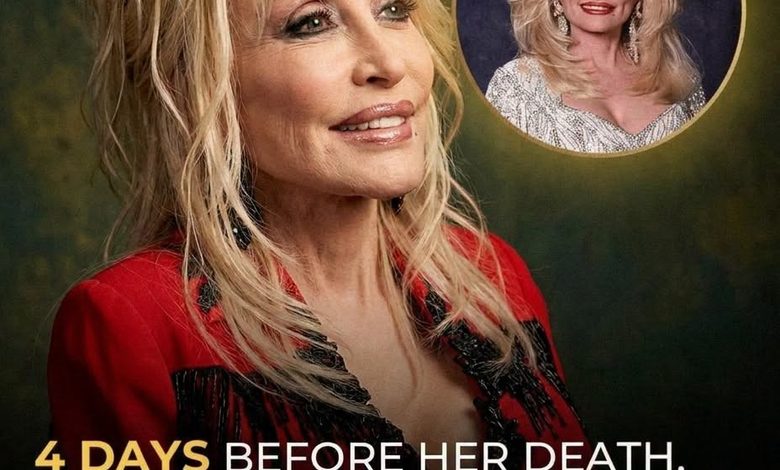
Only four days before her death, Dolly Parton was still talking about what came next. At 80, she acknowledged that her health had put limits on her schedule, but she spoke less like someone preparing to say goodbye and more like an artist adjusting the machinery of a career she had no intention of abandoning. She admitted she had endured “hard times” physically and revealed that some of her own problems had gone unattended while she cared for her husband, Carl Dean, before his death in March 2025. Even while healing, she insisted she was still working. Days earlier, when doctors kept her from traveling to Dollywood, she appeared virtually instead, joking that her physician had “clipped my wings.” What made that final interview especially poignant was not simply that she was ill—it was how determined she remained to find another way forward.
Parton had already spent months reshaping her plans around her health. A Las Vegas residency was postponed after doctors recommended medical procedures and later canceled, while dizziness and dehydration occasionally kept her from appearing in person. Still, her calendar remained full of ideas. She was preparing the Life of Many Colors Museum in downtown Nashville, developing Cup of Ambition Coffee from a lyric she had written more than four decades earlier, and working on additional branded projects tied to the world she had built around her music. She spoke enthusiastically about the SongTeller Hotel and the museum space connected to it, describing the building as the first Nashville location that truly felt right to her. Perhaps most revealing of all was an early-stage project involving avatar performances—technology that could allow audiences to experience a Dolly Parton show even when she could no longer travel or perform in the traditional way. Her body was asking her to slow down, but her imagination clearly had not received the message.
Then her final public chapter took on an even more emotional dimension. On August 15, ten days before her death, Parton’s last Instagram post celebrated the 43rd anniversary of “Islands in the Stream,” her enduring duet with Kenny Rogers. At the time, it read like simple nostalgia. After her death, it felt different. Rogers had died in 2020, and their friendship had stretched across decades of performances, jokes, television appearances and persistent rumors that the chemistry between them must have been romantic. Both repeatedly denied that interpretation, describing instead a bond built on genuine affection and a deliberate decision never to risk the friendship they valued. Parton once called Rogers a “soul mate,” while Rogers said the warmth between them was real precisely because they had protected it. The fact that one of her final public messages looked backward toward him gave an ordinary anniversary post an unexpectedly tender weight.
Their signature song almost never happened at all. “Islands in the Stream,” written by the Bee Gees, had not initially been conceived as a Dolly Parton and Kenny Rogers duet, and Rogers reportedly struggled with the recording before Barry Gibb suggested bringing Parton in. She arrived at the studio shortly afterward, and Rogers later said the song immediately became something entirely different once she began singing. It ultimately topped both the country chart and the Billboard Hot 100 in 1983 and became inseparable from their names. Decades later, the Rogers family responded to Parton’s death by emphasizing how genuine that musical friendship had always been, describing the affection expressed through their songs as something that came directly from the heart. Their tribute framed her death not only as the loss of an entertainment legend, but as the departure of someone who had remained part of their family story long after the final performances ended.
That may be the most striking detail about Parton’s final days: she seemed to be looking backward and forward at the same time. She remembered Kenny Rogers, spoke openly about Carl Dean, acknowledged that caring for her husband had caused her to neglect her own health, yet continued planning museums, products and even new technology that might extend her presence beyond the physical limits of touring. Nothing in those final conversations sounded like someone deliberately closing the door. They sounded like Dolly Parton doing what she had done for decades—turning limitations into another creative problem to solve. Her death transformed those plans into unfinished possibilities, but it also changed the meaning of that final post about an old friend. A woman who had spent a lifetime insisting there was always another song, another project and another dream left behind one final public image not of endings, but of a friendship that had survived time itself.