Park Mystery Identified as a Squirrel Embryo After Dog Refused to Approach
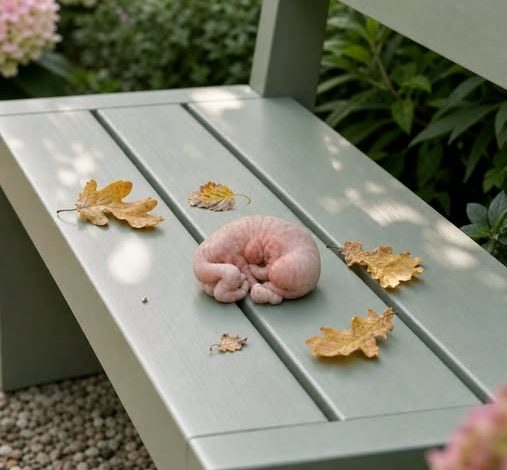
An ordinary morning walk in the park became unsettling when a dog refused to approach a small pale object lying beside the path. The animal stopped abruptly, trembled, and pulled away. From a distance, the shape did not look clearly human, but it also did not resemble any familiar animal. Its size and fragile appearance made the discovery difficult to understand.
The walker sat on a nearby bench and watched, torn between curiosity and caution. The dog’s reaction made approaching feel unwise. Animals often notice scent or movement that people miss, so the safest choice was to keep the leash short, maintain distance, and avoid touching something that might carry disease or attract a protective adult animal.
After several minutes, the object remained still. It appeared small, hairless, and incomplete, with delicate limbs and skin that made identification especially hard. Wildlife in very early stages of development can look dramatically different from the adult species, which is why guesses based on ordinary animal shapes were unsuccessful.
The walker took a few photographs without moving closer. The dog continued whining and seemed eager to leave, so they walked away rather than disturb the scene. Later, the pictures were shown to friends and neighbors. Suggestions ranged from a newborn rodent to a bird or an unusual plant growth, but none of the early answers felt convincing.
The images were eventually posted in a local group and compared with photographs on wildlife forums. That search produced the answer: the object appeared to be a squirrel embryo, an unborn baby squirrel. Its development had ended before the features people associate with a squirrel—fur, a recognizable tail, and a familiar head shape—had fully formed.
How it reached the path could not be known with certainty. A pregnant squirrel might have been injured, a predator could have disturbed a nest, or the embryo might have been carried from another location. Without evidence, selecting one explanation would turn an observation into a story that the scene could not support.
The identification transformed fear into sadness. What had seemed alien was a very young form of one of the park’s most common animals. The fragile body represented a life interrupted before it could become the quick, tree climbing creature people would have recognized immediately.
Wildlife specialists generally advise leaving dead or vulnerable animals undisturbed unless they create an immediate public hazard. Bare hands should not be used, and pets should be kept away. If the object is on a busy playground or walkway, local park staff, animal control, or a wildlife rehabilitation organization can decide whether removal is appropriate.
Dogs may react strongly to wildlife remains because smell gives them information unavailable to their owners. Their fear does not necessarily mean the object is supernatural or especially dangerous. It can simply be a response to unfamiliar scent, injury, decay, or the presence of another animal nearby.
The incident also shows why online identification should remain cautious. A single photograph can flatten size, distort color, and remove environmental context. People may offer confident answers based on resemblance alone. Comparing several images and consulting people familiar with local species produces a more reliable conclusion.
For the walker, the park no longer felt quite as ordinary. The path had revealed a private moment from the natural world, exposed where joggers, pets, and families passed. Nature includes beginnings and losses that happen without witnesses, and human attention does not make them less real or more easily explained.
The dog’s refusal to approach turned out to be sensible. Keeping distance protected both animal and owner while allowing the discovery to be documented. The answer was not a monster or mysterious creature but a squirrel embryo, vulnerable and unfinished. The brief encounter became a reminder that quiet tragedies exist beside everyday routines, often unnoticed until something makes us stop.