Billy Ray Cyrus Shares Dolly Partons Whole Heart Message as Miley Remembers Music and Metamorphosis
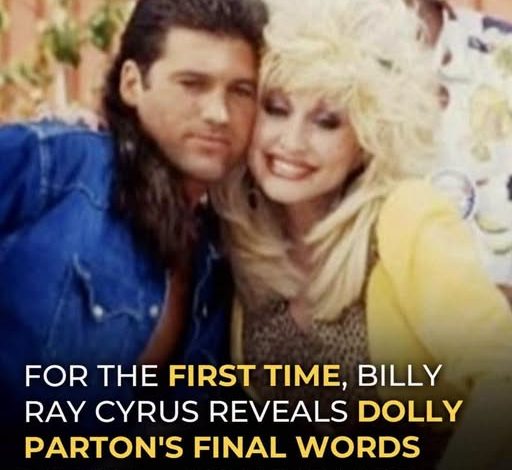
Billy Ray Cyrus has reflected on one of the last messages he received from Dolly Parton, a longtime friend who became godmother to his daughter Miley. The private note was simple: Dolly told him she loved him with her whole heart. After her death at 80, those words carry the weight of a final farewell even though they were sent as an ordinary expression of affection.
Billy Ray and Dolly’s friendship stretched back to the early 1990s, when his song Achy Breaky Heart made him a major country star and he toured with Parton. Miley was born in 1992, and Dolly accepted the role of godmother. What began as a professional connection developed into a family bond that lasted through decades of changes in all three careers.
Parton appeared as Aunt Dolly on Hannah Montana, the Disney Channel series that turned Miley into a global teenage star. The role reflected their real relationship while giving viewers a warm, humorous version of it. Off camera, Dolly offered advice about performance, business, public criticism, and the challenge of growing beyond an image created at a young age.
Billy Ray remembered her as someone who could make a person laugh while delivering wisdom without sounding formal. His tribute included memories of her ability to recognize the theatrical side of the music business. She understood that glamour, humor, and storytelling could coexist with serious craft.
The last message mattered because Dolly made time to say affection directly. People often assume close friends already know how they feel, but spoken or written words become precious after a death. Billy Ray did not need an elaborate final statement. The clarity of being loved with her whole heart was enough.
Miley described her own grief as too private and large to express completely. She said that sacred moments would remain between them, behind the stage and beneath the glamour. By protecting some memories, she preserved the difference between a public tribute and the relationship itself.
One of their final conversations concerned music and metamorphosis. The subjects were fitting for both artists. Dolly continually reinvented her work without abandoning her roots, while Miley moved through dramatic creative phases after childhood fame. Transformation did not mean erasing the past; it meant carrying recognizable qualities into a new form.
Miley believed her godmother would want her to feel the loss, write a song about it, and then continue with strength. That imagined instruction reflects the practical way Dolly approached hardship. Music was not an escape from emotion but a method of shaping it into something that could be shared.
Their bond also produced recordings. Dolly and Miley performed together, and Parton appeared on Rainbowland. Miley later joined Dolly on a version of Wrecking Ball for the Rockstar album. Those collaborations allowed the family relationship to become part of both artists’ musical histories.
Dolly’s death after a brief battle with cancer prompted tributes from performers across genres and generations. Billy Ray and Miley’s messages stood apart because they came from people who knew her as more than an icon. Their public words acknowledged the star while keeping the private woman at the center.
For Billy Ray, the final note now marks the end of a friendship that survived fame, touring, family changes, and time. For Miley, the loss means continuing without the mentor she called Aunt Dolly. Both can return to conversations, recordings, jokes, and advice even though no new message will arrive.
Dolly Parton’s last communication did not attempt to summarize her life. It expressed love and trusted the recipient to understand everything behind it. Billy Ray’s decision to share the message gives fans one small glimpse of how she treated people near the end: directly, generously, and with her whole heart.