“Dawson’s Creek” actress Busy Philipps has opened up about being diagnosed with a brain tumor at 47.
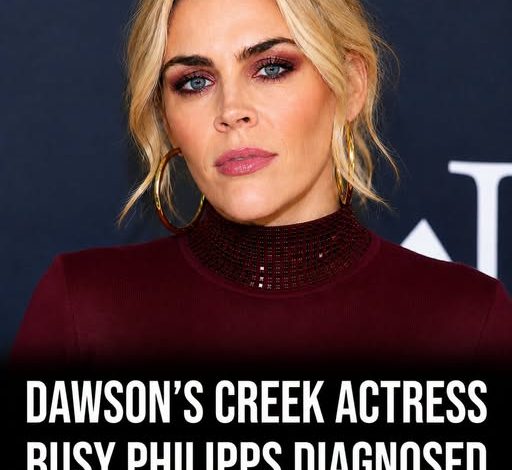
Busy Philipps has revealed that she went through an extraordinary health ordeal after doctors discovered a rare brain tumor earlier in 2026. The 47-year-old actress, known for television series including “Dawson’s Creek,” “Freaks and Geeks” and “Cougar Town,” discussed the experience publicly after keeping much of it private while she underwent treatment and recovery. Philipps described the previous six months as among the strangest of her life.
What made the discovery particularly unexpected was that she had not been experiencing the type of obvious neurological symptoms that might ordinarily lead someone to suspect a brain tumor. Instead, the abnormality was discovered after she decided to undergo a full-body MRI scan. Philipps told PEOPLE that she had previously considered getting a full-body Prenuvo MRI after hearing about the scans, including through information she had encountered on social media.
She had discussed the idea with her primary-care physician, who did not believe she needed the examination because other testing suggested she was healthy. Philipps nevertheless remained interested in obtaining the scan. After subsequently discussing it with a physician in her extended family, she decided to proceed. That personal decision unexpectedly led to the discovery that would dominate the next several months of her life. The scan was performed in February 2026 and detected a lesion in her brain.
Philipps did not go into the appointment expecting such a finding, and the discovery required additional medical investigation rather than providing an immediate definitive diagnosis. A lesion visible on imaging can have different possible explanations, so further evaluation was necessary. Philipps underwent additional imaging and was eventually connected with specialists who could determine what doctors were seeing. The process transformed what had begun as an elective examination into a serious neurological investigation.
After reviewing the additional imaging, neurologist Dr. Orrin Devinsky delivered the news Philipps had feared. She recalled being told that the abnormality was indeed a tumor and that it needed to be surgically removed. The conversation was understandably overwhelming. Philipps has described struggling to breathe normally while processing what she was hearing. Until that point, she had been living her ordinary life without knowing that a tumor was growing inside her brain. Suddenly, she was confronting the prospect of neurosurgery.
The diagnosis was especially difficult because Philipps is the mother of two children, Birdie and Cricket. One of the hardest parts of the experience was explaining the situation to her family without allowing the uncertainty surrounding the diagnosis to overwhelm them. Her eldest child, Birdie, was in the senior year of high school. Philipps recalled trying to reassure Birdie that the diagnosis did not automatically mean that the worst possible outcome was going to happen. It was a deeply personal conversation between a mother and child taking place while Philipps herself was still attempting to understand what lay ahead.
Philipps was ultimately referred to neurosurgeon Dr. John Golfinos and the medical team at NYU Langone Health. Surgery was scheduled for March 2, 2026. According to the accounts Philipps and her doctors subsequently provided, the operation lasted approximately five hours. Surgeons removed a mass measuring roughly 2.6 centimeters from her brain. The tissue then needed to be examined so doctors could determine exactly what type of tumor she had and what additional treatment, if any, would be required.
Pathology identified the tumor as a grade 2 oligodendroglioma. Oligodendrogliomas are uncommon tumors arising from cells in the brain and are part of the broader family of gliomas. Philipps’ tumor was classified as malignant, an understandably alarming word for any patient to hear. However, malignant brain tumors are not all biologically identical, and prognosis can vary considerably depending on the tumor type, molecular characteristics, grade, location, extent of removal and other individual medical factors.
Dr. Alexandra Miller, Philipps’ neuro-oncologist at NYU Langone, helped provide context for the diagnosis. Miller specializes in treating adults with primary brain tumors and serves as co-director of NYU Langone’s Brain and Spine Tumor Center. She explained to PEOPLE that Philipps’ tumor is considered malignant because of its potential to grow again over time. At the same time, she characterized oligodendroglioma as having a comparatively favorable prognosis among malignant gliomas. That distinction helped put a frightening diagnosis into a more accurate medical context.
Early discovery also proved important in Philipps’ case. Her neurosurgeon explained that discovering the tumor while it remained relatively small made the operation less complicated than it potentially could have become later. Philipps had not experienced seizures, one of the symptoms that can lead to the discovery of certain brain tumors. According to her surgeon’s comments reported by PEOPLE, waiting until the tumor produced that type of symptom could have allowed it to become substantially larger before diagnosis.
The operation itself was therefore only one part of a much larger process. Brain surgery is a major medical procedure even when surgeons are pleased with the result, and Philipps faced the physical and emotional realities of recovery immediately afterward. She has recalled being mobile relatively quickly in the hospital, walking around sooner than people might expect after undergoing neurosurgery. Some of her nurses reportedly worried that her energetic personality might make it difficult for her to slow down sufficiently while her body healed.
Philipps’ determination to return to normal life was understandable. She had professional commitments waiting for her, including work on “Cupertino,” an upcoming CBS legal drama. The project was particularly meaningful to her, and she did not want her diagnosis to completely derail an opportunity she had been excited about. Just weeks after undergoing the operation, she was moving toward returning to work. From the outside, her recovery initially appeared to be progressing remarkably well.
However, another medical problem was developing beneath the surface. During a later dermatology appointment, Philipps’ dermatologist examined the area of her surgical incision and became concerned about its appearance. Philipps sent an image of the incision to her medical team. The doctors agreed that it did not look right and needed attention. What initially seemed like a relatively smooth recovery suddenly became another source of uncertainty.
Doctors determined that Philipps had developed a staphylococcal infection involving the surgical site. Fortunately, according to Philipps, the problem was identified before it developed into a deeper infection. Nevertheless, addressing an infection following brain surgery was not something that could simply be ignored. The complication meant she needed another surgical procedure. Emotionally, that development was difficult because Philipps had already endured the original operation and had begun believing that the hardest stage was behind her.
The second procedure should not be confused with another attempt to remove the original brain tumor. The tumor had already been surgically removed during the March operation. The additional surgery was required because of the postoperative infection at the incision site. For Philipps, however, returning to surgery after making progress in recovery felt like a significant setback. She has described feeling as though she had been pushed back toward the beginning of a process she desperately wanted to move beyond.
After treatment of the infection, Philipps was again able to focus on healing and rebuilding her routine. She ultimately returned to her professional work, including filming “Cupertino.” Her ability to resume acting relatively soon after such a major medical experience became another part of the story she eventually decided to share publicly. Yet her comments also make clear that returning to work did not mean the preceding months had suddenly become easy or insignificant.
One encouraging part of her medical situation is that Philipps currently does not require chemotherapy or radiation therapy following the successful surgical removal of the tumor, according to her public account. That does not mean her medical follow-up is finished. Because oligodendrogliomas can recur, doctors intend to continue monitoring her carefully through regular imaging. PEOPLE reported that she will undergo scans every three months during the next two years, allowing her medical team to watch for evidence of recurrence or other concerning changes.
Regular surveillance is an important distinction when discussing her recovery. Being well enough to return to everyday activities does not mean doctors simply declare the condition permanently resolved and stop checking it. Philipps will remain under specialist care. Her medical team can evaluate future imaging and determine whether anything changes. Treatment decisions involving brain tumors are highly individualized, so her particular treatment plan should not be interpreted as a universal approach for every patient diagnosed with an oligodendroglioma.
Philipps has nevertheless expressed extraordinary gratitude about where she finds herself now. After brain surgery, an unexpected infection and a second operation, she has repeatedly emphasized how fortunate she feels to be alive and recovering. Her comments are not an attempt to minimize the seriousness of what happened. Instead, they reflect her awareness that the tumor was discovered before it became substantially larger and that she had access to specialists who were able to remove it.
Her recovery has also changed the way she thinks about experiences she had before the diagnosis. In later reflections, Philipps discussed previously feeling as though something about her thinking was not quite right. Following surgery and recovery, she said her brain no longer feels “broken.” It is a striking description because she did not initially seek medical evaluation because of classic brain-tumor symptoms. Only afterward could she reconsider certain experiences in light of what doctors discovered.
At the same time, it is important not to transform Philipps’ individual story into a general diagnostic checklist. Brain tumors can cause many different symptoms depending on their location, size and type, while some people may initially have few noticeable symptoms. Many common experiences such as headaches, fatigue, forgetfulness or changes in mood have numerous possible causes and do not automatically indicate a brain tumor. Anyone worried about neurological symptoms should seek individualized advice from an appropriate healthcare professional rather than attempting to diagnose themselves from a celebrity’s experience.
The same caution applies to full-body MRI screening. Philipps believes obtaining information was empowering in her particular situation because her scan unexpectedly detected the tumor early. Her experience represents one individual outcome rather than proof that elective full-body MRI screening is medically necessary or appropriate for everyone. Decisions about screening can involve benefits, limitations, incidental findings, additional testing and individual risk factors. Those questions are best discussed between patients and qualified medical professionals familiar with their circumstances.
What Philipps has emphasized most strongly is the importance she places on being engaged with her own healthcare. She has spoken about trusting her instincts, asking questions and not being frightened simply by having access to medical information. Her comments reflect her personal experience after an examination she chose to pursue led to an unexpectedly important discovery. They should be understood as her perspective on patient advocacy rather than universal medical instructions.
Her diagnosis also arrived during an emotionally intense period connected with her “Dawson’s Creek” family. Philipps appeared on the popular television drama as Audrey Liddell, joining a cast that included Michelle Williams and James Van Der Beek. The friendships formed around the series continued long after the show ended. Those relationships became particularly meaningful as Philipps confronted her own medical crisis in 2026.
Michelle Williams, one of Philipps’ closest longtime friends, was among the people she confided in about the diagnosis. Their friendship stretches back decades, and Williams provided support while Philipps prepared for surgery and recovered afterward. In a remarkable coincidence of timing, Williams publicly honored Philipps during an awards speech on March 1, the night before Philipps was scheduled to undergo brain surgery.
Williams had won an Actor Award for her performance in “Dying for Sex.” During her acceptance remarks, she referred affectionately to Philipps, although the audience did not know what Philipps was privately facing at the time. The following day, March 2, Philipps underwent the operation to remove the tumor. Only months later, after Philipps decided to speak publicly, did the emotional context surrounding that moment become widely known.
Williams continued supporting her friend after surgery, including during the difficult recovery period. Their relationship has long been visible at public events, but Philipps’ health crisis demonstrated that the friendship extended far beyond red carpets and entertainment-industry appearances. When Philipps needed practical and emotional support, Williams was among those who remained close to her. That friendship became one of the deeply personal elements surrounding an otherwise frightening medical experience.
Philipps also received support from her former husband, screenwriter Marc Silverstein, with whom she shares her children. Although the two separated after a long marriage, their shared responsibilities as parents remained particularly important during her health crisis. Serious illness can affect an entire family, and Philipps’ comments make clear that protecting and reassuring her children was one of her greatest concerns throughout the process.
Birdie and Cricket were not simply background figures in the story. Philipps had to decide how much information to share with them while she herself was still confronting uncertainty. For a parent, receiving a serious diagnosis can create two simultaneous emotional challenges: processing personal fear while trying to provide stability for children who may also be frightened. Philipps’ recollection of reassuring Birdie demonstrates how strongly that parental responsibility shaped her response.
The experience also provides a reminder of why accurate language matters when discussing cancer and brain tumors. Philipps’ oligodendroglioma has been described by her specialist as malignant, but that term alone does not explain prognosis. Dr. Miller emphasized that it has a more favorable outlook than other malignant gliomas. Simplifying the diagnosis into either “nothing to worry about” or an inevitably catastrophic condition would therefore misrepresent what her doctors actually said.
Oligodendrogliomas are relatively rare compared with many other cancers. They belong to a group of tumors affecting the central nervous system and require specialist evaluation. Modern classification of these tumors involves not only examining tissue under a microscope but also studying molecular characteristics. Those details help physicians understand the tumor more precisely and guide decisions about surveillance and possible future treatment.
For Philipps, the immediate medical strategy after surgery is observation rather than chemotherapy or radiation. That approach reflects the specifics of her case and the judgment of her treating specialists. If future scans remain stable, monitoring can continue according to the schedule determined by her medical team. If circumstances change, her physicians can reevaluate the available options. The key point is that recovery from surgery does not eliminate the importance of ongoing specialist follow-up.
Philipps’ willingness to discuss the diagnosis publicly also represents a significant shift after months of privacy. During the most uncertain stages, she did not owe the public immediate access to what was happening. Keeping the diagnosis relatively private gave her space to tell her children, undergo surgery and deal with complications before explaining everything to a much larger audience. When she eventually spoke about it, she could describe the experience from a position of greater medical clarity.
That decision is particularly understandable for someone who has spent much of her adult life in entertainment. Philipps has been publicly recognizable since her roles in “Freaks and Geeks” and “Dawson’s Creek,” and she has frequently been candid about aspects of her personal life. A brain tumor diagnosis, however, introduced a different level of vulnerability. Sharing the information only when she was ready allowed her to retain some control over an experience in which so much initially felt beyond her control.
Her account is also notable because it avoids presenting recovery as a perfectly straight line. The first surgery was followed by encouraging progress, but then came the infection. She returned to work, yet she still required continuing medical surveillance. She feels grateful and fortunate, but that gratitude exists alongside the fear and disruption she experienced. Recovery can contain all of those realities simultaneously.
The staph infection illustrates that complexity particularly clearly. Philipps had already undergone major surgery and believed she was moving toward normal life when another healthcare professional noticed something concerning about the incision. She acted on that observation and contacted her surgical team. Doctors determined that further treatment was necessary. Detecting the infection early helped prevent it from becoming a deeper problem, according to Philipps’ account.
Her experience therefore involved several different medical professionals playing important roles. The initial imaging detected the lesion. Neurological evaluation helped establish that the abnormality required surgical treatment. Neurosurgery removed the tumor. Pathology identified what kind of tumor it was. Neuro-oncology helped determine prognosis and follow-up. Later, her dermatologist noticed a potential problem with the incision that led to treatment of the infection.
That sequence demonstrates the multidisciplinary nature of caring for a patient with a brain tumor. Specialists in different fields contribute different expertise, and treatment does not necessarily end when an operation is completed. Follow-up imaging, pathology, infection management and long-term surveillance can all become part of the process. Philipps has repeatedly expressed gratitude for the medical professionals who helped her through those stages.
Professionally, her return to “Cupertino” represented another milestone. The CBS legal drama gave Philipps something beyond medical appointments to focus on as she recovered. Returning to a demanding television production so soon after neurosurgery might sound extraordinary, but Philipps has also acknowledged that medical staff sometimes worried about her tendency to keep moving. Her determination was part of her recovery, while slowing down when medically necessary remained important as well.
The actress’ career has already encompassed several generations of television viewers. “Freaks and Geeks” became a cult favorite despite its relatively short original run. “Dawson’s Creek” placed her within one of the defining teen dramas of its era, and “Cougar Town” introduced her to another large television audience. She later continued acting while also developing work as an author, podcast host and television personality.
That long public career means many people hearing about the diagnosis have followed Philipps since they were teenagers or young adults themselves. News of a serious health problem involving a familiar performer can naturally produce strong reactions. Yet Philipps’ current situation also contains encouraging facts: the tumor was discovered, surgeons were able to remove it, the postoperative infection was treated, and she has been able to return to work while remaining under medical surveillance.
Those details are more informative than sensational descriptions of the diagnosis. A brain tumor is unquestionably serious, but Philipps’ story does not need exaggeration to be compelling. She underwent brain surgery after an unexpected diagnosis, faced a significant postoperative complication, required another procedure and returned to work while preparing for years of follow-up scans. The documented facts already convey the scale of what she experienced.
Philipps herself has framed the experience largely through gratitude. She has questioned how she could have been fortunate enough for the tumor to be found when it was and for the right medical care to be available. Calling herself extraordinarily lucky reflects the perspective she