Dolly Parton Learned She Could Never Have Children After Surgery—What She Realized Later Changed the Way She Saw Her Life
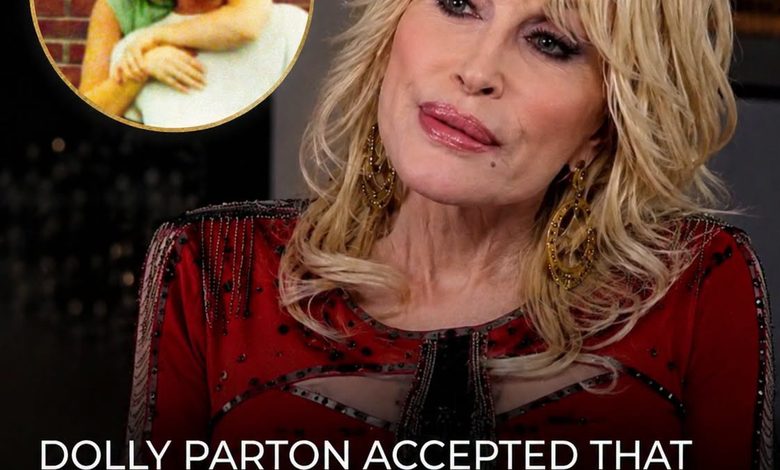
Dolly Parton had already endured the fear of nearly collapsing onstage when doctors delivered another piece of news that would alter the future she once imagined for herself: after undergoing surgery in 1982 for what she described as hormonal and other “female problems,” she learned that she could not have children. The discovery came during one of the darkest periods of her life, when the woman audiences knew for rhinestones, humor and seemingly limitless energy was privately struggling with depression, weight gain and turmoil in her professional world. Years later, Parton would speak openly about how low she had fallen, recalling thoughts so bleak that simply getting through another day had become difficult. She and her husband, Carl Dean, had once done what many young married couples do—wondered what their children might look like and even imagined names for them. A daughter, they thought, might be called Carla. Yet the child they once pictured never arrived. What surprised Parton in the years that followed was not simply that she learned to live with that reality, but that she eventually stopped seeing it as an empty space in her life.
Parton had grown up surrounded by children as the fourth of 12 siblings in rural Tennessee, long before Nashville transformed her into one of country music’s most recognizable stars. She arrived in the city at 18, married Dean in 1966 and spent the following decades building a life unlike the conventional domestic future she might once have expected. Dean fiercely protected his privacy while his wife recorded, toured, acted and expanded her career into an enormous entertainment and business enterprise. Their arrangement suited them. Parton later joked that her husband was like her “only child” and she was his, while describing how the couple instead helped nieces and nephews with college, graduation gifts and other major milestones. She also acknowledged that motherhood had never been an overwhelming ambition for her. When she was younger, she assumed children might simply become part of married life; as the years passed, however, she began to recognize how profoundly raising them would have changed the choices available to her. She believed she would have been a devoted mother—perhaps so devoted that Dolly Parton, the international entertainer, might never have existed in quite the same way.
That realization did not arrive without pain. Parton described the early 1980s as an emotionally punishing period, and she credited working with Sylvester Stallone on Rhinestone with helping restore some of the laughter and energy she had lost. As she recovered, the question of children gradually became less about what had been taken from her and more about what she could do with the life that remained. Decades later, when asked whether she regretted never becoming a mother, her answer was remarkably uncomplicated: she had not missed it as much as she once imagined she might. She knew herself well enough to believe that if she had had children, she probably would have stayed home more, worried constantly about them and felt guilty whenever work pulled her away. Touring, songwriting, films and the relentless demands of her career would have competed with a responsibility she would have taken extremely seriously. “Everything would have changed,” she reflected, even suggesting that she probably would not have become a star. Then the woman who never had children began building something that would eventually place millions of them inside the story of her life.
Parton founded the Imagination Library, a literacy initiative designed to put books directly into the hands of young children, and the project eventually expanded far beyond her Tennessee roots into an international program. The supplied article reports that the initiative has distributed more than 300 million books worldwide, an extraordinary extension of the philosophy Parton repeatedly expressed in interviews: perhaps she had not been meant to have children so that, in another sense, many children could become hers. Her reasoning also connected directly to the economics of time and opportunity behind an extraordinary career. In conversation with Oprah Winfrey, Parton acknowledged the sacrifices required by decades of near-constant work—missed time with family and friends, fewer vacations and a schedule she characterized as essentially year-round. Dean’s independence and their child-free marriage gave her professional freedom that she believed was fundamental to her success. That freedom created not only hit records, films and businesses, but the financial resources, public platform and organizational reach necessary to support other families. What had once looked like a closed door had, without erasing what might have been behind it, opened onto an entirely different kind of legacy.
Perhaps that is why Parton’s reflections on motherhood have remained so striking: she never needed to pretend that the other life had been unimaginable. She and Dean had imagined children. They had wondered about their faces, talked about their future and even chosen a possible daughter’s name. But growing older allowed Parton to look at the life she actually lived rather than continually measuring it against the one she did not. Daniel-like absolutes never seemed to interest her; she could believe she would have been a good mother while also believing motherhood might have required her to surrender much of what she ultimately created. She could acknowledge sacrifice without calling her life incomplete. And through the Imagination Library, nieces, nephews and generations of children who knew her through books rather than blood, the woman who once learned she would never become a mother found her own expansive definition of what caring for children could mean. Her answer to an unexpected loss was not to deny it. It was to build something enormous around the space it left behind.