Ricky Schroder’s Dolly Parton Tribute Began With Gratitude—Then One Sentence Left Fans Furious
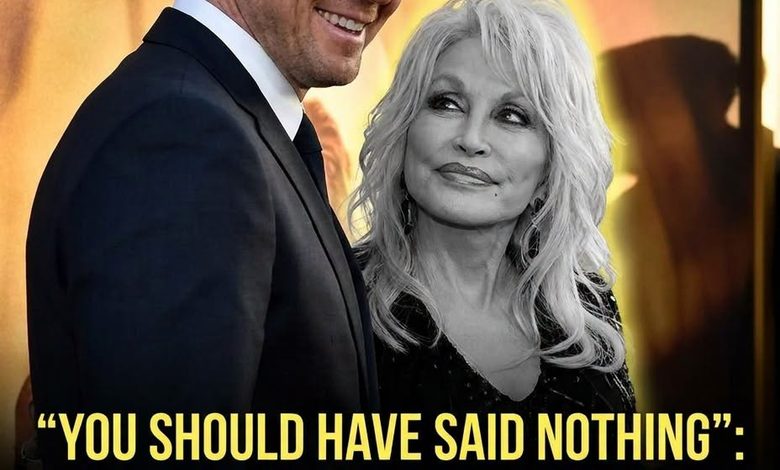
Ricky Schroder’s tribute to Dolly Parton began like the kind of remembrance fans expected after the country legend’s death: personal, grateful and tied to a meaningful chapter from her career. The actor had played Parton’s father in the 2015 television movie Dolly Parton’s Coat of Many Colors, a project rooted deeply in her Tennessee childhood. But when Schroder posted his farewell on August 26, one sentence immediately changed the tone. He thanked Dolly for choosing him to be her “Movie Daddy,” then added that he had disagreed with her support for transgender people and COVID vaccines before saying he loved her anyway. Within minutes, the comment section shifted away from memories of Parton and toward the wording of his tribute. Some followers called it unnecessary and “tone deaf,” while others questioned why a disagreement needed to be included at all in a memorial post. A message intended to honor Dolly had suddenly become a debate about what people should—or should not—say when someone dies.
The reaction was especially intense because acceptance had been one of the most consistent themes associated with Parton throughout her life. She had spoken openly about her large LGBTQ+ following as far back as the 1980s, saying that she judged people by who they were rather than what they did privately. That philosophy appeared not only in interviews but throughout the public persona she carefully built: faith without condemnation, humor without cruelty and an instinct to welcome audiences that might not otherwise occupy the same room. Schroder’s defenders argued that genuine affection does not require ideological agreement and that Dolly herself would probably have accepted a friend whose views differed from hers. Critics, however, saw the phrase “loved her anyway” differently, arguing that it made her beliefs sound like something requiring forgiveness. That tension transformed what might otherwise have been one celebrity remembrance among thousands into a small test of the very tolerance Dolly had spent decades encouraging.
Brandi Carlile’s tribute offered a striking contrast. Carlile wrote that she had loved Parton before ever meeting her partly because Dolly publicly accepted gay people at a time when a star of her stature could easily have avoided the subject altogether. She remembered Parton as extraordinarily generous, quick-witted and selective about which controversies deserved her attention, choosing to speak when she believed compassion could help real people rather than simply adding another opinion to the noise. That description helped explain why Schroder’s post struck such a nerve: for some fans, the controversy was less about whether two friends could disagree than about which part of Dolly’s legacy should occupy the foreground immediately after her death. The broader wave of tributes overwhelmingly focused on her kindness, philanthropy, music and ability to connect with people who otherwise agreed on very little. Against that backdrop, Schroder’s decision to place disagreement beside gratitude became impossible for readers to overlook.
The scale of the reaction also reflected how many different communities had claimed Dolly as one of their own. Political leaders praised the hundreds of millions of books distributed through her Imagination Library and her financial support for vaccine research. Reba McEntire, Tim McGraw, Trisha Yearwood, Blake Shelton and other country stars remembered someone who combined enormous professional influence with personal warmth. Billy Ray Cyrus shared a recent message from Dolly telling him she loved him with her “whole heart,” while Jane Fonda described her as playful, profound and fiercely loyal. Carrie Underwood’s tribute became one of the most celebrated, with fans praising her description of Dolly as a woman defined by faith, grace, humor and a gift for making people feel special. Even Barbra Streisand’s much shorter farewell became a discussion of its own, with some fans disappointed by its brevity and others defending it as appropriately authentic for two peers who were not especially close. The range of reactions showed that there is no single formula for public grief—but also that audiences pay close attention to what a person chooses to emphasize when the person being remembered mattered to millions.
That may be the most revealing part of the controversy surrounding Schroder’s post. Dolly Parton spent much of her life standing in spaces where people disagreed about politics, faith, culture and identity, yet she remained unusually difficult to reduce to any one of those battles. Fans who criticized Schroder believed his tribute briefly did exactly that, while those who defended him saw his willingness to love someone despite disagreement as perfectly consistent with Dolly’s own philosophy. Both responses, in their own way, revolve around the same question she spent decades answering through her behavior: whether affection survives difference. Schroder’s words may never be remembered as one of the most graceful tributes posted after her death, but the debate they created underscored something larger about the woman at its center. Dolly had built a legacy broad enough that conservatives, liberals, country singers, Hollywood actors, LGBTQ+ fans, churchgoers and people who fit several of those descriptions at once could all believe she belonged partly to them. The argument over one farewell ultimately revealed how rare that kind of cultural belonging had become.