Dolly Parton Looked Happy and “Very Dolly” at One of Her Final Outings—But Witnesses Noticed Something Different Behind the Scenes
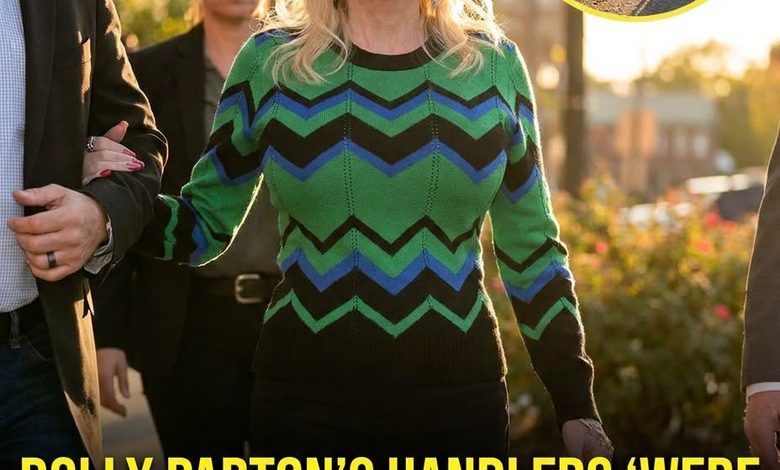
Dolly Parton stepped into the Tennessee heat on June 24 wearing towering stilettos, full glamor, and the kind of smile fans had recognized for decades. Her surprise appearance at the ribbon-cutting for Dolly’s Tennessean Travel Stop outside Cornersville had not been announced, so the crowd reacted with the delighted shock of people suddenly realizing they were standing only feet from a legend. Witnesses remembered her cracking jokes, speaking warmly, and appearing genuinely happy. Nashville concert reviewer Stacy Best later said Parton seemed “not in pain at all,” while Miss Grand Tennessee Amanda Bell described her as the same “happy, spunky self” fans knew. Yet Bell also noticed that Dolly was moving more slowly than usual, and another attendee, Brooks Ramsey, recalled that her handlers were unusually careful with her. At the time, those details seemed minor. Two months later, after Parton’s death at 80, they became some of the most closely examined moments from one of her final public outings.
Parton died on August 25, 2026, at Nashville’s Vanderbilt-Ingram Cancer Center following what her representatives described as a brief battle with cancer, although the specific type was not publicly disclosed. By then, health concerns had already begun reshaping a schedule that once seemed almost impossible to slow down. In August she canceled a Dollywood appearance after telling fans she had been dealing with dizziness and dehydration, joking that doctors had told her she “ain’t traveling this week.” Five days later she appeared virtually to accept the Academy of Country Music Poet’s Award, speaking not about illness but about songwriting as the force behind every dream she had ever seen come true. Even earlier, in an August 11 video about her Broadway musical, she had cheerfully said she planned to attend as much as possible, adding the familiar Southern phrase, “good Lord willing and the creek don’t rise.” Nothing about the remark sounded like a farewell then. In hindsight, it became one of those ordinary sentences whose meaning changed completely because of what happened next.
The more painful revelation came after her death, when reports suggested that the public version of Parton’s health struggles may have represented only part of what she was enduring. Sources described her as having been seriously ill for months and said she intentionally kept the severity of her condition within a small inner circle. Her husband of nearly sixty years, Carl Dean, had died in March 2025, and Parton later acknowledged that while caring for him she had neglected some of her own health problems. In July 2026, she also lost her older brother Coy “Denver” Parton, adding another layer of grief during an already difficult period. Only four days before her own death, she reportedly admitted in a final interview that she was dealing with health issues she had failed to prioritize while looking after Carl. She was hospitalized that same day, August 21. The contrast between those private struggles and the woman witnesses remembered in Cornersville—still joking in five-inch heels—made that June afternoon feel less like a routine promotional appearance and more like a glimpse of how hard she was working to remain herself in public.
Witnesses now remember the event in two layers. Onstage, Parton welcomed the crowd, joked about competing with Buc-ee’s, thanked people for coming and filmed additional promotional material inside the store. Offstage, those around her appeared to be protecting her energy and monitoring how much she did. Ramsey’s observation that her handlers were “careful with her that day” carries particular weight because Parton’s health would increasingly limit travel and public appearances during the weeks that followed. Her slower movement, brief time before the crowd and later cancellations now fit into a larger pattern that had not been obvious in real time. Yet nothing witnesses described suggested defeat. They remembered humor, polished clothes, signature stilettos and a woman determined to participate fully in the few minutes she had chosen to give them. For someone whose public identity had always been built on color, wit and control over her own presentation, that distinction matters: the body may have been asking for caution, but Dolly Parton was still deciding what the audience would see.
That may be why the Cornersville appearance has become so meaningful after her death. People who were there did not come away talking primarily about frailty. They remembered how happy she seemed, how she joked, how she wore heels that most people decades younger would refuse to attempt, and how unmistakably “Dolly” she remained. The warning signs were there, but so was something else: intention. She knew how she wanted to walk into a room, how she wanted fans to remember her, and even during a period of serious illness, she apparently refused to let sickness become the only story surrounding her. Looking back, the most poignant detail may not be that she moved slowly or that handlers stayed close. It is that she showed up anyway, dressed exactly as herself, made people laugh, cut the ribbon and left them believing they had simply witnessed another joyful Dolly Parton moment. Only later did they understand how much effort that moment may have required.