Dolly Parton Once Revealed the Life-Changing Discovery That Came After Her Surgery — and Why She Never Regretted It
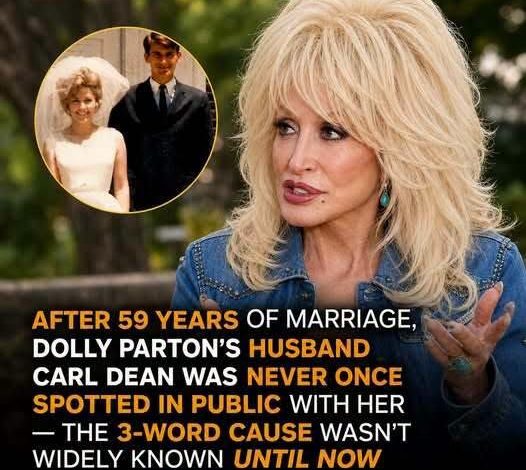
Dolly Parton nearly collapsed under the weight of a life she had chosen.
Fame.
Fortune.
A decades-long marriage.
A career most people could only dream of.
And beneath all of it, one devastating truth she quietly carried for years.
She could not have children.
The girl who had grown up in a tiny cabin in Tennessee, surrounded by eleven siblings and raised in a family where children were everywhere, eventually had to imagine a future without babies of her own.
That reality could have broken her.
Instead, Dolly found a way to transform it.
She turned absence into purpose.
Dolly Parton did not pretend that not having children never hurt.
She understood what motherhood could have meant to her.
She had grown up surrounded by brothers and sisters. She knew what it meant to have a crowded home, family voices filling the rooms, and children growing up side by side.
So the idea of never having a child of her own was not something she could simply dismiss.
There was a life she had once imagined.
A little girl.
A little boy.
A family of her own.
The ordinary experiences that so many people take for granted.
And yet, that life never came.
As Dolly’s career exploded, the decision became even more complicated.
She had built a life that demanded almost everything from her.
Recording sessions.
Concerts.
Travel.
Television.
Movies.
Songwriting.
Business ventures.
Charitable work.
There was always another project waiting.
Another stage.
Another song.
Another opportunity.
And somewhere inside that whirlwind was the realization that motherhood and the career she had created might not coexist in the way she once imagined.
Dolly eventually spoke openly about the fact that she believed she could not have children, and she reflected on what that meant for the life she had chosen.
She did not frame it as though she had simply missed out on something insignificant.
There was a sense of sacrifice.
A recognition that another version of her life might have existed if circumstances had been different.
But she also refused to spend the rest of her life trapped inside that “what if.”
Instead, she poured herself into the people she did have.
She poured love into her marriage with Carl Dean, a relationship that survived decades of fame and extraordinary public attention while remaining remarkably private.
She became deeply involved in the lives of her nieces and nephews.
She supported family members.
She celebrated their milestones.
She helped them when they needed it.
And she continued building the career that had become far bigger than anyone could have imagined when she was a little girl in Tennessee.
Her family may not have looked the way she once pictured it.
But it was still full of love.
And eventually, Dolly found another way to express the part of herself that had always wanted to nurture children.
That path led to one of the most meaningful legacies she would ever create.
The Imagination Library.
What began as an effort connected to children and literacy eventually grew into something enormous.
Books began reaching children who might otherwise have had fewer opportunities to own them.
A child would receive a package.
Inside was a book.
A simple gift.
But for Dolly, that book represented something much bigger.
Possibility.
Education.
Curiosity.
Imagination.
The chance for a child to open a page and discover a world beyond the one immediately surrounding them.
Dolly understood that feeling.
She had lived it.
She had grown up with limited resources, but she had enormous dreams.
She knew that circumstances could make a person feel small.
She also knew that imagination could make the world feel enormous.
And she wanted children to have that opportunity.
The Imagination Library eventually placed hundreds of millions of books into the hands of children.
Children she would never meet.
Children whose names she would never know.
Children who might grow up in completely different circumstances from the ones she experienced.
Yet Dolly continued to think of them as part of something much larger.
A family of sorts.
A generation of children she could help simply by giving them access to stories.
That is why one of her most memorable explanations of not having children carries so much emotional weight.
In her reflections about motherhood, Dolly said she believed God had kept her from having children so that “everybody’s kids could be mine.”
To some people, that might sound like a beautiful line from a celebrity.
But when you understand the life behind it, it becomes much more powerful.
Because Dolly didn’t simply say it.
She lived it.
She turned her resources toward children.
She built programs around them.
She helped provide books.
She encouraged education.
She used her name and influence to create opportunities.
She found a way to make children part of her legacy even though she never became a mother in the traditional sense.
And perhaps that was how she made peace with the life she had not lived.
She didn’t erase the loss.
She transformed it.
That distinction matters.
People often talk about sacrifice as though it is a clean transaction.
You give something up.
You receive something else.
Everything balances perfectly.
Real life rarely works that way.
Sometimes you can be grateful for the life you have while still wondering about the life you might have had.
Sometimes you can know that a decision was right for you and still feel pain about what it cost.
Sometimes acceptance does not mean forgetting.
It means learning how to carry the unanswered questions without allowing them to consume you.
Dolly seemed to understand that.
She built an extraordinary life, but she never needed to pretend it was the only life she could have imagined.
There was another possibility.
There was a family she might have had.
There were children who might have called her Mom.
But instead of allowing that absence to become the definition of her story, she asked a different question.
What can I do with the love that I still have?
The answer was remarkable.
She gave it away.
She gave it to family.
She gave it to friends.
She gave it to fans.
She gave it to children.
She gave it through music.
She gave it through books.
She gave it through philanthropy.
She gave it through the simple act of making other people feel as though their dreams were worth pursuing.
That is why the story of Dolly’s childlessness should never be reduced to tragedy alone.
There was sadness in it.
There was sacrifice.
There were undoubtedly moments when she wondered what motherhood would have felt like.
But there was also transformation.
She took something she could not change and built something meaningful around it.
Her nieces and nephews became important parts of her life.
She celebrated their accomplishments.
She supported them.
She loved them.
And they gave her another connection to the experience of watching younger generations grow.
It was not the same as having children of her own.
Dolly never needed to pretend it was.
But love does not always follow the shape we expect.
Sometimes family expands in unexpected directions.
Sometimes the people who become closest to you are not connected to you in the traditional way.
And sometimes a person’s influence can reach far beyond their immediate household.
Dolly’s influence eventually reached millions of children.
A book arriving at a child’s home may seem like a small thing.
But small things can change lives.
A child discovers a love of reading.
That child performs better in school.
That child develops a larger vocabulary.
That child begins imagining a different future.
Maybe that child becomes a teacher.
Maybe a writer.
Maybe a scientist.
Maybe a parent who later gives books to their own children.
You cannot always see where one small gift ends.
That is the beauty of Dolly’s approach.
She understood that generosity does not need to be dramatic to be powerful.
A book is small.
A child’s imagination is not.
And perhaps Dolly saw something of herself in that relationship.
She had been a child with limited means and enormous dreams.
She knew what it felt like to imagine something bigger.
She knew that a person’s starting point does not have to determine their destination.
So she gave children tools to imagine.
Not promises.
Not guarantees.
Just possibilities.
And sometimes possibility is the most valuable gift anyone can give.
The irony is that the woman who never had children of her own became one of the most recognizable advocates for children’s literacy.
Her personal absence became connected to a public mission.
The pain she carried quietly helped shape something that would outlive her.
That is a remarkable transformation.
It is also why her story resonates with so many people.
Because almost everyone has some version of an unlived life.
A road not taken.
A dream that never happened.
A relationship that ended.
An opportunity that disappeared.
A future that looked possible until suddenly it wasn’t.
Dolly’s story shows that an unlived life does not have to become a wasted life.
You can grieve what you didn’t receive.
And still build something beautiful with what remains.
You can acknowledge the dream that didn’t come true.
And still create new dreams.
You can accept that one door closed.
And then spend the rest of your life opening doors for other people.
That is exactly what Dolly appeared to do.
She did not let the absence of children make her life smaller.
She made her purpose bigger.
Her career became bigger.
Her charitable work became bigger.
Her definition of family became bigger.
And ultimately, her legacy became bigger than the question of whether she ever had children.
She became part of the childhoods of millions.
That is an extraordinary legacy for anyone.
And perhaps it was especially meaningful for a woman who had once wondered what motherhood would have looked like.
There is another important part of the story.
Dolly never seemed to believe that success should require her to abandon tenderness.
She could be enormously ambitious while remaining deeply sentimental.
She could build businesses while caring about children.
She could become a global celebrity while still remembering where she came from.
She could fill stadiums and still talk about ordinary family experiences.
That combination was part of what made her unique.
She didn’t become successful by pretending she had no vulnerability.
She became successful while carrying it.
Her inability to have children was one of those vulnerabilities.
But she did not allow the public to define her by it.
She kept working.
She kept loving.
She kept creating.
And eventually, she turned one of the most personal parts of her life into something that benefited people she would never know.
That is why the Imagination Library means so much in the larger story.
It wasn’t simply another charitable project attached to a famous person’s name.
It reflected something deeply personal.
Dolly knew the value of imagination.
She knew the power of stories.
She knew what it meant to grow up dreaming beyond your circumstances.
And she wanted children to have what every child deserves:
the chance to imagine a future before they know exactly how to reach it.
In that sense, the books became more than books.
They became invitations.
Imagine.
Explore.
Learn.
Dream.
Become.
That message was profoundly Dolly.
She had spent her entire life doing exactly that.
Imagine something.
Work for it.
Keep going.
And when you finally have something, share it.
That philosophy explains why her story feels so different from the usual celebrity narrative.
Her legacy isn’t measured only in records sold or awards won.
It is measured in lives touched.
In children reading.
In families benefiting.
In young people finding confidence.
In fans finding comfort in her songs.
In people learning that kindness and ambition do not have to be enemies.
And perhaps that is why the phrase “she never had children” ultimately feels incomplete.
It tells you what she didn’t have.
It does not tell you what she gave.
It does not tell you how many children knew her name.
It does not tell you how many children opened books because of her.
It does not tell you how many people felt encouraged by her story.
It does not tell you how many families were changed in small ways by her generosity.
Dolly’s life cannot be measured by an empty nursery.
It has to be measured by the enormous number of lives she touched.
That does not mean the sacrifice was painless.
It means the sacrifice became part of something larger.
She gave up one version of motherhood and discovered another.
Not the kind that happens around a kitchen table every morning.
Not the kind that involves school pickups, birthday parties, and bedtime stories with your own children.
Something different.
Something spread across generations.
A kind of motherhood expressed through giving.
Through encouragement.
Through books.
Through belief.
Through making children feel as though the world might have room for their dreams.
And perhaps that is why Dolly could look back on her life without defining herself by what she lacked.
She had loved.
She had created.
She had built.
She had helped.
She had inspired.
She had given.
She had lived.
That was enough.
More than enough.
The little girl from the Tennessee cabin who once grew up surrounded by siblings could have spent her life mourning the family she never created.
Instead, she helped create opportunities for other families.
The woman who could not have children became a champion for children.
The woman who could not give one child a bedtime story helped place hundreds of millions of stories into children’s hands.
The woman who never got to watch her own child grow became part of the growth of generations.
That is not the story of a life defined by absence.
It is the story of a life defined by what happened after the absence.
Dolly could not change what happened to her.
But she could decide what it meant.
And she chose meaning.
She chose generosity.
She chose purpose.
She chose love.
That may be the most beautiful lesson in her story.
We cannot always choose the circumstances that shape us.
We cannot always keep every dream.
We cannot always understand why one path closes while another remains open.
But we can decide what we do with what is left.
Dolly did.
She took the life she had.
She poured everything into it.
And then she used that life to make other people’s lives a little brighter.
So when people remember Dolly Parton, perhaps they should not begin with the question of why she never had children.
Perhaps they should begin with what she did instead.
She loved generations.
She encouraged generations.
She gave generations books.
She gave generations music.
She gave generations permission to dream.
And in doing so, she created something that no single child could ever have carried alone.
A legacy that belongs to millions.
The life she imagined did not happen exactly as she once thought it might.
But the life she actually lived became extraordinary.
And perhaps, in the end, that is the hardest and most beautiful truth of all.
Dolly did not get every life she could have imagined.
She got one.
And she chose to fill it with so much love that it reached far beyond the walls of any one family.
She sacrificed one life to fully live another.
And the measure of that life was never what she lacked.
It was how many people she helped believe that their own lives could become something more.