Dolly Parton’s Final Public Appearance Left Fans Reflecting on a Remarkable Career
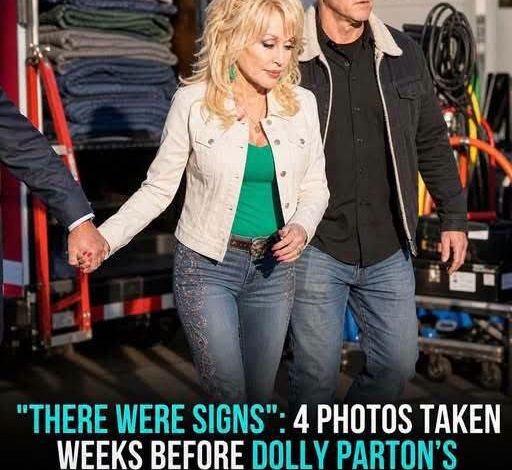
Dolly Parton seemed so composed. So peaceful. So certain.
Fans watched her accept the ACM Poet’s Award dressed in glowing white, smiling with that familiar warmth, and almost no one imagined they might be witnessing one of her final public moments. There was nothing about the scene that immediately announced an ending. She looked graceful, grateful, and completely in command of herself.
Only later did the details begin to feel different.
The careful styling.
The measured movements.
The calm voice.
The gentle smile.
The soft gratitude hiding something the audience could not yet fully understand.
At the time, viewers saw Dolly doing what she had done throughout her career: standing in front of people, accepting an honor, telling stories, making them smile, and expressing gratitude for the life and work that had brought her there.
But hindsight has a way of changing ordinary moments.
A gesture that once looked routine suddenly feels significant. A pause becomes something you remember. A quieter voice sounds almost like a farewell, even if nobody in the room understood it that way at the time.
In those last appearances, Dolly Parton offered the world a final masterclass in grace.
The woman who had needed help walking at a Tennessee ribbon-cutting was the same woman who later sat poised in white, speaking gently and confidently about songwriting, creativity, and comfort.
At first, those images might seem contradictory.
They weren’t.
Both were true.
There was the physical frailty of a body under strain, and there was the remarkable steadiness of a spirit that remained determined to keep giving.
One image showed the limitations of the body.
The other showed the freedom of the mind.
And Dolly seemed to understand that those two realities could exist at the same time.
She could be tired and still grateful.
She could be physically limited and still creatively alive.
She could acknowledge that life was changing without allowing that change to become the only thing people saw when they looked at her.
Rather than dwell on illness, she repeatedly turned the conversation back toward the things that had always mattered most to her.
Music.
Community.
Children.
Creativity.
Faith in possibility.
And the projects she believed could continue long after she was no longer personally standing at the center of them.
She spoke about work that could outlive her, including libraries filled with children’s books, a Broadway musical, plans connected to a museum and hotel in Nashville, and the quiet, steady work of the Dollywood Foundation.
That detail is important because Dolly’s career was never simply about being famous.
She built things.
She invested in ideas.
She created opportunities.
She seemed to understand that a meaningful legacy is not something you simply leave behind at the end of your life. It is something you construct while you are still here, piece by piece, so that other people can continue using it when you’re gone.
Her children’s literacy efforts are a perfect example.
A book arriving in a child’s hands may seem like a small thing compared with a sold-out concert or a major television appearance. But for the child receiving it, that book can become a doorway into another world.
The same philosophy appeared in her approach to music.
Songs can outlive their writers.
Stories can travel further than their storytellers.
Ideas can continue growing after the person who first imagined them is no longer there to watch.
Dolly appeared to understand that deeply.
Her final months were not necessarily a denial of pain.
They were a deliberate choice about focus.
She acknowledged her limits.
She postponed appearances when necessary.
She listened to doctors.
She allowed herself to slow down.
But she also refused to allow illness to become the only language surrounding her final chapter.
Instead, she continued choosing humor, hope, gratitude, and creativity.
That choice may have been one of the most authentically Dolly things she could have done.
She had spent decades turning difficult experiences into songs and painful memories into stories people could laugh about. She understood that suffering does not always disappear simply because you smile, but she also understood that joy can exist alongside pain.
You don’t have to pretend everything is perfect to appreciate what is still beautiful.
You don’t have to deny fear to choose hope.
And you don’t have to know exactly how much time remains to make the time you have meaningful.
That philosophy seemed to shape the way she approached those final public moments.
She wasn’t trying to convince everyone that nothing had changed.
She was simply refusing to let the changes erase everything that remained.
There was still music to talk about.
There were still people to encourage.
There were still projects worth dreaming about.
There were still children who could receive books.
There were still audiences who needed a reason to laugh.
There were still stories waiting to be told.
And there was still gratitude.
For many fans, that is what makes her last public appearances so powerful.
They don’t necessarily feel like a slow fading.
They feel like a gentle, luminous insistence that life can remain meaningful even when circumstances become difficult.
That creativity can continue even when the body begins to slow down.
That kindness can survive hardship.
That dreams don’t necessarily belong only to the person who first imagined them.
Sometimes, dreams become bigger than their creator.
A song becomes someone’s favorite memory.
A book becomes a child’s first love of reading.
A park becomes a family’s annual tradition.
A foundation becomes a source of opportunity for people who never had the chance to meet its founder.
And a simple sentence spoken on a stage can stay with someone for years.
That may be the deeper meaning behind Dolly’s final public moments.
She wasn’t simply accepting awards or talking about projects.
She was demonstrating something about how she wanted to be remembered.
Not as a woman who never struggled.
Not as someone untouched by pain.
Not as a celebrity who remained perfectly composed until the very end.
But as someone who, even while facing limitations, continued looking outward.
Continued creating.
Continued giving.
Continued dreaming.
Her calmness was not necessarily proof that everything was easy.
It may have been proof that she knew what deserved her attention.
Illness could take energy.
Time could take strength.
Life could change plans.
But none of those things had to take away her ability to be grateful.
And perhaps that is why the image of Dolly in white has remained so powerful for the people who watched it.
She looked luminous.
Not because she was untouched by darkness, but because she had spent a lifetime learning how to carry light into it.
For many fans, those final appearances will therefore be remembered not as moments of loss, but as moments of extraordinary grace.
A woman facing uncertainty without allowing uncertainty to define her.
A songwriter still thinking about songs.
A dreamer still thinking about dreams.
A giver still thinking about what she could leave for others.
And a woman who seemed to understand that the most beautiful ending is not necessarily one where everything is finished.
It is one where the work continues.
The books keep arriving.
The music keeps playing.
The laughter keeps traveling.
The dreams keep moving forward.
And even after their author steps away from the spotlight, the things she created continue speaking in her voice.