The Iconic Hollywood Actor, D.i.e.s at 65… See more
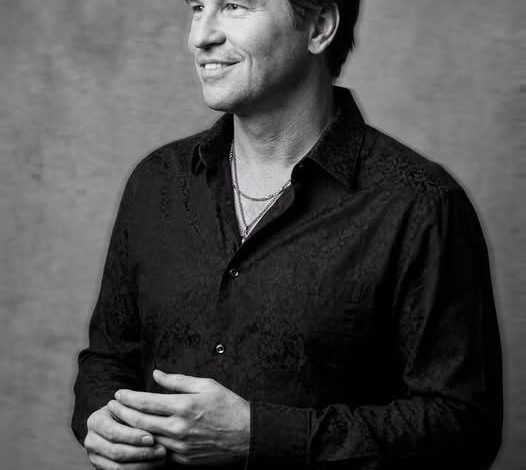
He was supposed to be untouchable.
The smirk behind the aviators. The haunted poet commanding the stage. The gunfighter staring down death with a cough and a grin. The larger-than-life presence who could walk into a scene and make everyone else disappear.
Then, on April 1, 2025, the news broke—and Hollywood stopped.
Tributes poured in from colleagues, friends, and fans who had spent decades watching Val Kilmer transform himself into unforgettable characters. But beneath the headlines and familiar clips was a deeper story, one that had little to do with fame and everything to do with resilience.
Because behind Iceman, Jim Morrison, Doc Holliday, and Batman was a man who spent much of his later life confronting something no performance could defeat: time.
For decades, Kilmer seemed almost impossible to break. His confidence could feel intimidating. His performances were intense enough to blur the line between actor and character. He possessed the kind of screen presence that suggested he could simply will himself through anything.
But real life doesn’t follow a Hollywood script.
His health began changing.
His voice became increasingly difficult to use.
The body that had once carried him through demanding performances could no longer be taken for granted.
And suddenly, the actor who had spent his career controlling characters was forced to confront the loss of control over his own body.
Yet he refused to disappear.
That may have been his most important performance of all.
Even as illness changed his voice and limited what he could physically do, Kilmer continued searching for ways to create. Technology helped him communicate. Art gave him another language. Writing, painting, performance, and film allowed him to keep expressing the part of himself that illness couldn’t take away.
For someone whose identity had been so closely connected to his voice and physical presence, that adaptation required extraordinary courage.
He had to find another way to be heard.
And he did.
Colleagues remembered the intensity that had always followed him, but they also remembered something audiences didn’t always see: vulnerability.
Kilmer could obsess over a single line, searching for exactly the right rhythm or emotion, and then suddenly break the tension with an unexpected laugh.
He could be difficult because he cared deeply.
He could be demanding because he believed the work mattered.
And he could be deeply funny when the seriousness finally became too much.
That complexity was part of him.
He was never easily reduced to a single description.
He wasn’t simply the brilliant actor.
He wasn’t simply the difficult actor.
He wasn’t simply the Hollywood heartthrob.
He wasn’t simply the man battling illness.
He was all of those things at once.
And perhaps that is why his later years resonated so strongly with people who had never met him.
Fans who remembered the fearless Doc Holliday eventually watched the same man confront his own mortality.
The contrast was painful.
The younger Kilmer seemed to stare directly into danger and dare it to blink first.
The older Kilmer had to acknowledge that some battles cannot be won by sheer force.
But accepting that reality wasn’t surrender.
It was another form of courage.
His illness forced him to redefine what strength meant.
Strength wasn’t always shouting.
It wasn’t always standing tall.
It wasn’t always being the loudest person in the room.
Sometimes strength was waking up and finding another way to communicate.
Sometimes it was continuing to create when your body had become an obstacle.
Sometimes it was allowing people to see your vulnerability without pretending you weren’t afraid.
And Kilmer increasingly did exactly that.
His story became less about preserving the image of the invincible movie star and more about allowing people to see the human being underneath.
That human being had regrets.
He had ambitions.
He had complicated relationships.
He had enormous artistic pride.
He had pain.
He had humor.
He had a deep desire to keep creating even when creation became harder.
The world often remembers actors through their most iconic roles.
For Kilmer, there were many.
Iceman’s cold confidence.
Jim Morrison’s dangerous charisma.
Doc Holliday’s dying brilliance.
Batman’s brooding authority.
Each character seemed to contain a different piece of the actor himself.
But perhaps the most revealing character was the one he never played.
The man facing a body that was changing.
The man learning to communicate differently.
The man discovering that fame couldn’t protect him from illness.
The man who continued anyway.
That story doesn’t have the neat ending of a screenplay.
There is no triumphant final scene where everything is restored.
No magical cure.
No return to the person he had been decades earlier.
Instead, there was adaptation.
There was persistence.
There was acceptance.
There was art.
And there was an increasingly honest relationship with mortality.
When fans look back at his career now, the performances carry another layer.
Every confident line feels more fragile.
Every grin seems more precious.
Every scene reminds us that the person who appeared invincible on screen was always human behind the camera.
That’s perhaps the strange bargain of acting.
We remember fictional characters as though they are immortal.
But the people who created them are not.
Eventually, the lights go out.
The sets are dismantled.
The costumes are stored away.
The credits roll.
What remains are the performances—and the memories attached to them.
For Val Kilmer, those memories are unusually powerful because his later life gave audiences another way to understand the man behind the roles.
He showed that a person can lose pieces of themselves without losing everything.
A voice can change.
A body can weaken.
A career can slow.
But creativity can survive.
Curiosity can survive.
Humor can survive.
The desire to be seen can survive.
And sometimes, surviving means refusing to become a monument to the person you used to be.
It means becoming someone new.
That is what makes Kilmer’s story more than a Hollywood obituary.
It is a story about identity.
About what happens when the thing you believed defined you is taken away.
About discovering that you are still there afterward.
His final chapter was never going to compete with the mythology of his younger years.
It didn’t need to.
The man who once played heroes and antiheroes eventually became something more complicated and more recognizable: a human being confronting the limits of his own body while refusing to surrender his imagination.
And perhaps that is why his legacy will endure.
Not because he was perfect.
Not because every role was effortless.
Not because his personality was always easy.
But because he dared to be complicated.
Difficult.
Brilliant.
Vulnerable.
Funny.
Proud.
Broken in places.
And still determined to create.
The world may remember the aviators, the smirk, the gunfighter, the rock star, the superhero.
But underneath all of those faces was a man who eventually had to face the one opponent no actor can defeat.
Time.
And when that fight became impossible to win, he did something remarkably human.
He kept going.
That is the part of Val Kilmer’s story that may outlive every movie credit.
Not the illusion that he was untouchable.
But the proof that even when life finally touched him, he refused to disappear.