The 7 kilo baby who amazed the world in 1983 this is how it looks today, at the age of 40
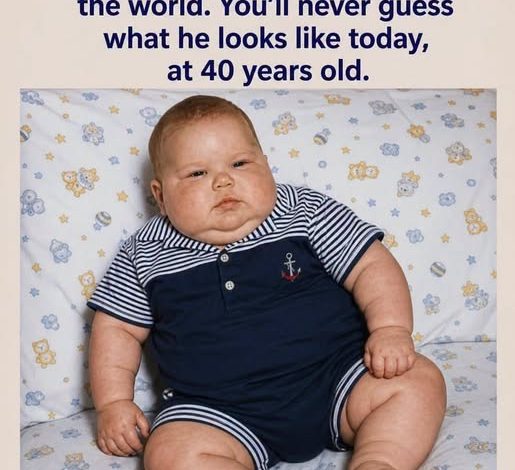
In 1983, reports of a newborn weighing about seven kilograms, or roughly fifteen pounds, drew worldwide attention. A baby of that size was far outside the average range, making the birth a medical and human-interest story that newspapers and television programs could not resist.
Most full-term newborns weigh much less. A seven-kilogram birth can be described as macrosomia, a term used for babies whose birth weight is unusually high. Such deliveries require careful medical planning because increased size can raise risks for both the baby and the mother.
Possible factors include genetics, a pregnancy extending beyond the expected term, maternal diabetes, and previous large births. None of those explanations should be assigned to this individual without medical records. A number printed in a headline does not reveal the mother’s health, the course of labor, or the child’s condition after delivery.
The 1983 story became memorable because the weight was easy to compare and difficult to imagine. Photographs of a large newborn beside medical staff or ordinary-sized objects made the contrast more dramatic. The baby was often described as having “stunned the world,” language typical of human-interest reporting at the time.
Decades later, social posts began promising to show what the child looks like at age forty. Those claims should be approached carefully. Old birth stories are frequently recirculated with photographs of unrelated adults, incomplete names, or details copied from another case. A modern image placed beside an archival photograph is not proof that the two people are the same.
The source account does not provide a complete, verifiable public biography of the adult. That absence matters. It would be easy to invent a career, family, health history, or current appearance to satisfy curiosity, but doing so would turn a real person’s life into fiction.
Birth weight also does not determine adult body size. Growth depends on genetics, nutrition, health, environment, and many other factors. A very large newborn may become an average-sized adult, while a smaller baby may grow into a large adult. The surprising measurement from one day in 1983 cannot predict four decades of development.
There is a privacy question as well. The newborn did not choose international attention. As an adult, that person is entitled to live outside the public record if desired. A historical article can discuss the extraordinary birth without treating current photographs or personal details as something the internet is owed.
Medical teams facing an unusually large baby focus on safe delivery, breathing, blood sugar, injuries, and the mother’s recovery. The public may remember a record or near-record number, but for the family the event involves far more than a statistic.
The enduring interest shows how strongly people respond to extremes. Tallest, oldest, youngest, and heaviest stories offer an immediate point of comparison. Yet those labels capture only a moment. The seven-kilogram baby became famous for a measurement before having any say in the story.
What can responsibly be said is limited but remarkable: a birth reported in 1983 involved an infant weighing around seven kilograms and attracted international notice. Claims about the person’s present appearance require reliable identification and current consent. Without them, the honest ending is not a fabricated reveal but respect for the difference between a famous birth and a private adult life.
Readers can evaluate a claimed update by tracing the adult photograph to its first publication, checking whether the name and birthplace match, and looking for a direct interview or reputable follow-up. Reverse-image results often reveal that a picture has been borrowed from an unrelated profile. If the evidence ends at a social caption, the dramatic “age forty” comparison should remain unverified rather than becoming another invented chapter.