Understanding the Latest Updates on COVID-19 Vaccination Research-
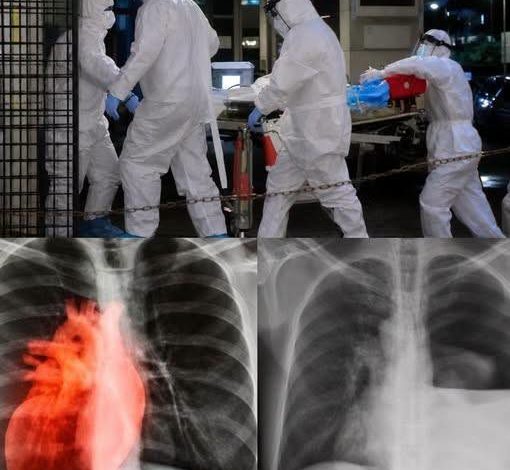
A quiet warning may be pulsing inside a small number of vaccinated hearts. New Stanford research has uncovered a surprising immune twist that could help explain rare cases of myocarditis following mRNA COVID-19 vaccination. Young men. Inflamed heart muscle. A biological chain reaction that scientists have been trying to understand for years—until now. The discovery does not erase the benefits of vaccination, but it may help explain why a very small group of people experience an unusual inflammatory reaction while the overwhelming majority do not.
For most people, mRNA vaccination does not lead to myocarditis. But in a small subset, particularly younger males, the immune system appears to respond differently. Stanford scientists have been examining the biological signals behind these rare cases, looking beyond the simple question of whether inflammation occurs and asking why it happens in certain individuals.
Their research points toward a specific kind of immune overreaction. The body’s defenses are designed to recognize and respond to the mRNA and the spike protein it temporarily instructs cells to produce. In these unusual cases, however, that immune response appears to become more intense than expected. Instead of quickly settling down after doing its job, the inflammatory reaction may continue strongly enough to affect heart tissue.
That distinction could help explain one of the most puzzling features of vaccine-associated myocarditis: its uneven distribution.
The condition has been observed disproportionately in younger males, while the vast majority of vaccinated people experience nothing similar. That pattern has suggested for some time that biological factors may influence who is susceptible. The new work attempts to connect that observation to a specific chain of immune activity, offering researchers a more detailed explanation for what may be happening inside the body.
The discovery is important precisely because it moves the conversation away from simple arguments of “safe” versus “dangerous.”
A vaccine can provide substantial protection while still producing rare adverse reactions. Understanding those reactions does not automatically mean rejecting the vaccine. In medicine, identifying a side effect is often the first step toward reducing it.
The same principle applies here.
Researchers are trying to understand why the immune system behaves differently in this small group of people and whether that reaction can eventually be prevented. If scientists can identify the biological pathways that contribute to inflammation, they may be able to modify vaccine doses, timing, formulations, or delivery strategies to reduce the possibility of triggering the response.
That could ultimately make future vaccines safer without sacrificing their protective benefits.
The broader comparison also matters. COVID-19 infection itself can affect the heart and is associated with myocarditis and other cardiovascular complications. The risk associated with infection is an important part of any honest discussion about the relative risks and benefits of vaccination. A rare vaccine-associated reaction must be considered alongside the much broader risks created by the disease itself.
For people who do develop myocarditis after vaccination, many cases are manageable with appropriate medical attention and supportive care. But “rare” does not mean “unimportant.” Even a very uncommon complication deserves careful investigation when researchers can identify a biological pattern that might eventually help prevent future cases.
That is what makes the Stanford findings potentially significant.
Instead of simply documenting that myocarditis sometimes occurs, scientists are asking what happens inside the immune system immediately before the inflammation develops. Which signals become amplified? Why do certain people appear more susceptible? What separates a normal immune response from one that becomes excessive?
Those questions could eventually lead to better answers.
They could also help doctors communicate risk more accurately.
For years, discussions surrounding COVID-19 vaccines have often been reduced to competing claims, political arguments, and emotionally charged headlines. But biology is rarely that simple. A medical intervention can have enormous benefits while carrying a small risk. A disease can be mild for one person and dangerous for another. And a rare side effect can be real without making the entire treatment unsafe.
The value of research is that it allows those complexities to be examined rather than ignored.
The new findings do not mean that every vaccinated person should be worried about myocarditis. They do not suggest that most people will experience this reaction. And they do not erase the protection vaccines can provide against serious COVID-19 illness.
Instead, they add another piece to a complicated scientific puzzle.
Young men appear to represent a group in which the rare inflammatory reaction is more likely to occur. Researchers now have a better idea of the immune mechanisms that may contribute to that risk. The next challenge is turning that knowledge into practical improvements.
Perhaps future formulations can avoid the specific immune pathway.
Perhaps dosing schedules can be adjusted.
Perhaps researchers can identify people who are particularly susceptible before the reaction occurs.
Those possibilities remain questions for continued study, but understanding the mechanism is an important step toward answering them.
And that is the reassuring part of the story.
Science does not become stronger by pretending that complications never happen. It becomes stronger by finding them, investigating them, and changing course when the evidence demands it.
A rare case of myocarditis is not something to dismiss simply because it is uncommon. At the same time, a rare adverse event should not be transformed into evidence that vaccines are broadly unsafe.
Both realities can exist at once.
There can be a genuine medical risk for a very small group, while vaccination continues to offer important protection to many others.
The goal is not to choose between those facts.
The goal is to understand them.
By identifying the immune pathways involved in these unusual cases, Stanford researchers may have opened the door to a future in which vaccine-related myocarditis becomes even rarer. The research offers something often missing from polarized health debates: a mechanism that can be tested, a problem that can potentially be reduced, and a scientific process that continues to evolve.
The story is not that vaccines are suddenly unsafe.
It is that researchers are learning more about how the human immune system responds—and how that knowledge might make future vaccines safer.
Science is still watching.
Still questioning.
Still adjusting.
And most importantly, still learning.