What Does It Mean When a Black Cat Enters Your Home Separating Myth From Reality
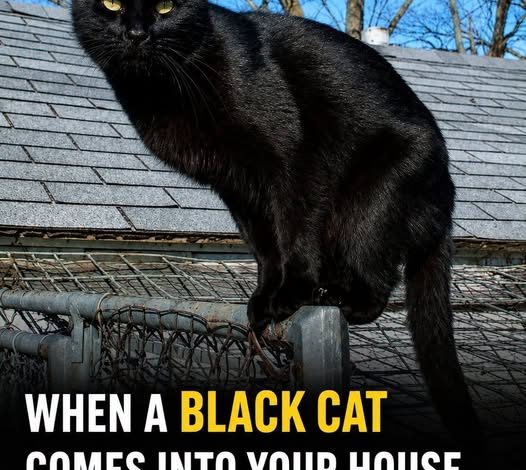
For centuries, a black cat crossing a threshold has been treated as a sign that something unusual is about to happen. Some people see the animal as a warning, while others believe it brings protection, prosperity, or good fortune. Those conflicting ideas reveal more about human history than they do about cats. A black cat entering a home does not carry a universal spiritual message. Its meaning changes from one culture to another, and the animal’s real motivation is usually much simpler than the stories people attach to it.
Ancient societies did not all fear black cats. In Egypt, cats were respected and connected with protection of the home. Harming one could be treated as a serious offense. In parts of Europe, however, attitudes changed during the Middle Ages. Black cats became associated with witchcraft and superstition, particularly when fear of unexplained events was common. Folklore claimed that witches could disguise themselves as cats or send them as companions. Those ideas spread through sermons, stories, and public panic, eventually turning an ordinary coat color into a symbol of danger.
Other traditions developed almost the opposite belief. Sailors and their families sometimes considered black cats lucky because cats controlled rodents aboard ships and helped protect food supplies. In parts of Britain and Japan, encountering a black cat could be viewed as a positive sign. Some communities believed that a black cat arriving at a house predicted money or a happy marriage. The same animal could therefore be feared in one place and welcomed in another, which is strong evidence that the symbolism came from culture rather than from the cat itself.
When a black cat actually approaches a person or walks into a home, practical explanations should come first. It may be hungry, thirsty, cold, frightened, lost, or looking for shelter. Cats are observant and often return to places where they have found calm voices, food, or safety. A friendly animal may belong to a neighbor and simply be exploring. A cat that appears thin, injured, dirty, or unusually anxious may be a stray or a missing pet in need of help.
The safest response is to remain calm and avoid forcing contact. Check whether the cat wears a collar, and ask nearby residents whether they recognize it. A veterinarian or animal shelter can scan for a microchip. If the cat is frightened, give it space and keep children and other pets away until its behavior is understood. Offering water is generally reasonable, but feeding it repeatedly before checking for an owner can encourage a roaming pet to stay away from home. Anyone who decides to shelter the animal should also consider fleas, parasites, vaccinations, and a veterinary examination.
Black cats face a real disadvantage because old superstitions still influence adoption and treatment. Their dark fur can also make them harder to photograph, which sometimes reduces interest on adoption websites. None of that reflects temperament. Coat color does not determine whether a cat will be affectionate, independent, playful, or cautious. Those traits are shaped by genetics, early socialization, health, and individual experience.
A person may still choose to give the visit a personal or emotional meaning. A black cat arriving during a difficult moment might feel comforting, memorable, or symbolic. Personal interpretations can be meaningful as long as they do not replace responsible care or lead to fear of the animal. The most grounded conclusion is that the visitor is a cat first, not an omen. Its arrival is an opportunity to look for an owner, offer safe help when needed, and question a superstition that has followed black cats for far too long.