Remembering a Life: A Reflection on the Passage of Time
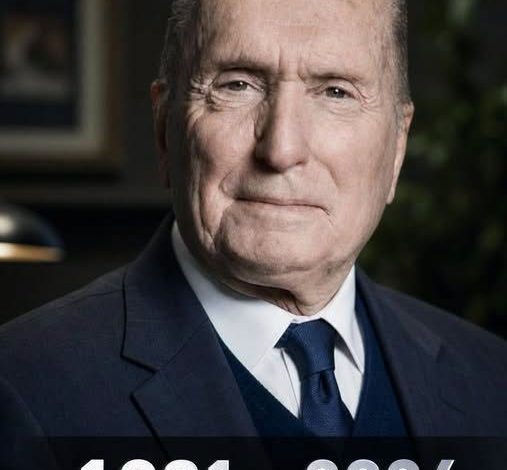
A face. Two dates. And an entire lifetime trapped between them.
The black-and-white portrait of an unknown man marked **“1931–2026”** doesn’t tell us his name, his profession, his dreams, or the secrets he carried through nearly a century of life. There is no biography attached to the photograph, no list of accomplishments, no explanation of who he was to the people around him. And yet, somehow, those two dates and that quiet expression hit us in a place that statistics never can.
Because we rarely stop to think about how much of a human life disappears when it is reduced to two numbers and a hyphen.
**1931–2026.**
A beginning. An ending. And almost ninety-five years hidden between them.
A man born in 1931 would have entered a world that is almost impossible for us to imagine today. His childhood would have unfolded before televisions became a permanent fixture in every living room, before people carried computers in their pockets, before the internet connected billions of strangers across continents. He would have watched the world transform from handwritten letters and rotary telephones into instant messages and video calls.
He would have witnessed wars and peace, economic hardship and prosperity, cultural revolutions and technological miracles. He might have watched humanity place its first footprints on the moon. He would have seen cities change, neighborhoods disappear, buildings rise, and entire generations come and go.
He would have lived through a world that repeatedly reinvented itself.
And yet, despite everything history might have placed in front of him, the most important moments of his life probably weren’t the ones that ever appeared in a newspaper.
They were likely much smaller.
A child’s first steps.
A wedding day.
A conversation that lasted until midnight.
A family gathering around a crowded table.
The sound of someone he loved calling his name.
A birthday candle.
A holiday remembered years later.
A hand held during a difficult moment.
A laugh that everyone in the family knew instantly.
Those are the things that rarely make it into official records, but they are often the moments that make a life feel like a life.
That’s what makes the photograph so powerful.
There is no dramatic background. No grand monument. No explanation of what happened during all those decades. Just a face looking back at us from another time.
And perhaps that is enough.
We instinctively want to know who he was. What did he do? Who did he love? What did he fear? What made him laugh? What dreams did he have when he was young? Did he ever imagine reaching the age represented by that final number?
We’ll probably never know.
But we can still recognize something familiar in his face.
Because every older face carries evidence of time. The lines around the eyes, the expression shaped by decades of experience, the quietness that comes from having lived long enough to understand that life changes whether we’re ready for it or not.
A person born in 1931 would have watched younger people arrive, grow old, and eventually become memories themselves. Friends would disappear. Relatives would pass away. Children would become parents. Parents would become grandparents. The world around him would constantly be replaced by something newer.
And eventually, his own photograph became a record of the generation that had come before us.
That’s the strange cruelty of dates.
They tell us when someone arrived and when they left, but they tell us almost nothing about what happened in between.
The hyphen looks so small.
But inside that tiny mark is a lifetime.
Thousands of mornings.
Thousands of conversations.
Countless meals.
Journeys.
Mistakes.
Successes.
Arguments.
Forgiveness.
Birthdays.
Goodbyes.
Ordinary Tuesdays that meant nothing at the time but became precious memories years later.
A life cannot truly be measured in years.
It is measured in moments.
That’s why a simple portrait can feel heavier than a detailed obituary. An obituary gives us information. A photograph gives us a presence—and then reminds us of its absence.
We look at the man’s face and realize that someone once looked exactly like that while making plans for tomorrow.
Someone once worried about things that no longer matter.
Someone once believed there would always be another morning.
Someone once stood in a room surrounded by people who loved him and probably never imagined that, decades later, strangers would stare at his photograph and wonder about his story.
Now he is gone.
But the fact that we don’t know his biography doesn’t make his life meaningless.
If anything, it makes the image more universal.
He could represent anyone.
A grandfather.
A father.
A husband.
A brother.
A friend.
Or simply a person who spent almost an entire century moving through the world, leaving small pieces of himself behind in the people he met.
And perhaps that’s the lesson hidden inside those two dates.
One day, every one of us will have our own beginning and ending written down somewhere. Two numbers separated by a tiny line.
What will that line contain?
Will someone remember our achievements?
Maybe.
But more importantly, will someone remember our voice?
Our laugh?
The way we made them feel?
The stories we told?
The ordinary moments we shared?
Because when everything else disappears, those are often the pieces of us that remain.
So perhaps the photograph isn’t really asking us to mourn a stranger.
Perhaps it is asking us to remember the value of the people who are still here.
Call someone.
Sit at the table a little longer.
Ask an older relative about their childhood.
Listen to a story you’ve already heard.
Take the photograph.
Say the thing you’ve been putting off saying.
Because a lifetime can disappear into a single hyphen, but while we’re living it, every day is another piece of the story.
And when our own dates are eventually written, the greatest hope isn’t that people remember exactly how many years we lived.
It’s that they remember **how we made those years feel.**