I Was About to Move My Husband Into a Nursing Home — Then I Found a Letter in His Nightstand That Changed Everything
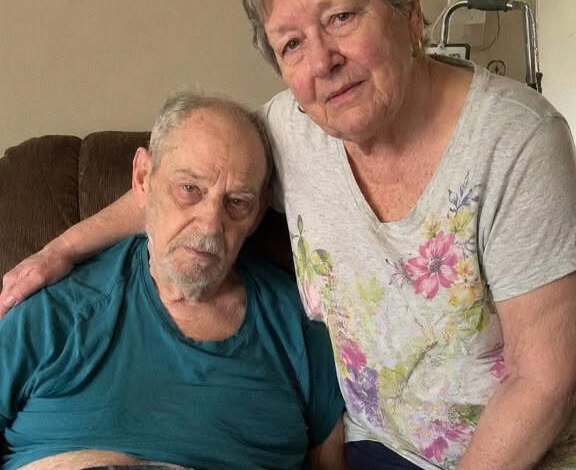
The first line of the letter stopped me cold:
“Linda, if you’re reading this, you waited too long.”
I read it again.
Not I’m sorry.
Not Please don’t send me away.
Just:
You waited too long.
My husband, David, had written the letter seven years earlier—long before his falls, medications, and the day our home became filled with grab bars and pill bottles.
His next words made my hands shake.
“If caring for me has become more than you can carry, you should have asked for help long ago.”
Then:
“You’ll call exhaustion loyalty.”
“You’ll call suffering commitment.”
“You’ll keep saying you’re fine until you forget what fine feels like.”
I broke down crying.
David knew me too well.
He continued:
“Taking care of me doesn’t mean you have to do everything yourself.”
“If I ever need more care than you can provide, get it.”
“A nurse. A facility. A stranger with strong arms and a degree.”
“I don’t care. Just don’t destroy yourself trying to prove you love me.”
That was David.
Practical, even when preparing for a future neither of us wanted.
When he saw the letter in my hands, he simply said:
“You found it.”
He had written it after watching his brother Frank’s wife become completely consumed by caregiving.
“Everyone called her amazing,” David told me.
“But she disappeared.”
He looked at me.
“I didn’t want that to happen to you.”
I insisted I was fine.
He asked when I had last slept through an entire night.
When I had last gone to book club.
When I had last eaten lunch with a friend without worrying about getting home.
I had no answer.
I had stopped living outside of caregiving.
Eventually, I admitted I had toured a nursing home.
“Which one?” he asked.
“Meadow Ridge.”
“Does it have a garden?”
“Yes.”
“Old movies?”
“Yes.”
He smiled.
“Good.”
I stared at him.
“You want to go?”
“No.”
My heart sank.
Then he took my hand.
“But I need more care than you can give me.”
I argued.
I said I could do more.
He shook his head.
“You can’t be everywhere, Linda.”
Then he reminded me of our wedding vows.
“In sickness and in health.”
He smiled.
“They didn’t say one spouse had to become an entire medical staff.”
I almost laughed.
But then he said something I will never forget:
“You’d abandon me if you put me there and stopped coming.”
He squeezed my hand.
“But if you put me there because I need more help, and you visit me, bring my shirts, complain about the coffee, and then go home and sleep…”
“That’s marriage.”
I finished the letter.
The last page nearly destroyed me.
“You may think I’m losing my home.”
“Remember, home was never the building.”
“It was you.”
“If I move somewhere else, bring yourself.”
“Not the version of you who hasn’t eaten.”
“Not the version who apologizes for being tired.”
“You.”
Four days later, we moved him into Meadow Ridge.
The first day was awful.
Not because anything went wrong.
Because I had to leave.
David looked at me and said:
“Go home.”
“Read the letter.”
“I already did.”
“Read it again.”
I kissed him and walked away.
At home, the silence felt unbearable.
For almost two years, every sound had revolved around David—the walker, medication alarms, his cough, his voice calling my name.
Now there was nothing.
I opened the refrigerator and realized I could make whatever I wanted for dinner.
I cried.
Then I ate cereal.
That night, I slept for ten hours.
For the first time in nearly two years.
The next morning, I showered, ate breakfast, and went to see David.
He was sitting in the garden.
“You slept,” he said.
“Ten hours.”
He smiled.
“Show-off.”
The months that followed weren’t easy.
Some days David wanted to come home.
Some days his health worsened.
Some days I felt guilty watching nurses do things I used to do myself.
But slowly, something changed.
I realized I loved being his wife more than being his nurse.
When I visited him, we could actually talk again.
We watched old movies.
I brought coffee.
We argued about actors.
We laughed.
And eventually, I went back to book club.
I sat in my car for ten minutes, almost turning around.
Then I remembered his words:
“Bring yourself.”
So I went inside.
Four months later, David was still at Meadow Ridge.
His health hadn’t improved much.
But I was sleeping.
Eating.
Seeing our daughter more.
Spending time with my grandchildren.
I still felt guilty sometimes.
But I finally understood something:
Guilt isn’t always proof that you’ve done something wrong.
Sometimes it’s simply grief trying to judge you.
One Sunday, David and I sat together watching an old movie.
He fell asleep beside me.
I looked around at the nurses, wheelchairs, and other residents.
This wasn’t the life we’d planned.
Then David opened his eyes.
“You still here?”
I took his hand.
“Yeah.”
He closed his eyes.
“Good.”
And for the first time, that word didn’t hurt.
I was still caring for my husband.
I had simply stopped believing I had to do it all alone.
Love doesn’t require you to destroy yourself.