Anderson Cooper concludes his 19-year journey at CBS, choosing to dedicate more time to his growing family
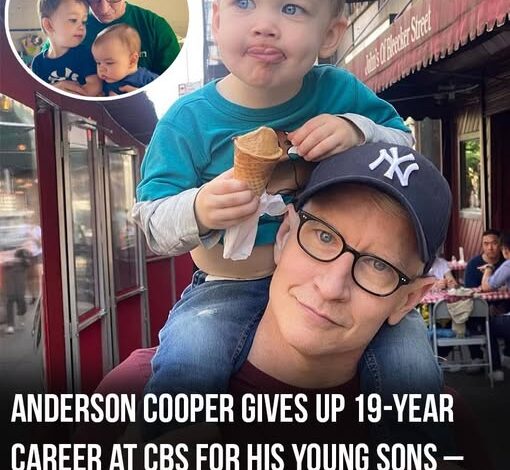
Veteran journalist Anderson Cooper has announced that he is stepping away from his role as a correspondent on 60 Minutes, bringing to a close a chapter that has spanned nearly two decades.
His decision, however, is not tied to controversy, contract disputes, or professional setbacks. Instead, it reflects something deeply personal: a desire to devote more time and energy to his young children during what he describes as the most meaningful years of his life.
For many viewers, Cooper’s presence on 60 Minutes became synonymous with thoughtful storytelling, in-depth reporting, and carefully crafted investigative pieces.
Over the course of nearly 20 years contributing to the program, he built a reputation as a correspondent capable of balancing compassion with rigorous journalism.
His departure marks the end of a significant era not only for him, but also for the long-running news magazine that has shaped American broadcast journalism for generations.
A Career Built on Storytelling
Before examining his decision to step away, it’s important to understand the magnitude of Cooper’s professional journey.
A 16-time Emmy Award winner, Cooper has long been recognized for his ability to cover complex global events with clarity and humanity.
In addition to his work at CBS, he has maintained a central role at CNN, where he anchors Anderson Cooper 360°, one of the network’s flagship programs.
Balancing responsibilities at both CNN and 60 Minutes required a demanding schedule.
For nearly two decades, Cooper traveled extensively, reported from disaster zones and political hotspots, and conducted high-profile interviews with world leaders, cultural figures, and everyday individuals whose stories deserved national attention.
His contributions to 60 Minutes often focused on in-depth investigations and international reporting—segments that required meticulous preparation and significant time away from home.
In a public statement released in mid-February, Cooper described his tenure at 60 Minutes as “one of the highlights” of his career.
He expressed gratitude for the producers, editors, and camera crews who worked alongside him, noting that the collaborative nature of the broadcast was central to its enduring quality.
CBS News responded warmly, stating that it was grateful for his dedication and understood his desire to spend more time with his family. The network emphasized that the door would remain open should he ever wish to return.
A Shift in Priorities
Cooper’s decision to leave 60 Minutes stems from a simple but profound realization: time with young children is fleeting.
In his statement, he acknowledged that while he had successfully balanced his responsibilities at CNN and CBS for many years, fatherhood changed the equation.
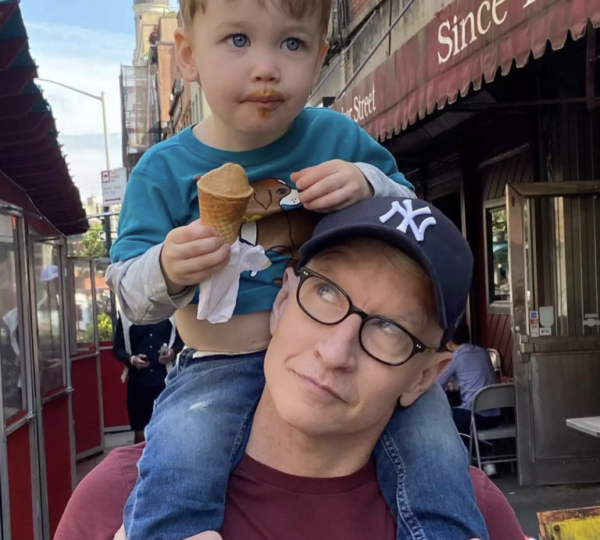
“I have little kids now,” he explained, “and I want to spend as much time with them as possible, while they want to spend time with me.”
That sentiment captures a universal truth many parents understand. Careers, however rewarding, often require sacrifices.
For Cooper, who became a father later in life, the opportunity to be fully present during his children’s early years carries special meaning.
Becoming a Father
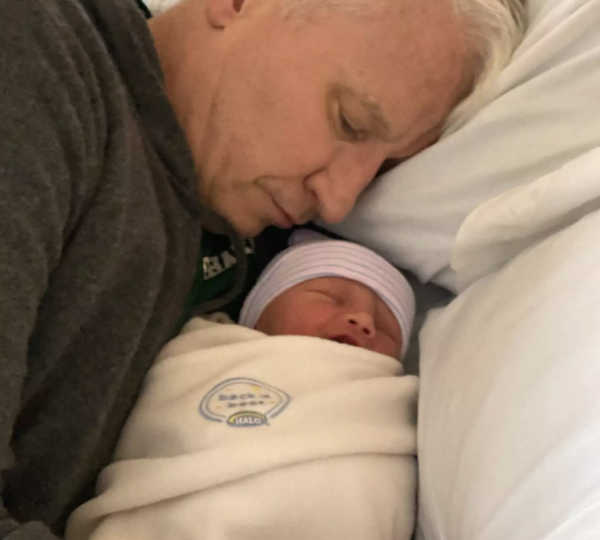
On April 30, 2020, during a broadcast of Anderson Cooper 360°, Cooper shared life-changing news with viewers: he had become a father. Three days earlier, his son Wyatt Morgan Cooper had been born via surrogate.
The moment was emotional and deeply personal. Cooper introduced his newborn son to the public, later sharing a photo on social media and explaining the significance of his name.
Wyatt was named after Cooper’s father, Wyatt Emory Cooper, who passed away when Anderson was just ten years old.
The middle name, Morgan, was chosen because it had once been considered by his own parents when naming him. In discussing the birth, Cooper expressed heartfelt gratitude to the surrogate who carried Wyatt and to her family, describing their support as an extraordinary blessing.

Fatherhood, he later said, felt like the true beginning of his life. In interviews, including one with People, he described experiencing a new level of love—one that surpassed anything he had known before.
He spoke openly about the joy, vulnerability, and sense of purpose that accompanied caring for his newborn son.
In 2022, Cooper welcomed his second son, Sebastian Luke. Like Wyatt, Sebastian was born via surrogate. Cooper shared the news publicly, once again expressing deep gratitude and pride.
The expansion of his family reinforced his commitment to reshaping his professional life around his role as a father.
Co-Parenting and Family Structure
Although Cooper and his former partner, Benjamin Maisani, ended their romantic relationship in 2018, they have continued to maintain a close friendship and partnership as co-parents.
Cooper has spoken candidly about their arrangement, acknowledging that it may seem unconventional but emphasizing its stability and shared dedication.
In interviews, he has said that he always knew Maisani would be a devoted father. Their co-parenting dynamic, he explained, is rooted in mutual respect and a shared commitment to providing a loving, secure environment for their children.
The two live close to one another and collaborate actively in raising Wyatt and Sebastian.
Cooper’s openness about his family life has resonated with many viewers. As one of the most prominent openly gay journalists in American media, his journey into fatherhood carries symbolic weight.
He has spoken about how, as a 12-year-old boy realizing he was gay, he once assumed that becoming a parent would never be possible.

That belief caused him deep sadness at the time. Decades later, holding his sons in his arms, he has reflected on how dramatically both his own life and broader social acceptance have evolved.
The Emotional Impact of Parenthood
Parenthood has clearly transformed Cooper’s worldview. In interviews over the past several years, he has described these early years with his sons as the best time of his life.
The daily routines—bedtime stories, morning cuddles, playful laughter—have provided a sense of grounding that contrasts sharply with the intensity of global news reporting.
He has described moments of “bliss, humor, gentleness and sheer delight” that catch him by surprise. Even amid professional commitments, those small experiences at home have become central to his happiness.
This emotional shift is not uncommon among parents, but in Cooper’s case, it represents a significant recalibration after decades spent in fast-paced, high-stakes journalism.
Covering wars, natural disasters, and political upheaval demands resilience and emotional stamina. Returning home to young children offers a different kind of focus—one centered on stability, affection, and presence.
Continuing Professional Engagement
Although he is leaving 60 Minutes, Cooper is not stepping away from journalism altogether. He will continue anchoring Anderson Cooper 360° on CNN, maintaining his influential role in daily news coverage.
In addition, he hosts The Whole Story with Anderson Cooper, a long-form program that allows for deeper exploration of important issues.
Cooper has also developed a podcast focused on grief, inspired in part by his own experiences with loss. The podcast features conversations about mourning, resilience, and the ways people process life-altering events.
Through these projects, Cooper continues to engage audiences in meaningful dialogue while managing a schedule that allows for greater family time.

Balancing Public Life and Private Joy
For public figures, stepping back from a prestigious platform can prompt speculation. Yet in Cooper’s case, the explanation is straightforward and consistent with his public statements.
There have been no reports of disputes or contractual conflicts. Instead, the decision reflects a conscious effort to prioritize family during a limited window of childhood.
His transparency about the reasoning behind his departure has been met with widespread understanding. Many viewers appreciate the reminder that even highly accomplished professionals must make choices about how they allocate their time and energy.
A Legacy at 60 Minutes
Cooper’s contributions to 60 Minutes are significant. The program, which has been on the air since 1968, remains one of the most respected investigative news broadcasts in the United States. Joining its ranks placed Cooper within a lineage of renowned correspondents.
Over nearly 20 years, he reported on humanitarian crises, political developments, and cultural stories that demanded careful reporting.
His calm, steady delivery and willingness to engage deeply with interview subjects strengthened the program’s reputation.
As CBS News noted, the relationship remains positive and respectful. The network has indicated that Cooper would be welcomed back should he choose to return in the future.
Looking Ahead
For now, Cooper’s focus is clear. He wants to be present while his sons are young—attending milestones, sharing daily experiences, and building memories that will shape their lives.
He has expressed openness to the possibility of expanding his family further one day, though there are no specific plans.
Ultimately, his decision underscores a universal theme: success can be defined in many ways. For years, Cooper’s success was measured in awards, ratings, and impactful reporting.
Today, it is also measured in bedtime routines, shared laughter, and the quiet fulfillment of being a parent.
As he closes one professional chapter and deepens another personal one, Anderson Cooper’s story resonates beyond the newsroom. It speaks to the evolving nature of ambition, identity, and love.
His departure from 60 Minutes does not signal retreat, but rather a recalibration—a recognition that some seasons of life deserve undivided attention.
Supporters across the country have expressed appreciation for his honesty and dedication both to journalism and to fatherhood.
In stepping away from one of television’s most prestigious platforms, Cooper reminds us that even in high-profile careers, family can remain the most powerful calling of all.