Beloved Indigenous actor and filmmaker dies following tragic rodeo incident
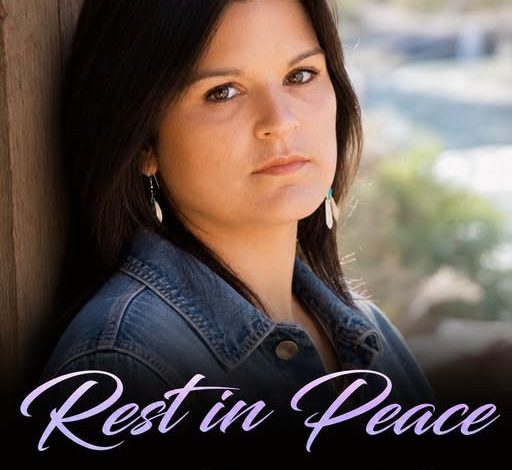
The impact was instant.
One moment, Georgina Lightning was documenting the power, speed, and tradition of Indigenous riders.
The next, she was gone.
A beloved mother.
A groundbreaking filmmaker.
A fierce advocate for Indigenous voices.
A woman who spent much of her life creating space for stories that had too often been ignored.
Her sudden death at 63 was devastating, but the story of her life was anything but unfinished.
She spent her final hours doing what had defined her for decades: centering Indigenous stories.
This time, her camera was focused on the thundering spectacle of Indian Relay racing, where riders and horses carry generations of tradition, competition, and cultural pride into the arena.
It was fitting that she was there.
Lightning had never been content simply to stand at the edge of the frame.
She wanted to tell the stories happening inside it.
Long before she became known as a filmmaker, she understood what it meant to be Indigenous in an industry where authentic representation was often limited or controlled by someone else.
Her early acting work opened one door.
She used it to find another.
And then another.
Eventually, she became a pioneering director, breaking barriers that had stood for generations and helping demonstrate that Indigenous filmmakers could tell their own stories with their own voices.
She didn’t wait for Hollywood to decide when Indigenous stories were worth telling.
She told them herself.
And once she gained influence, she used it to create opportunities for others.
That may ultimately become one of the most important parts of her legacy.
Because opening a door is one thing.
Holding it open for the next person is another.
Those who knew Lightning have described a woman whose determination extended far beyond her professional accomplishments. She was a mother, a mentor, a colleague, and a friend.
Her daughter, Crystle, has spoken through the rawness of grief, revealing the profound personal loss behind the public tributes.
For audiences, Georgina Lightning was a filmmaker and performer.
For her family, she was simply Mom.
That difference matters.
When a public figure dies suddenly, the world often focuses on the résumé—the films, awards, groundbreaking achievements, and historical firsts.
But families remember something else.
The voice in the kitchen.
The person who called.
The familiar laugh.
The small conversations nobody else heard.
The ordinary moments that suddenly become priceless.
And perhaps that is why the tributes surrounding Lightning’s death have carried such weight.
People aren’t simply mourning a filmmaker.
They’re mourning someone who made other people feel seen.
Every young Indigenous actor who recognized themselves on screen.
Every filmmaker who found courage because someone like Lightning had gone first.
Every artist she encouraged.
Every story she helped bring into the world.
Those are pieces of her legacy.
Her career wasn’t only about making films.
It was about changing who got to make them.
It was about challenging an industry that had too often treated Indigenous people as subjects instead of storytellers.
It was about proving that representation becomes more powerful when the people telling the story actually belong to the community whose story is being told.
And that work doesn’t disappear when the person who began it is gone.
It continues.
In classrooms.
On sets.
In young actors watching themselves reflected in characters they once thought they would never see.
In filmmakers picking up cameras because someone before them proved it was possible.
Georgina Lightning’s final day ended with tragedy.
But her life’s work did not end there.
The camera may have stopped.
The stories did not.
She spent her life insisting that Indigenous voices deserved to be heard, not as an exception, but as an essential part of the larger story.
Now the people who follow behind her inherit the path she carved.
The loss is immeasurable.
But so is what she left behind.
A mother remembered with love.
A filmmaker remembered with respect.
A mentor remembered with gratitude.
And a trailblazer whose greatest achievement may not have been becoming the first to break through a barrier.
It may have been making sure she wasn’t the last.