Rescued Baby Monkey Slowly Lets Go of Stuffed Toy After Finding New Troop
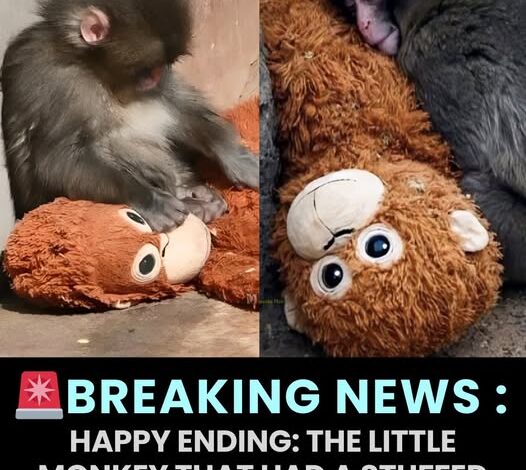
A small macaque rescued earlier this year captured attention after caretakers noticed something unusual — the baby refused to let go of a stuffed toy that had been placed in its enclosure.
According to wildlife rehabilitators, the young monkey had been separated from its mother at a very early age. In primates, maternal separation can cause severe stress because young monkeys rely heavily on physical contact for security, warmth, and emotional development.
When the baby arrived at the rescue facility, staff provided a soft plush toy to simulate the comfort of maternal contact — a common practice in primate rehabilitation centers.
The monkey clung to it constantly.
Caregivers observed the baby sleeping on it, wrapping its arms around it, and even attempting grooming behaviors — a sign of attachment. Experts explain that these behaviors are not unusual in orphaned primates. In the absence of a mother, young monkeys will often bond with substitute objects.
But the goal was always long-term social integration.
Wildlife professionals gradually introduced the baby to other young macaques in a controlled setting. At first, the monkey remained hesitant, retreating to the toy for comfort.
Over time, small changes began to appear.
Short play interactions.
Moments of curiosity.
Brief grooming exchanges with another juvenile.
As the monkey formed bonds with its own species, its dependence on the stuffed animal began to decrease naturally.
Caretakers say there was no forced removal of the toy. Instead, they allowed the attachment to fade as social confidence grew.
Within weeks, the monkey spent more time playing, climbing, and interacting with its troop than holding the toy.
Today, the stuffed animal remains in the enclosure, but it is no longer the baby’s constant companion.
According to rehabilitators, this transition is an important milestone. Social bonding with other primates is critical for survival, especially if reintroduction into the wild is ever considered.
The story serves as a reminder of how emotionally complex primates are — and how careful, patient rehabilitation can restore normal development after trauma.
It wasn’t a viral miracle moment.
It was slow work. Quiet progress.
And now, the baby monkey has what it needed all along — real companionship.