This Mysterious Chunk of Steel Is Stumping Everyone 99 Have No Idea What Its Really For
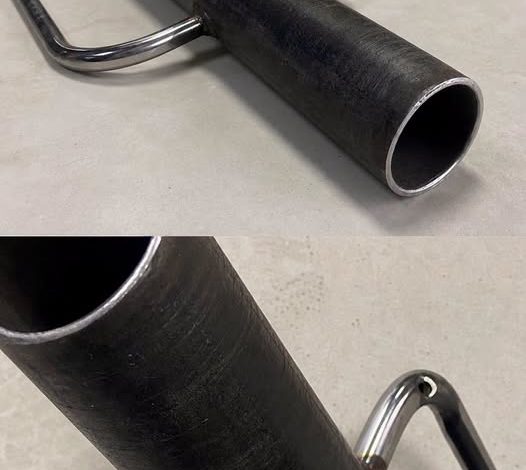
It looks like trash. It looks like something torn off a tank and abandoned in a field. Most people walk past it without a second thought, never realizing what it can actually do. But this brutal-looking steel cylinder, with its welded handles and scars of hard use, quietly transforms farms, fences, and rough ground in ways that most homeowners never im… Continues…
What appears to be a chunk of forgotten metal is, in reality, a purpose-built agricultural tool: a heavy steel roller used to pack, level, and shape soil and materials. The thick cylinder provides weight, while the welded handles give enough control to pull, push, or tow it behind equipment. On farms and rural properties, it’s used to firm freshly worked ground, press posts or wire into place, and smooth ruts or rough patches that would be exhausting to tackle by hand.
Its crude appearance hides the logic of its design. The mass of steel delivers pressure evenly across the surface, turning raw muscle work into a simple, repeatable motion. Instead of hauling rocks, stomping dirt, or fighting with uneven terrain, a person or machine can roll this cylinder and let gravity do the hard labor. That’s why something that looks like battlefield scrap quietly becomes indispensable anywhere land, fences, and boundaries need to be shaped and controlled.
The appeal of an unfamiliar tool is that its purpose has to be read from its shape. A cylinder suggests movement across a surface. Weight suggests pressure. Handles suggest that somebody needed a way to direct that weight. Before its name is known, the object already offers clues about the problem it was designed to solve.
That is a useful way to approach many old pieces of equipment. Instead of beginning with an elaborate guess, look at the parts that would touch the material being worked. Consider where the force comes from and how a person would control it. A design that appears awkward when sitting still can make much more sense once its movement is imagined.
The worn surface also tells a limited but interesting story. Scratches, repairs, and changes in finish suggest use, although they do not establish exactly where or when the object worked. The temptation is to turn every mark into a dramatic history. Often the more satisfying explanation is ordinary: a practical item was made to withstand a repetitive job.
Simple equipment can be easy to underestimate because it lacks switches, screens, or moving assemblies. Yet simplicity may be precisely what makes a tool suitable for its task. A sturdy shape, a clear direction of force, and a manageable way to guide it can be enough to turn a difficult operation into a repeatable one.
An unfamiliar heavy object should still be treated with care. Understanding its likely purpose is different from knowing whether it is safe to move or use. Its condition, balance, and intended handling matter, particularly if it has been left outdoors or altered over time.
The mystery is therefore not only about naming a piece of steel. It is about recognizing the practical thinking behind an unglamorous design. Once the relationship between shape, weight, and movement becomes clear, the object stops looking random and begins to look deliberate.