She Was Only 10 — The Driver Allegedly Left Peyton and Her Brother Lying in the Road.34
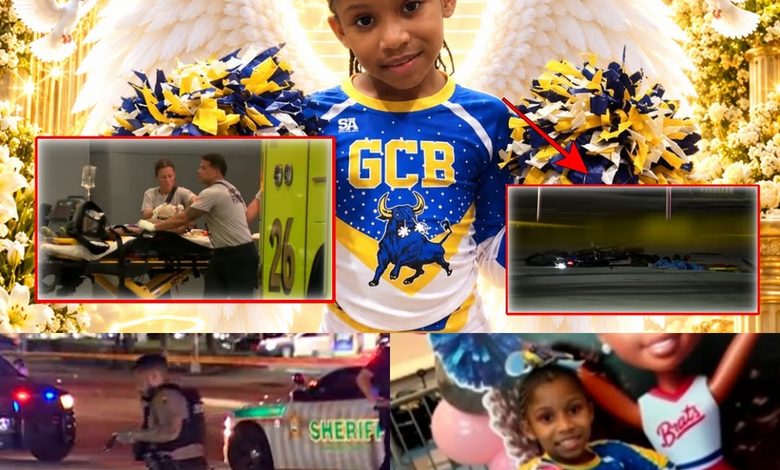
Peyton was only 10 years old, a young cheerleader whose family remembers her as a bright and joyful child with so much life still waiting ahead of her. She was deeply loved, and according to her aunt Patrice, she was almost always beside her older brother, Brent. “They always were together,” their aunt said, a simple description that now carries heartbreaking meaning for everyone who loved the siblings.
Wednesday night should have been another ordinary evening for Peyton and Brent in Miami-Dade County, Florida. The brother and sister were riding together on an e-bike near Northwest 117th Street and Northwest Seventh Avenue when investigators say their lives suddenly collided with the actions of a driver. Within moments, the siblings who were known for being together would both be lying critically injured in the roadway.
Investigators say a vehicle was making a left turn when it struck the children. The impact left Peyton and Brent seriously hurt, and deputies responding to the scene around 8:40 p.m. found both children unresponsive in the road. But according to investigators, the person behind the wheel did not remain there to help them.
The driver allegedly fled after the collision. That meant two injured children were left behind as the vehicle disappeared from the scene, while emergency responders rushed to save them. Authorities are now searching for the person they believe was responsible for a crash that changed one family forever.
Peyton and Brent were transported to Ryder Trauma Center, where medical teams fought to treat their injuries. For their family, the hours that followed must have been filled with fear as they waited for information about two children who had been together only moments before the collision. Then came the news no family wants to receive.
Peyton did not survive her injuries and died Thursday, according to the account of the crash. She was just 10 years old, an age when her future should have been measured in school years, cheerleading practices, birthdays, friendships, and dreams. Instead, her loved ones were suddenly being forced to speak about her in the past tense.
Brent survived the crash but remained hospitalized as he worked to recover from his injuries. His family was therefore confronting two emotional realities at once, grieving Peyton while hoping and praying for her older brother’s recovery. The siblings who their aunt said were always together had been separated in the most devastating way imaginable.
Peyton’s death is particularly difficult to comprehend because of how young she was. Ten years old is an age when children are only beginning to discover the interests, talents, friendships, and dreams that may shape the rest of their lives. Peyton should have had many years to find out who she wanted to become.
She was already a cheerleader, an activity that offers a small but meaningful glimpse into the little girl behind the headline. There would have been practices, routines, teammates, excitement, and moments when people who loved her watched proudly from nearby. Those memories now carry an entirely different weight for the people who shared them with her.
Her aunt described Peyton as someone who brought joy everywhere she went. That is the kind of description that cannot be captured in a crash report or an official investigation, because it speaks to the person her family actually knew. Peyton was not simply a 10-year-old involved in a traffic collision; she was a daughter, sister, niece, cheerleader, and child whose presence mattered deeply.
Her relationship with Brent appears to have been especially important. Their aunt’s words — “They always were together” — paint a picture of siblings whose lives were closely connected through the ordinary routines of childhood. Wednesday night, they were together once again when tragedy found them.
For Brent, recovery may involve far more than physical healing. He is dealing with injuries from a devastating collision while his family mourns the little sister who was riding beside him. The emotional consequences of that night may remain long after visible wounds begin to heal.
His family will now have to support him while carrying their own grief. They may feel relief that Brent survived while simultaneously experiencing overwhelming sorrow that Peyton did not, two emotions that can exist together without diminishing either one. There is no simple way for a family to process a tragedy involving two children at once.
Then there is the question that makes this case even more painful: why did the driver allegedly leave? Investigators say the motorist did not stop after striking Peyton and Brent, leaving the scene while the children were critically injured. Whatever explanation may eventually emerge, Peyton’s family deserves truthful answers established through the investigation.
Stopping after a serious collision can allow a driver to call emergency services, provide information, and remain available to investigators. Leaving instead creates additional uncertainty at precisely the moment when injured people and their families need help most. In this case, investigators are now trying to identify a person who may know exactly what happened that night.
Authorities are searching for a silver or gray Nissan Versa believed to be from model years 2009 through 2012 that may be connected to the collision. That description could become one of the most important pieces of information available to the public as investigators attempt to locate the vehicle and determine who was driving. Someone may recognize a car that suddenly appeared damaged or whose appearance changed after Wednesday night.
The public should not attempt to confront anyone or decide guilt based solely on a vehicle resembling the description. Information about a potentially matching car should instead be provided to investigators, who can determine whether it has any connection to the case. A credible tip could help detectives fill a crucial gap in the timeline.
Hit-and-run investigations can depend heavily on small details. Surveillance footage, vehicle debris, witness observations, repair records, traffic cameras, and other evidence may potentially help authorities identify a vehicle when such evidence is available. Investigators will have to determine which pieces exist in this case and how they fit together.
Someone may have been driving through the area and noticed the collision or its immediate aftermath. Someone else may have seen a silver or gray Nissan Versa with new damage and not initially understood why that detail could matter. Even information that seems insignificant to a witness can sometimes become important when combined with other evidence.
For Peyton’s family, every hour without answers can deepen the frustration surrounding their grief. They know what happened to the child they loved, but they are still waiting for accountability and a clearer understanding of the circumstances that led to her death. Their questions cannot bring Peyton back, but answers can still matter.
The person responsible for the collision, if identified, will have legal rights and any criminal allegations would need to be established through the justice system. Investigators must gather evidence rather than allowing understandable public anger to substitute for facts. That process protects both the integrity of the investigation and Peyton’s family’s search for genuine accountability.
What does not require speculation is the magnitude of what her family has lost. Peyton was 10 years old and should have had an entire adolescence and adulthood ahead of her. There should have been countless ordinary mornings after Wednesday night.
She should have gone back to school, spent more time with friends, and returned to cheerleading. She should have celebrated another birthday and watched the candles multiply year after year. Her family should have had the privilege of watching her grow from a little girl into the person she would eventually choose to become.
Those possibilities are part of what disappears when a child dies. Families grieve the child they knew, but they also grieve the teenager, graduate, adult, and future family member they will never have the opportunity to meet. With Peyton, there were so many unwritten chapters still waiting.
Her older brother should have been beside her through many of them. Siblings can argue, laugh, protect one another, share secrets, annoy each other, and build memories that become increasingly valuable as they grow older. Peyton and Brent’s aunt said they were always together, suggesting a bond their family expected to continue for many years.
Now Brent must move forward carrying memories of a sister who will forever remain 10. There may be birthdays, holidays, family gatherings, and milestones when her absence feels especially overwhelming. The fact that he survived the same collision may make those emotions even more complicated.
No one outside the family should presume to know exactly what Brent is feeling. Grief is deeply individual, particularly when it follows a traumatic event, and recovery does not move according to a predictable schedule. What he deserves is time, privacy, compassion, and support as he heals.
The same is true for Peyton’s parents and extended family. They were not prepared to lose a 10-year-old child because parents naturally imagine themselves watching their children grow older. Suddenly, the future they pictured for Peyton has been replaced by photographs and memories.
A bedroom, a cheerleading uniform, school belongings, favorite objects, or unfinished plans can become emotionally overwhelming after a sudden loss. Things that seemed completely ordinary before the crash may now feel priceless because they belonged to Peyton. Grief often settles into those small details rather than only the dramatic moments surrounding a tragedy.
Her family may remember the sound of her voice more than anything written in a news report. They may remember how she laughed, how she acted around Brent, what made her excited, or the way she entered a room. Those memories tell far more about Peyton than the circumstances of her final night ever could.
That distinction matters because victims can easily become defined by the event that ended their lives. Peyton deserves to be remembered for the 10 years she lived, not only for the collision that took her away. She had an identity before strangers ever learned her name.
She was a cheerleader. She was a sister who was reportedly almost always beside her older brother. She was a child whose aunt remembered her as someone who brought joy wherever she went.
Those facts may sound simple, but they represent an entire world to a grieving family. A person does not need decades of life to become irreplaceable to others. Ten years was enough for Peyton to leave memories her loved ones will carry for the rest of their lives.
Meanwhile, the search for the driver continues. Investigators need evidence that can lead them from a description of a vehicle to the person who was actually behind the wheel. The public may be able to help, but tips should be based on genuine observations rather than online rumors.
A silver or gray Nissan Versa from approximately 2009 to 2012 is not enough by itself to accuse anyone. There are many vehicles that could resemble that description, and investigators must establish a connection through evidence. Sharing accurate information is helpful; publicly identifying innocent people based on guesswork is not.
The driver also has an opportunity to come forward. If the person responsible recognizes the vehicle description and knows what happened, turning themselves in would allow investigators to hear their account and move the legal process forward. Leaving questions unanswered only prolongs the uncertainty surrounding a family already living through enormous pain.
Whatever fear or panic may have existed after the collision cannot erase what happened to Peyton and Brent. One child lost her life, and another was hospitalized with serious injuries. Their family will live with the consequences long after the roadway itself looks ordinary again.
That is one of the unsettling realities of traffic tragedies. Cars continue passing the same location, traffic lights continue changing, and strangers travel through without knowing what happened there. For Peyton’s family, however, that stretch of road may never again feel ordinary.
Wednesday night divided their lives into a before and after. Before it, Peyton was a 10-year-old cheerleader riding alongside the brother who was almost always with her. After it, the family was grieving Peyton and waiting beside Brent as he fought to recover.
The transition between those two realities happened within moments. That is why sudden tragedy can feel so impossible for families to process, because there was no warning and no time to prepare. One minute there were two siblings together, and soon afterward emergency responders were trying to save them.
Peyton deserved more time. She deserved to return home, continue cheerleading, grow alongside Brent, discover new interests, make mistakes, celebrate achievements, and experience all the ordinary stages of growing up. She deserved the future every 10-year-old should be allowed to imagine.
Her family deserved those years with her too. They deserved more photographs in which Peyton gradually looked older, more birthdays, more school milestones, and more opportunities to watch her become herself. Instead, they now have to preserve the memories already created.
Justice cannot recreate those years. Even if investigators identify the driver and the case eventually leads to criminal accountability, no court can restore the future that disappeared Wednesday night. But accountability can still matter because Peyton’s life mattered.
It can also provide answers for Brent. One day, as he continues healing, he may want to understand exactly what happened to him and his little sister. A complete investigation can help ensure that those answers are grounded in evidence rather than rumors.
The community can play a role by keeping attention focused on credible information. Sharing Peyton’s story and the vehicle description may help the right person recognize something they previously dismissed. A witness who initially believed they had nothing important to contribute may realize that investigators need exactly what they saw.
Perhaps someone noticed a damaged vehicle after the collision. Perhaps someone knows who was traveling through that area around the time Peyton and Brent were struck. Those possibilities should be directed to law enforcement, where investigators can evaluate them properly.
Behind every request for tips is a family waiting for the telephone to ring with news that the investigation has moved forward. Peyton’s relatives are not asking out of curiosity; they are seeking answers about the night they lost a child. Brent is also part of that search for justice because he was injured in the same collision.
As he recovers, the family’s attention will inevitably be divided between hope and grief. They can celebrate every improvement Brent makes while still aching for Peyton. Loving the child who survived does not lessen the sorrow for the child who did not.
In time, Brent may become one of the most important keepers of his sister’s memory. He knew what it meant when their aunt said the two of them were always together. He carries years of shared childhood moments that nobody else experienced in exactly the same way.
Those memories may hurt now, but someday some of them may also provide comfort. A funny story about Peyton, an old photograph, or a memory of something the siblings did together may allow her personality to remain present in family conversations. Remembering her with joy does not mean forgetting the tragedy.
Peyton’s cheerleading community may also carry her memory forward. Teammates, coaches, friends, and parents who knew her may remember the energy she brought to practices and events. A child’s absence can be deeply felt throughout the many small communities that formed part of her life.
School may feel different without her as well. A seat, hallway, playground, or classroom can become a reminder that someone who belonged there is missing. For children who knew Peyton, understanding the permanent loss of a friend at such a young age may be especially difficult.
Adults surrounding them will have the responsibility of helping them grieve in age-appropriate ways. They may have questions about why the driver left, why Peyton could not be saved, or why something so terrible happened to someone their own age. Some questions simply do not have answers capable of making the situation feel fair.
Because it is not fair that Peyton’s life ended at 10. It is not fair that Brent is recovering without his little sister beside him. It is not fair that their family went from an ordinary Wednesday evening to a nightmare that will remain part of their lives forever.
Yet fairness cannot change the past, which leaves the family with remembrance and the search for accountability. They can speak Peyton’s name, preserve the joy she brought them, and continue asking anyone with information to help investigators. Those actions are ways of refusing to allow her story to disappear.
Public attention often moves quickly from one tragedy to another. News stories fade from feeds, and people who were shocked for a day return to their normal routines. Peyton’s family does not have that option.
They will still miss her after the headlines stop appearing. Brent will still have a sister who should be growing older beside him, and her parents will still encounter milestones that make them wonder what Peyton would have looked like or who she might have become. The loss will continue long after the investigation eventually reaches a conclusion.
That is why remembering Peyton as a person matters. Her story should not end with a vehicle description or the word “hit-and-run.” It should include the little girl who loved cheerleading and brought happiness to people around her.
It should include the relationship she shared with Brent. It should include her aunt’s simple words that the siblings “always were together,” because those words reveal something precious about their childhood. And it should include the future that Peyton deserved but never received.
Investigators will continue doing the work necessary to determine who was driving and exactly what occurred. If someone is eventually charged, the courts will decide legal responsibility based on evidence and applicable law. Until then, the driver’s identity should not be replaced by online guesses.
But the community does not need to wait to show compassion. People can share accurate information, support Peyton’s family, hope for Brent’s recovery, and remember that behind the investigation are two children whose lives were changed in seconds. One is gone, and one is trying to heal.
Peyton was only 10 years old. Her family should be worrying about homework, cheerleading schedules, childhood friendships, and what she wanted for her next birthday, not searching for answers about the driver who allegedly left her in the road. She should still be beside her brother.
Instead, Brent is recovering while the people who love them both are learning how to live with an absence that cannot be repaired. Their aunt’s words now sound painfully different: “They always were together.” What once described a beautiful sibling bond now explains part of why this goodbye hurts so much.
Somewhere, investigators believe there may be a silver or gray 2009–2012 Nissan Versa connected to this tragedy. Someone may know where that vehicle is, who was driving it, or why it suddenly showed signs of damage after Wednesday night. If that person exists, Peyton’s family deserves for them to speak.
A 10-year-old girl cannot ask for answers herself. Her family, her community, and investigators must now ask on her behalf while allowing evidence to lead the case where it belongs. Brent deserves to know that every reasonable effort was made to find the truth about the night he lost his little sister.
Peyton deserved the chance to grow up, to cheer again, and to spend years creating new memories with the brother who was almost always beside her. Her family cannot get that future back, but they can continue fighting to make sure her name and story are not forgotten. Remember Peyton, pray for Brent’s recovery, and if you have genuine information about the vehicle or driver, give it directly to investigators. 💔🕊️