Kyle Bickham Was Heading Home After Work — His Family Is Now Demanding Justic
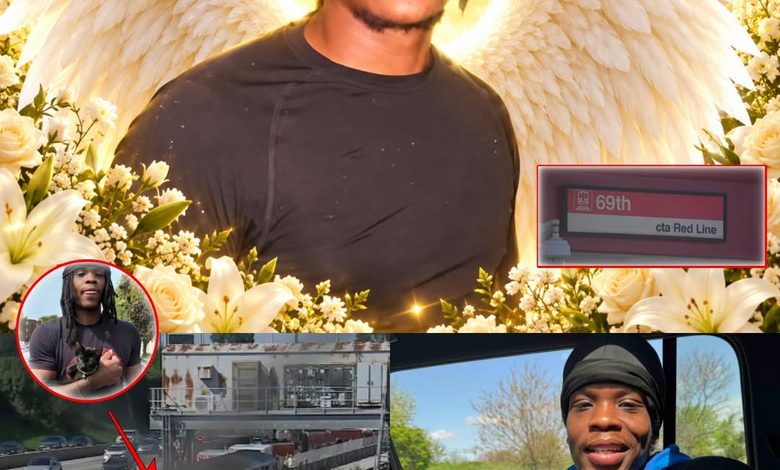
For 29-year-old Kyle T. Bickham, Monday was supposed to end the way countless ordinary workdays do: finish the shift, board a train, and make the familiar journey home.
His family says Kyle was coming home from work aboard a CTA Red Line train when an altercation unfolded and he was allegedly pushed from the moving train near Chicago’s 69th Street station. Instead of walking through the door and continuing with his evening, Kyle never made it home, leaving his loved ones mourning a loss they never imagined would come from something as routine as a commute.
According to Chicago police, the incident happened at approximately 2:40 p.m. as the Red Line train was moving near the 69th Street station on the city’s South Side. Investigators said Kyle became involved in an altercation aboard the train, though the information currently available does not explain what started the confrontation or exactly how it escalated.
Police allege that three people pushed the 29-year-old from the train during the encounter, beginning a horrifying sequence of events that ended with his death.
Kyle fell onto the tracks after being pushed from the train, according to investigators. Before he could escape the danger, he was struck by another train and suffered fatal injuries. He was pronounced dead at the scene, turning a busy public transit area into the location of a tragedy that would soon devastate his family.
The Cook County Medical Examiner’s Office later ruled Kyle’s death a homicide. That determination describes the manner of death but does not by itself determine the criminal responsibility of any particular person, and Chicago police continue investigating what happened. For Kyle’s family, however, the most painful fact is already certain: a 29-year-old man who was simply expected home after work is never coming back.
There is something especially difficult to comprehend about a life ending during such an ordinary part of the day. Millions of people leave work, step onto trains or buses, look at their phones, think about dinner, and mentally prepare for whatever waits for them at home without imagining that the journey itself could become dangerous. Kyle’s family had every reason to believe his Monday would end just as countless previous Mondays had ended.
Instead, a routine commute became his final journey. The train that was supposed to carry him closer to home became the setting for an altercation investigators are now trying to reconstruct in detail. Somewhere between leaving work and reaching his destination, the future Kyle expected disappeared in a matter of moments.
His family is now demanding justice and accountability for whoever is responsible for his death. Their request is simple but profound: they want answers about what happened aboard that train and they want the person or people responsible to be held accountable under the law. Behind that demand is the pain of relatives who know Kyle was coming home from work and cannot understand why he never had the chance to complete that journey.
Police have said three people allegedly pushed Kyle during the confrontation, but the information released so far leaves many questions unanswered. It is not yet publicly clear what led to the altercation, what role each person allegedly played, or whether investigators have identified everyone they are seeking in connection with the incident.
Those details matter, and authorities will need evidence to establish individual responsibility rather than relying on assumptions created by the shocking circumstances.
Investigators may examine surveillance footage from the train, station platforms, nearby areas, and other available cameras as they attempt to reconstruct Kyle’s final minutes.
Witness statements could also prove important because passengers may have seen or heard portions of the confrontation before Kyle went onto the tracks. Any available digital, physical, or video evidence could help police determine how the encounter began, how it escalated, and who was involved.
For Kyle’s family, waiting for those answers may feel unbearably slow. Their lives changed immediately, but investigations often require detectives to carefully collect evidence, interview witnesses, compare accounts, and establish a timeline before reaching conclusions. Every unanswered question can become another source of pain when a family is already trying to understand why someone they loved did not make it home.
Kyle was only 29 years old. At that age, life is usually filled with plans that extend years into the future, from work and relationships to personal goals and ordinary moments nobody thinks to treasure until they are suddenly gone. His family expected more conversations, more birthdays, more holidays, and more evenings when he would simply arrive home after work.
Those expectations are now part of what they are grieving. Losing someone unexpectedly means mourning not only the person who existed but also every future moment that will never happen. Kyle’s loved ones have been forced to confront that reality without warning.
There was no opportunity to prepare for goodbye. There was no gradual adjustment to the possibility that his life might be ending, because according to his family, Kyle had simply been going about an ordinary day and heading home after work. One moment he was part of the normal rhythm of the city, and soon afterward his family was facing unimaginable news.
That detail — coming home from work — has resonated because of how familiar it is. Nearly everyone understands the feeling of finishing a shift and wanting nothing more complicated than to get home, change clothes, eat something, rest, or spend time with the people they love. It is an ordinary expectation, which makes what happened to Kyle feel all the more disturbing.
Public transportation depends heavily on an unspoken agreement among strangers. People from different neighborhoods, jobs, backgrounds, and circumstances share enclosed spaces because everyone needs to reach a destination. Most rides pass without incident, which is why an allegation that someone was pushed from a moving train can create such profound fear and disbelief.
For regular CTA passengers, the case may raise understandable concerns about personal safety. Riders cannot always predict when an argument between passengers will escalate, and confined train cars can leave limited space to move away from danger. Yet the full circumstances surrounding Kyle’s confrontation remain under investigation, making it important not to fill gaps in the known facts with speculation.
What police have described is already devastating enough. An altercation occurred aboard a moving Red Line train, three people allegedly pushed Kyle from the train, and he fell onto the tracks before being struck by another train. The medical examiner subsequently classified his death as a homicide.
The word “homicide” can sound clinical when written in an official report. For Kyle’s family, it means something far more personal: the person they expected to see again was suddenly gone because of the actions of another person or people. It means a family is now remembering Kyle in the past tense when they should still be making plans with him.
His relatives are also living through the difficult intersection of private grief and public investigation. Their loved one’s final moments are now being discussed in news reports, police statements, and conversations among strangers who never knew him. While public attention can help generate tips, it can also be painful when a person’s entire life becomes reduced to the worst thing that happened to them.
Kyle was more than what happened on the Red Line. Before his name appeared in a homicide investigation, he was a 29-year-old man who worked, traveled home, had people who cared about him, and occupied a place in the everyday lives of his family. Those ordinary facts matter because they restore humanity to a story that could otherwise become only another statistic about violence.
There will be an empty place in his family that no investigation can fill. His phone will no longer light up with new calls or messages from him, and future gatherings will include the painful awareness that someone who should be present is missing. Small reminders may appear unexpectedly, sometimes in places his loved ones least expect them.
Perhaps it will be the time of day when Kyle normally came home from work. Perhaps it will be a particular train, a familiar route, a photograph, a piece of clothing, or an unfinished conversation that suddenly brings the loss rushing back. Grief often lives most powerfully in those ordinary details.
For relatives, the question of justice may become intertwined with the question of how to continue without him. Holding someone accountable cannot undo the final moments on the train, but it can provide answers and recognition that Kyle’s life mattered. It can also ensure that decisions about responsibility are based on evidence examined through the legal system.
At the moment, police are still investigating the circumstances surrounding his death. Authorities have asked for information, and Kyle’s family is similarly urging anyone who knows something to come forward. In cases occurring in public spaces, even a seemingly minor observation can sometimes help investigators establish a clearer timeline.
A passenger may have witnessed the beginning of the argument without realizing what happened afterward. Someone may remember where individuals were standing, what was said, when the confrontation became physical, or what happened immediately before Kyle went from the train. Investigators, not members of the public, are in the best position to determine whether such information is relevant.
That is why the family’s appeal for witnesses matters. Silence can leave investigators with missing pieces, while credible information can help them understand events that unfolded quickly in a crowded and chaotic environment. Anyone with firsthand information should provide it directly to authorities rather than relying on social-media speculation.
For Kyle’s loved ones, each piece of verified information could bring them closer to understanding the final minutes of his life. They may never receive an explanation capable of making his death emotionally understandable, because there is no answer that can make losing a 29-year-old on his way home feel acceptable. Still, knowing what happened and who was responsible can matter enormously to a family living with uncertainty.
There is also the painful question of what Kyle himself expected when he boarded the train. He likely could not have imagined that this commute would become the final chapter of his life, just as his family could not have known they were waiting for someone who would never arrive. The normality of the day before the confrontation is what makes the ending feel so cruel.
Most people do not say elaborate goodbyes every time they leave home for work. Families assume there will be another evening, another morning, and another chance to say whatever went unsaid because that is how ordinary life functions. Kyle’s death is a painful reminder of how quickly that assumption can be shattered.
His family now carries memories from before Monday that have taken on new significance. Conversations that seemed routine may suddenly feel precious, photographs may be examined differently, and moments once taken for granted may become some of their most valuable possessions. This transformation of ordinary memories is one of the hardest realities of sudden grief.
The city around them will continue moving. Trains will keep arriving at stations, commuters will keep going to work, and the Red Line will continue carrying thousands of people through Chicago each day. For Kyle’s family, however, one train ride will always represent the moment their world changed.
That contrast can make grief feel isolating. The rest of the world continues its schedule while a family feels as though time should have stopped because someone irreplaceable is gone. Kyle’s loved ones now have to navigate that contradiction while simultaneously waiting for developments in the investigation.
The people allegedly involved in the confrontation also have individual legal rights, and any eventual criminal charges must be supported by evidence. The medical examiner’s homicide ruling does not replace the investigative and judicial process required to determine who is criminally responsible and for what specific conduct. That distinction is important even in a case whose reported circumstances evoke strong emotions.
Justice requires patience as well as accountability. Detectives must determine what happened, prosecutors must evaluate the evidence if suspects are identified or arrested, and any accused person must have the opportunity to respond to the allegations in court. For the family, that process may be frustratingly methodical compared with the speed at which Kyle was taken from them.
Their loss happened in moments. Legal accountability, if charges follow, could take months or considerably longer. Grief has no such timeline and began immediately.
In the days ahead, Kyle’s name may appear in updates about suspects, evidence, or developments in the investigation. Those updates are important, but they should never overshadow the person at the center of the story. He was not merely “the man pushed from a CTA train”; he was Kyle T. Bickham, a 29-year-old whose family expected him home from work.
That is the image worth holding onto. A young man had completed his workday and was making the same kind of journey home that people across Chicago make every afternoon. He deserved the chance to reach his destination safely.
Instead, his family is now planning life around an absence they never expected. They are asking for justice, pleading for information, and trying to understand how a routine commute could end with someone they loved dying on the tracks. No family should have to learn about the fragility of ordinary life in such a devastating way.
The circumstances of Kyle’s death will ultimately be clarified through the continuing police investigation and, if criminal charges are filed, through the courts. Until then, unanswered questions should remain questions rather than becoming rumors presented as facts. What does not require speculation is the depth of the loss his family is experiencing.
Kyle had a destination that afternoon. He had people who expected him to arrive, a life waiting beyond the train doors, and countless ordinary moments that should have followed once he stepped off the Red Line. He never received the chance to reach them.
Now his loved ones are asking Chicago not to forget his name. They want witnesses to speak, investigators to find the truth, and whoever is legally responsible for his death to face accountability. Above all, they want justice for Kyle T. Bickham — the 29-year-old who was simply coming home from work when an ordinary Monday became his final journey. 💔🕊️