After a Frantic Search, the Young Woman Was Finally Found-
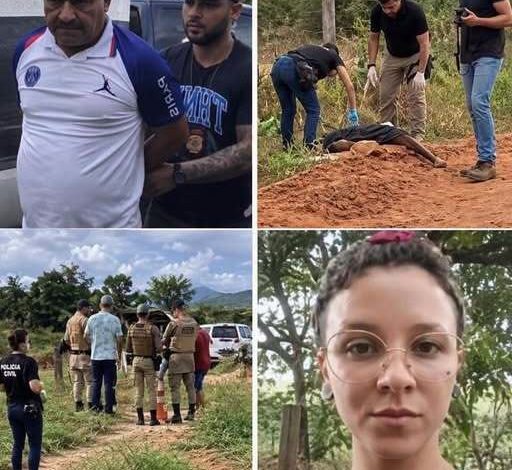
The call came before dawn, and nothing felt safe after that.
Two 18-year-old twins, Carolina and Luiza, were suddenly gone without a trace. What began as one family’s nightmare quickly became a citywide emergency, as panic spread faster than any official alert could contain it. Phones began ringing. Messages appeared across social media. Neighbors stepped outside to search. Strangers shared photographs and descriptions, hoping that one familiar face might become the clue that brought the sisters home.
Every passing hour felt heavier than the one before.
For a family waiting for answers, time does not move normally during a disappearance. Minutes feel like hours. Every unfamiliar car creates a moment of hope. Every phone notification brings the possibility of devastating news—or the miracle everyone is praying for.
As theories multiplied and information remained scarce, fear filled the empty spaces.
In the days after Carolina and Luiza disappeared, their city became a living search party. Their faces appeared on timelines, posters, community pages, and street corners. People who had never met the twins began looking for them as though they were searching for members of their own families.
Parents held their children closer.
Friends checked on one another.
Volunteers walked through streets and searched areas they might otherwise never have noticed.
People stayed awake late into the night, refreshing their phones and waiting for any new information.
The twins’ disappearance had transformed ordinary places into frightening reminders of uncertainty. A quiet road no longer looked simply quiet. An empty building raised questions. A passing vehicle became something worth noticing. Every possible clue seemed important because everyone understood what was at stake.
And at the center of it all were two sisters whose bond had always been part of their identity.
Twins share a connection that is difficult for outsiders to describe. They grow up together, experience the same milestones, and often become each other’s first source of comfort. Their closeness made their disappearance even more painful for those searching.
The thought of one being alone was difficult enough.
The thought of both being missing was unbearable.
Their story became larger than a missing-person case. It became a test of how much a community was willing to do when one of its families was living through unimaginable uncertainty.
People searched because they could not simply sit and wait.
They shared information because silence felt unbearable.
They offered encouragement because hope, even fragile hope, was something the family needed to survive each passing day.
And then came the message everyone had been waiting for.
The girls had been found alive.
For a moment, the fear that had dominated the community gave way to something almost impossible to describe. Relief arrived all at once. Tears replaced speculation. People embraced. Hands shook. Phones filled with messages from people who had spent days hoping for exactly this outcome.
Strangers who had never met Carolina and Luiza felt as though they had received good news about someone they loved.
The joy was enormous.
But relief does not erase the questions left behind.
How had two inseparable sisters disappeared?
What happened during the time they were gone?
Why had the situation become so frightening before they were found?
Those questions mattered because the ending, however hopeful, did not erase the terror that came before it.
Investigators continued examining the circumstances surrounding the disappearance, while the family and community began the difficult process of returning to ordinary life after experiencing something profoundly abnormal.
For Carolina and Luiza, being found was not necessarily the end of the story.
It was the beginning of recovery.
For everyone who had searched, shared their photographs, walked the streets, or simply prayed for their safe return, the experience left another kind of mark. It reminded people how quickly ordinary life can be interrupted and how vulnerable families can feel when someone they love suddenly disappears.
But it also revealed something powerful.
Connection matters.
When fear spread, people did not simply look away. They responded. Neighbors became volunteers. Strangers became advocates. Online communities amplified the search. Families who had never met one another offered support because they understood the most basic human fear of all—the possibility of losing someone you love.
That collective response became part of the story.
The twins came home, but the community that searched for them had changed too.
Their disappearance had created days of uncertainty, fear, and sleepless waiting. Their return brought tears, embraces, and a reminder that hope can survive even when answers seem impossibly far away.
The darkest hours had not been erased.
They had simply been followed by light.
And perhaps that is what people will remember most—not only the fear of two young women vanishing without explanation, but the extraordinary determination of people who refused to let that disappearance become silence.
Because sometimes, in the middle of a frightening story, the most powerful force is not certainty.
It is people choosing to keep looking.
Choosing to keep sharing.
Choosing to keep hoping.
And when the long-awaited message finally arrives, the relief belongs not only to one family, but to everyone who refused to give up on bringing them home.