Juvenile Justice and Child Safety: Understanding Accountability, Rehabilitation, and Prevention
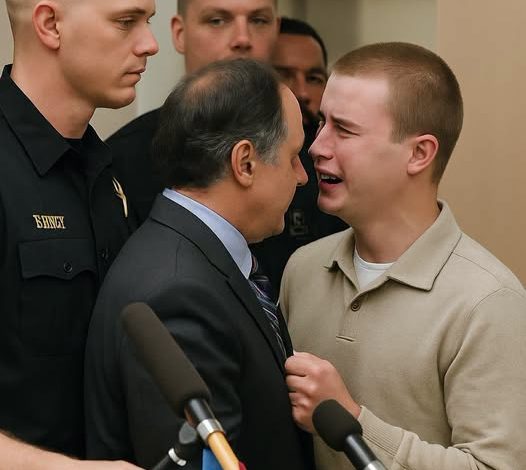
Caregivers break. Children die. And suddenly, a teenager is standing where no young person should ever stand: at the center of a courtroom, a crime, and a community’s rage.
Headlines demand punishment. Families demand answers. Neighbors demand to know how something so devastating could have happened. But beneath the outrage lies a harder question—one that cannot be answered with a headline or a single name:
How did so many adults, systems, and safeguards fail before that night ever arrived?
When a young caregiver is accused after a child is seriously harmed or dies, the tragedy rarely begins at the moment the emergency occurs. By the time police arrive, sirens fill the street, and a courtroom becomes the stage for public anger, there may already be a long history of exhaustion, inadequate supervision, isolation, fear, and unmet needs hiding beneath the surface.
None of those circumstances erase responsibility.
A child who is harmed deserves justice. A grieving family deserves answers. A community deserves safety.
But understanding how a tragedy developed is not the same as excusing it.
When the accused is an adolescent, the situation becomes even more complicated. A teenager may be capable of making serious decisions and causing devastating harm, yet they are still developing emotionally, socially, and neurologically. Their judgment, impulse control, ability to anticipate consequences, and response to overwhelming stress are not necessarily the same as those of an adult.
That does not make the consequences less real.
It means the response must recognize the person’s age while still taking the harm seriously.
Juvenile justice exists in part because adolescents are not simply miniature adults. Young people can commit terrible acts, but they can also change in profound ways. Their identities are still forming. Their understanding of responsibility can develop. With appropriate intervention, education, treatment, structure, and accountability, the trajectory of a young life can sometimes be changed.
That possibility matters—not because victims matter less, but because preventing another tragedy matters too.
A courtroom can determine what happened and what consequences are appropriate. It can establish accountability and protect the public. But it cannot go backward and repair the moment before everything went wrong.
That is why prevention has to begin much earlier.
Young people who take on caregiving responsibilities need preparation, realistic expectations, supervision, and a clear understanding that asking for help is not failure. They need adults who notice when exhaustion becomes dangerous rather than waiting until a crisis forces everyone to pay attention.
They need somewhere to turn when they feel overwhelmed.
They need someone who will answer the phone.
They need mental-health resources that are accessible before desperation becomes an emergency.
And perhaps most importantly, they need permission to say, “I can’t handle this,” without believing that admitting it makes them weak, selfish, or inadequate.
Caregiving can be demanding even for experienced adults. Asking an adolescent to shoulder responsibilities beyond their emotional or practical capacity can create risks that are invisible until something goes terribly wrong.
That is why responsibility cannot stop with the person standing in the courtroom.
Families, schools, social services, healthcare providers, community organizations, and other adults surrounding vulnerable children all have a role in creating safety. No single system can prevent every tragedy, but a stronger network can make it more likely that warning signs are recognized and support arrives before a breaking point.
The media has a responsibility too.
There is a powerful temptation to turn tragedy into a simple story: a villain, a victim, a shocking photograph, and a demand for the harshest possible punishment. Simplicity attracts attention. Outrage spreads quickly.
But real human suffering is rarely simple.
A grieving parent may be experiencing a loss that can never be adequately described. A teenager accused of causing that loss may also be frightened, traumatized, or struggling to comprehend the consequences of what happened. Neither reality cancels the other.
Responsible reporting can acknowledge both without minimizing the harm.
Because justice is not strengthened by stripping away complexity.
Sometimes the most difficult response is also the most responsible one: to demand accountability while asking what could have prevented the tragedy, what warning signs were missed, and what must change so another family never experiences the same devastation.
The goal should not be to turn pain into spectacle.
It should be to learn from it.
When a child dies, the loss cannot be undone. No court decision can restore the future that disappeared. No punishment can make a grieving family wake up and discover that the nightmare was only a dream.
But society can decide what it does with the lessons left behind.
We can build stronger safeguards around young caregivers. We can make support easier to access. We can teach adolescents that seeking help is an act of responsibility. We can give overwhelmed families practical resources before they reach a crisis. And we can create systems that recognize danger before the only remaining response is punishment.
A tragedy may begin with one terrible moment.
Prevention begins with thousands of smaller choices made long before it.
When we remember that every case contains multiple vulnerable lives—children who deserved protection, families carrying unimaginable grief, and young people whose futures may still be shaped by what happens next—we can demand justice without surrendering compassion.
Because accountability and prevention do not have to stand on opposite sides.
The strongest response can be both.
Justice for what happened.
Support for those left behind.
And a commitment to build a world where fewer young people are ever placed in a position where they are expected to carry burdens they were never prepared to carry.