Persistent Leg Swelling and Skin Darkening: When to See a Doctor
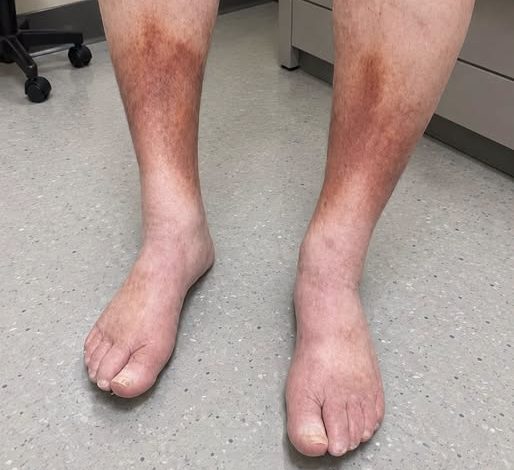
A quiet warning can start with something so ordinary that most people barely notice it: ankles that never quite return to their normal shape.
At first, it may seem harmless. A little puffiness after a long day. Socks leaving deeper marks around the skin. Shoes feeling slightly tighter by evening. You tell yourself it is because you were standing too long, sitting too much, eating something salty, gaining a little weight, or simply getting older.
Then tomorrow comes—and the swelling is still there.
Day after day, the puffiness lingers. The skin may gradually darken around the ankles, become thicker or tougher, or develop a texture that feels different beneath your fingers. There may be no sharp pain, no dramatic injury, and no single moment when everything suddenly feels wrong.
That is precisely why persistent swelling can be so easy to dismiss.
But when swollen ankles stop being an occasional nuisance and become a regular part of life, they can sometimes be a sign that the body is struggling with circulation or another underlying problem.
One common possibility involves the veins in the legs. Normally, veins have to move blood upward, against gravity, toward the heart. Valves inside the veins help keep blood from flowing backward. When those valves or the surrounding circulation do not work efficiently, blood can begin pooling in the lower legs.
As pressure builds, fluid can seep into surrounding tissues.
The result may be swelling around the ankles and lower legs, particularly after standing or sitting for long periods.
And sometimes, the body leaves a visible record of that struggle.
The skin around the lower legs can become darker or discolored. It may gradually feel firmer, thicker, or less flexible. Some people notice itching or a sensation of heaviness or tightness. Over time, the changes can become increasingly difficult to dismiss as simply part of aging.
These signs are not merely cosmetic.
They can be clues that something beneath the surface deserves attention.
Persistent swelling can have many possible causes, including vein problems, medications, kidney or heart conditions, liver disease, or other medical issues. That is why trying to diagnose the cause from the appearance of the ankles alone can be misleading.
What matters is the pattern.
Is the swelling happening repeatedly?
Is it becoming worse?
Does it improve after resting or elevating the legs, only to return again?
Has the skin begun changing?
Are both legs affected, or is one suddenly much more swollen than the other?
Those details can help a medical professional determine what needs to be investigated.
Some symptoms, however, should make the situation more urgent.
Warmth, redness, significant pain, tenderness, or sudden swelling—particularly when it affects only one leg—can require prompt medical evaluation. An unexplained change that appears suddenly should not simply be watched for days in the hope that it disappears.
And there is one combination that demands immediate attention.
If leg swelling occurs together with **chest pain, difficulty breathing, sudden shortness of breath, fainting, or other severe symptoms, seek emergency medical care immediately.** Those symptoms can sometimes be associated with a dangerous blood clot or other serious cardiovascular or respiratory problem.
Not every swollen ankle means something dangerous is happening.
Sometimes swelling has a temporary and relatively simple explanation.
But persistent swelling is different from an occasional puffy ankle after a long day. When a change keeps returning, gradually progresses, or comes with changes to the skin, it deserves an explanation rather than an assumption.
Your body does not always sound an alarm.
Sometimes it whispers.
A darker patch of skin. A sock mark that never used to be there. An ankle that stays swollen overnight. A leg that suddenly feels heavier than the other.
None of these signs should automatically cause panic—but they should encourage attention.
Because catching the underlying cause early can sometimes make a meaningful difference in treatment and prevent complications from becoming harder to manage.
The important lesson is simple: **don’t judge persistent swelling only by how much it hurts.**
Some important problems begin quietly.
And sometimes, the smallest visible change is the body’s way of asking you to look closer.