My Neighbor Refused to Pay My Grandpa $100 for Rebuilding Her Porch — He Just Smiled and Said, “See You After the First Rain”
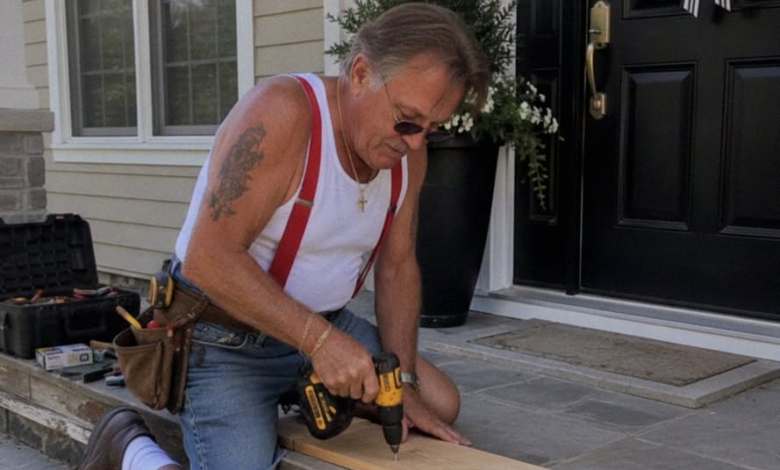
My neighbor refused to pay my 79-year-old grandfather the $100 she had promised him for rebuilding her porch.
I was furious.
Grandpa wasn’t.
He simply looked beneath the new steps, smiled, and said:
“See you after the first rain.”
I had no idea what he meant.
Three days earlier, Diane’s porch had barely been safe.
One step tilted forward.
Several boards were soft.
The railing moved whenever anyone touched it.
She had complained about contractor prices, so she asked Grandpa to repair it.
He agreed to do the work for $100 if she paid for the materials.
I thought he was charging far too little.
For three days, I helped him remove old boards and rebuild the steps.
But while working underneath the porch, Grandpa noticed something strange.
The soil beneath one corner was loose and much darker than the surrounding ground.
He also found a shallow channel running through the dirt.
“That’s drainage,” he told me.
Then he noticed something else.
Someone had filled part of the channel with dirt.
He asked Diane about it.
Her answer came immediately.
“There’s nothing under there.”
Grandpa didn’t argue.
He simply warned her that heavy rain could wash the loose soil away.
Diane dismissed him.
“I’ve lived here for sixteen years. It’s fine.”
Grandpa shrugged.
“Fine doesn’t mean right.”
The next day, he found part of an old stone-lined channel beneath the porch.
Again, Diane told him to leave it alone.
So he did.
By the third day, the porch was finished.
New boards.
New steps.
A solid railing.
Diane came outside to inspect the work.
Then I reminded her about the $100.
She folded her arms.
“I’m not paying for that.”
I couldn’t believe it.
“You agreed to $100.”
She shrugged.
“He only replaced a few boards.”
I was ready to argue.
Grandpa stopped me.
He looked toward the porch, smiled, and said:
“See you after the first rain.”
Diane laughed and walked inside.
I followed Grandpa home.
“You’re really going to let her keep your money?”
“Don’t worry,” he said.
“She’ll pay.”
“She literally just said she wouldn’t.”
Grandpa looked back at her porch.
“Give it a good rain.”
That night, a storm rolled through the neighborhood.
Rain hammered the roofs for hours.
At 6:20 the next morning, someone began pounding on our front door.
It was Diane.
She was barefoot and completely soaked.
“There’s water under my house,” she said.
Grandpa simply picked up his boots.
When we reached her property, the porch itself was still standing.
But the ground beneath it had changed.
Rainwater had washed several inches of soil away from one corner.
Then we saw something rust-colored sticking out of the mud.
Grandpa carefully brushed the dirt aside.
It was a metal door.
Diane immediately went pale.
“Cover that back up.”
Grandpa stared at her.
“You’ve used that word a lot this week.”
The rain had exposed a small set of concrete steps leading beneath the house.
Diane finally admitted the truth.
There was an old storage cellar beneath the porch.
And she knew about it.
But she claimed she had never opened it.
“What’s inside?” I asked.
“I don’t know.”
Then she explained why.
The cellar had belonged to her mother, who had died years earlier.
Inside were sealed containers and family possessions that had been left specifically for Diane’s daughter, Lily, to receive when she turned eighteen.
Diane had never opened them because they weren’t technically hers to take.
But years earlier, when the porch was extended, she had covered the old entrance with dirt.
She hadn’t realized she’d also disrupted the drainage.
Now the first major storm had exposed the entrance—and water was heading straight toward it.
With professional help, the area was stabilized.
A few days later, the cellar was safely opened with the proper people present.
Inside were old photographs, jewelry, silver, watches, collectible coins, family documents, furniture, and boxes of belongings that had been carefully preserved for years.
There was also an old wooden toolbox filled with antique carpentry tools.
Grandpa examined one of them.
“These might be valuable,” he said.
They were.
The collection was eventually appraised at well into six figures.
But the money wasn’t what mattered most.
The belongings told the story of Diane’s family.
The jewelry had belonged to previous generations.
The photographs showed relatives Diane had almost forgotten.
The tools had belonged to her grandfather, who had been a cabinetmaker.
Her mother had apparently spent years gathering family possessions that might otherwise have been lost or sold.
Diane had thought her mother simply didn’t trust her.
Now she understood something different.
Her mother had been trying to make sure part of the family’s history survived long enough to reach the next generation.
And Diane had almost allowed water to destroy it.
The drainage was repaired.
The cellar was professionally dried and documented.
The family belongings were moved into safer storage according to the estate arrangements.
A few days later, Diane came to our house.
She handed Grandpa an envelope.
Inside was $200.
“For the porch,” she said, “and for everything else.”
Then she apologized.
She admitted she shouldn’t have refused to pay him.
And she shouldn’t have ignored his warning about the water.
Grandpa accepted the money.
Diane looked toward her house.
“I guess you were right about the rain.”
Grandpa smiled.
“No.”
She looked confused.
“I was right before the rain.”
And that was Grandpa.
He didn’t need to argue.
He didn’t need to threaten anyone.
He simply noticed what other people ignored—and waited for the truth to reveal itself.