My Daughter in Law Told Me Her Mother Would Always Come First Three Days Before I Was Supposed to Give Them $87,500 for Their Dream Home My Son Stayed Silent, So on Closing Day, I Made One Phone Call They Never Expected
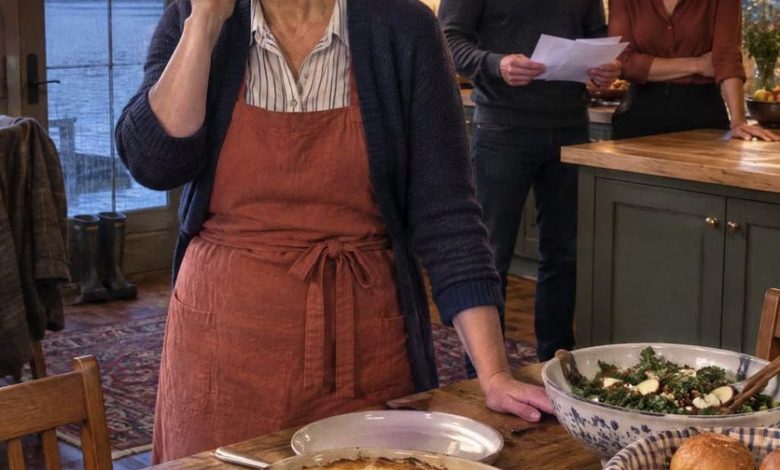
My Daughter-in-Law Told Me Her Mother Would Always Come First—Three Days Before I Was Supposed to Give Them $87,500 for Their Dream Home. My Son Stayed Silent, So on Closing Day, I Made One Phone Call They Never Expected.
“My mother comes first. Accept it, or we handle things separately.”
My son didn’t stand up for me. He didn’t even call. He sent a text.
And on closing day, while they were preparing to sign the paperwork for the home they already considered theirs, I made one phone call.
That call changed everything.
But I’m getting ahead of the story.
That Saturday evening, I stood by myself in my kitchen with my phone still held against my ear.
A roast chicken rested in the pan on the counter, its golden skin glistening with butter, rosemary, and thyme. Fresh rolls sat beneath a clean dish towel. Green beans from my garden waited in a serving bowl.
Dinner was nearly ready. Dinner nobody was coming to eat.
Through the screen door, I could hear birds moving around the garden and the soft rustling of leaves in the evening breeze.
For one brief moment, I could almost hear Harold.
My husband.
The man who had shared that kitchen with me for more years than I could count. The man who would have taken one glance at my face and understood exactly what had happened.
Harold always knew what to say.
But Harold had been gone eleven years.
So instead of saying everything that was running through my mind, I simply whispered into the phone,
“I understand.”
Then I ended the call and turned off the oven.
Twenty minutes later, my son Caleb texted me.
“Hey, Mom. Hope that’s okay. She really wanted to do something special for her mom.”
I stared at the message.
“Hope that’s okay.”
Something about those words hurt more deeply than I expected.
It sounded as though he were asking whether I minded them changing a restaurant reservation.
As though I hadn’t just been shown exactly where I stood.
As though the woman who had spent decades putting him first was now expected to quietly accept being placed second.
I didn’t respond.
I opened a kitchen drawer, put the phone inside, closed it, and went outdoors.
Then I pulled weeds until there wasn’t enough daylight left to see them clearly.
The truth was, this wasn’t really about one canceled dinner.
It had been building for months.
Caleb and his wife, Lindsay, had lived in a cramped one-bedroom apartment in Knoxville for four years.
They wanted a house.
Their dream house.
When Caleb finally approached me and asked whether I could help with the down payment, he could barely meet my eyes.
He sounded uncomfortable.
Almost ash@med.
“Mom, I hate even asking you this…”
I didn’t allow him to finish.
I said yes.
Immediately.
There was no attorney. No written contract. No conditions. No repayment plan.
Nothing.
He was my son.
And I believed love was enough of a foundation.
The amount was $87,500.
To Lindsay, it seemed to become their money almost as soon as I offered it.
But to me?
That money represented twenty years of saying later.
Later to purchasing the sewing machine I truly wanted. Later to replacing my aging Honda Civic. Later to vacations. Later to new furniture. Later to countless little things I could have purchased for myself.
Because the mortgage came first.
Braces came first.
School expenses came first.
Family came first.
That $87,500 wasn’t simply sitting inside an account.
My life was sitting inside that account.
But Lindsay didn’t appear to view it that way.
During Sunday dinners at my home, she would sit at the table scrolling through countertop samples, lighting fixtures, and cabinet hardware.
One afternoon, she showed Caleb a $4,000 sectional on her phone.
Then she smiled and casually said,
“It’s so helpful when families pitch in for the big stuff.”
She never directly asked me to purchase anything.
That was Lindsay’s talent.
She could transform requests into facts.
Expectations into logistics.
And if you hesitated, somehow you became the difficult person.
Caleb rarely said much.
My gentle boy had grown into a man who avoided conflict.Whenever Lindsay crossed a boundary, he would suddenly become interested in the floor, the wall, or something somewhere over my shoulder.
For months, I made excuses for it.
Then I began noticing something.
His silence always protected her.
And somehow, it always came at my expense.
Then Donna arrived in town.
Lindsay’s mother drove up from Atlanta that Saturday, and I had invited everyone over for dinner.
Roast chicken. Fresh rolls. Green beans from my garden.
Caleb had told me earlier that week that everything sounded wonderful.
I spent most of Saturday preparing the meal.
Then Lindsay called that afternoon.
Donna had decided she wanted Italian food downtown.
Lindsay had already booked a reservation for seven.
She explained that giving her mother a “proper welcome dinner” was extremely important.
I looked at the chicken already roasting inside my oven.
“I’ve already started cooking,” I told her.
There was a pause.
Then Lindsay said the words I would never forget.
“My mother comes first.”
Her voice remained calm.
Almost matter-of-fact.
As though she were explaining a family rule I should have understood a long time ago.
Then came the sentence that changed something inside me.
“Accept it, or we handle things separately.”
I didn’t argue. I didn’t raise my voice.
I simply said, “I understand.”
And later, Caleb sent that text.
Hope that’s okay.
The following morning, I drove to visit Bob Whitmore.
Bob had been Harold’s college roommate and one of our closest friends for decades.
He had spent twenty-two years working as a senior loan officer, and even after retirement, he kept his financial certifications current.
I told him everything.
The house. The $87,500. The escrow timeline. Lindsay. The canceled dinner. Her words. Caleb’s text.
Bob listened without interrupting me.
When I finished, he slowly placed his coffee cup on the table.
Then he asked me one question.
“You haven’t signed the final transfer documents yet?”
“No,” I said. “Closing is Thursday.”
Bob leaned back.
Then he nodded.
“Then nothing’s been given yet.”
I remained silent.
He continued.
“Roberta, you made a promise. You haven’t made a transfer. Those are two different things.”
Those words stayed with me the entire drive home along the river road.
And for the first time in months, something became completely clear.
I had been thinking about the $87,500 as Caleb and Lindsay’s money.
Money they were expecting. Money I was obligated to provide.
But it wasn’t theirs.
Not yet.
I thought about the hands that had earned it.
The years contained within it.
The things I had gone without in order to save it.
And most importantly, the name still written on the account.
Mine.
Wednesday morning, my neighbor Joyce and I were preparing to leave for Gatlinburg when my phone buzzed.
Lindsay.
She was reminding me that closing was Thursday at 2:00.
The escrow office had the gift authorization paperwork waiting for my signature.
That was the whole message.
No “please.” No “thank you.” No “we appreciate you.”
Only a reminder.
As though I were an employee who had forgotten to complete an assigned task.
I slipped the phone back inside my jacket pocket.
That night, something unexpected happened.
I slept better than I had in months.
Thursday morning, I woke up at 5:30.
I made coffee and carried it outdoors.
Then I sat on the back steps and watched the first morning light appear behind the ridge.
The garden was peaceful.
Harold and I had planted most of it together years earlier.
For a long while, I simply sat there.
Thinking. Remembering. Deciding.
At exactly 8:00, I walked inside.
I picked up my phone.
And I called the escrow office.
A woman answered.
I gave her my name and explained which closing I was calling about.
I could hear her typing.
A few moments later, she located Caleb and Lindsay’s file.
She confirmed my identity.
Then she told me something I already knew but needed to hear one final time.
The $87,500 gift authorization remained unsigned.
Nothing had been transferred or finalized.
The decision was still mine.
For several moments, I said nothing.I stood beside the kitchen window looking toward the garden Harold and I had created together.
Then I tightened my hand around the phone.
“I’m calling about the gift authorization,” I said.
“Yes, ma’am,” the escrow officer replied. “What would you like us to do?”
I took a slow breath.
And then I told her.
Meanwhile, across Knoxville, Caleb and Lindsay were getting dressed for their 2:00 closing, completely unaware that the $87,500 they had already planned to spend was still sitting safely inside my account.
And they had absolutely no idea what I had just done.
Continue reading below 👇
PART 2
By 1:15 that afternoon, my phone had already rung three times.
The first call was from Caleb.
“Mom, what’s going on?” he asked, his voice tight in a way I hadn’t heard since he was a teenager.
I didn’t answer right away. I let the silence settle between us, just long enough for him to feel it.
“The escrow officer said the gift transfer was canceled,” he said. “They can’t close without the funds.”
“I know,” I replied calmly.
Then came the second call—Lindsay.
This time, she didn’t sound polished or confident. She sounded furious.
“You blindsided us!” she snapped. “Do you realize what you’ve done?”
Yes. For the first time in months, I did.
I stood by the kitchen counter, looking at the same garden Harold and I had planted together, and something inside me felt stronger than guilt.
“I didn’t blindside anyone,” I said. “I simply stopped being taken for granted.”
She went quiet.
A few minutes later, Caleb called again. His voice was softer now. Hurt. Confused.
“Mom… why would you do this on closing day?”
I closed my eyes for a moment, took a slow breath, and finally said the words he needed to hear most—
“Because, Caleb, before I give you anything that took me a lifetime to build, you and your wife are going to learn exactly what it cost me.”