Nine People Reported Dead Following Avalanche Near Lake Tahoe, Including Group of Mothers on Ski Trip
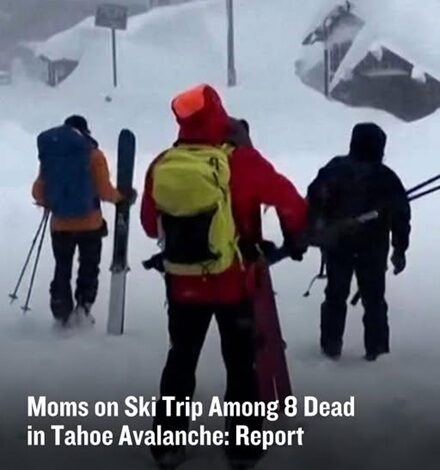
Winter in the Sierra Nevada mountains brings extraordinary beauty. Snow blankets the peaks, forests glisten under pale sunlight, and backcountry terrain transforms into a vast alpine playground for skilled skiers and mountaineers.
Yet beneath this breathtaking landscape lies a powerful and sometimes unpredictable force.
Avalanches remain one of the most serious hazards facing those who venture beyond resort boundaries into remote wilderness. In recent years, avalanches in and around Tahoe National Forest, near landmarks such as Castle Peak and the greater Lake Tahoe region, have served as sobering reminders of nature’s strength.
While the Sierra Nevada is widely regarded as less avalanche-prone than some other North American mountain ranges, dangerous snow slides do occur, especially during periods of heavy snowfall combined with fluctuating temperatures and wind loading.
When avalanches strike, the consequences can be devastating. For families, friends, and tightly connected mountain communities, such events leave lasting emotional scars.
A Beloved Mountain Landscape
The northern Sierra Nevada, including Tahoe National Forest, has long been a destination for experienced backcountry enthusiasts.
The terrain near Castle Peak is particularly well known among skilled skiers for its open bowls, steep chutes, and scenic ridgelines.
On clear winter days, the landscape offers expansive views stretching across snow-covered forests and granite peaks.
Backcountry skiing differs significantly from resort skiing. Outside managed ski areas, there are no avalanche mitigation teams conducting explosive control work, no groomed trails, and no ski patrol stationed nearby.
Skiers must evaluate snowpack stability themselves, interpret weather data, and navigate complex terrain using specialized training and equipment.
Guided backcountry trips are often organized by professional mountain guide companies. These excursions typically include detailed route planning, avalanche safety briefings, beacon checks, and continuous terrain assessment. Guides are trained in snow science, rescue procedures, and risk management.
Even so, mountain professionals consistently emphasize a critical truth: risk can be reduced, but never eliminated.
Understanding Avalanche Conditions in California
Avalanches form when layers of snow with different strengths and bonding characteristics separate and slide downhill. In the Sierra Nevada, storm cycles can rapidly build unstable snowpack layers.
Strong winds may transport snow across ridgelines, depositing dense slabs on leeward slopes. Rapid warming after storms can further destabilize the snowpack.
Organizations such as the Sierra Avalanche Center provide daily forecasts during winter months, assessing danger levels on a five-tier scale ranging from low to extreme. These forecasts incorporate snowpit data, weather observations, and reports from backcountry users.
While California historically experiences fewer avalanche fatalities than states such as Colorado, Utah, or Alaska, deadly incidents have occurred. When they do, they often involve experienced individuals in remote terrain.
Avalanches move with extraordinary speed and force. A large slide can travel at highway speeds, carrying tons of snow capable of burying vehicles, trees, and entire groups of people.
The Critical Window for Rescue
Avalanche survival often depends on immediate response. Most avalanche victims who survive are located and extricated by companions within the first 15 minutes. Beyond that window, survival rates decline sharply due to asphyxiation.
Backcountry travelers typically carry three essential pieces of equipment:
Avalanche transceiver (beacon)
Probe
Shovel
Modern avalanche beacons emit radio signals that allow rescuers to pinpoint buried individuals. However, successful rescue requires training and rapid coordination.
Professional search-and-rescue teams may deploy helicopters, avalanche dogs, and specialized equipment, but reaching remote locations can take significant time, particularly during ongoing storms or unstable conditions.
Difficult terrain, deep snow, and ongoing slide risk often complicate recovery efforts. In major avalanche events across North America, rescuers must balance urgency with safety to prevent additional casualties.
The Human Toll Behind the Headlines
Whenever an avalanche claims lives, it is not merely a statistical event. It represents the sudden loss of parents, siblings, friends, and mentors.
In mountain towns surrounding Lake Tahoe, outdoor recreation is not simply a pastime — it is a shared way of life. Families build traditions around skiing, snowshoeing, and alpine travel. Children grow up learning snow safety and mountain respect from an early age.
When tragedy strikes, the impact ripples through schools, ski programs, faith communities, and local businesses.
Resorts such as Sugar Bowl Resort and surrounding academies often serve as gathering points for reflection and remembrance. While guided backcountry trips are typically independent from ski resorts, community connections often overlap.
In past avalanche incidents within the broader Sierra Nevada, communities have responded with candlelight vigils, fundraising initiatives, and memorial gatherings.
Counselors and grief specialists frequently provide support for families and first responders alike.
Experience Does Not Eliminate Risk
One of the most sobering aspects of avalanche accidents is that they often involve highly experienced individuals.
Many victims across North America have held avalanche certifications or traveled frequently in backcountry terrain.
Psychologists studying outdoor risk behavior note that familiarity with terrain can sometimes create a false sense of security.
Groups may also face subtle social pressures to continue planned objectives despite warning signs. Experts emphasize conservative decision-making, especially during elevated avalanche forecasts.
Key principles consistently reinforced by avalanche educators include:
Choosing lower-angle terrain during unstable conditions
Avoiding travel beneath loaded slopes
Spacing out group members during descents
Continually reassessing weather and snowpack changes
Despite these precautions, mountains remain dynamic environments. Wind shifts, temperature fluctuations, and hidden weak layers can produce unpredictable outcomes.
Climate Variability and Snowpack Complexity
Researchers studying snow science in the western United States have observed that climate variability can influence avalanche patterns.
Warmer storms may create denser snow layers that sit atop lighter, weaker snow. Rapid temperature swings — common in California winters — can increase instability.
However, experts caution against oversimplifying avalanche causation. Each event results from a combination of terrain, snowpack structure, weather, and human decision-making.
Detailed post-incident investigations are typically conducted to understand contributing factors, both to provide clarity and to improve future safety education.
The Role of Search and Rescue Teams
California’s search-and-rescue teams are often composed of trained volunteers working alongside sheriff’s departments and state agencies.
These individuals undergo rigorous training in avalanche response, wilderness medicine, rope rescue, and navigation.
Helicopter crews may assist when weather permits, but heavy snowfall and poor visibility can limit air operations. Avalanche dogs — specially trained to detect human scent beneath snow — often play a vital role in locating victims quickly.
Rescuers frequently describe avalanche response as physically and emotionally demanding. The urgency of time, combined with hazardous conditions, creates intense pressure.
When fatalities occur, first responders often receive additional counseling support.
Community Strength in the Aftermath
In mountain regions, community bonds tend to run deep. Outdoor enthusiasts often describe the backcountry as a place of connection — not only to nature but to one another. Shared experiences in challenging environments create lasting friendships.
Following serious incidents in the Sierra Nevada over the years, local organizations have organized memorial funds to assist affected families.
Neighbors deliver meals, offer childcare, and provide logistical help during difficult weeks. Faith leaders and mental health professionals host reflection gatherings and open forums.
These acts of compassion cannot erase grief, but they provide stability in moments of profound shock.
Remembering Lives Beyond the Tragedy
It is essential that coverage of avalanche incidents honors the full humanity of those lost. Individuals who pursue backcountry skiing often do so out of deep respect for nature, a love of physical challenge, and a desire to share meaningful time with others.
They are parents teaching children resilience, professionals balancing demanding careers, volunteers serving their communities, and friends known for generosity and warmth.
The mountains are not reckless playgrounds but places where many people find clarity, renewal, and joy.
Responsible storytelling ensures that remembrance focuses not only on the event itself but on the lives lived with purpose and passion.
A Continuing Commitment to Safety
Avalanche educators across the West continue to advocate for expanded training opportunities. Introductory and advanced avalanche courses teach:
Snowpack assessment techniques
Terrain identification
Companion rescue drills
Decision-making frameworks
Technology has also improved in recent years. Airbag backpacks, more precise digital beacons, and improved forecasting tools offer additional layers of protection.
Still, experts consistently stress that equipment is no substitute for judgment.
Moving Forward With Humility
The Sierra Nevada mountains will always draw adventurers seeking beauty and challenge. Their granite peaks and winter silence inspire awe.
But every avalanche season reinforces a fundamental lesson: humility is essential. No level of experience can eliminate uncertainty entirely.
Respecting forecasts, turning back when conditions feel questionable, and prioritizing safety over objectives remain the most powerful tools available to backcountry travelers.
A Final Reflection
Avalanche tragedies remind us of the fragile balance between human aspiration and natural forces.
They call communities together in grief but also in gratitude — gratitude for shared memories, for time spent outdoors, and for the resilience that follows hardship.
For families who have lost loved ones in avalanche incidents anywhere in the Sierra Nevada, words can offer only limited comfort.
Yet the broader mountain community continues to stand beside them, honoring lives through support, remembrance, and renewed commitment to safety.
The snow will fall again in Tahoe National Forest. Skiers will return, guided by experience, caution, and respect. And in quiet moments on high ridgelines, many will carry forward the memory of those who cherished these mountains most.