My Father Abandoned Me and My Little Brother for His Girlfriend — 15 Years Later, He Came Back Begging for Help
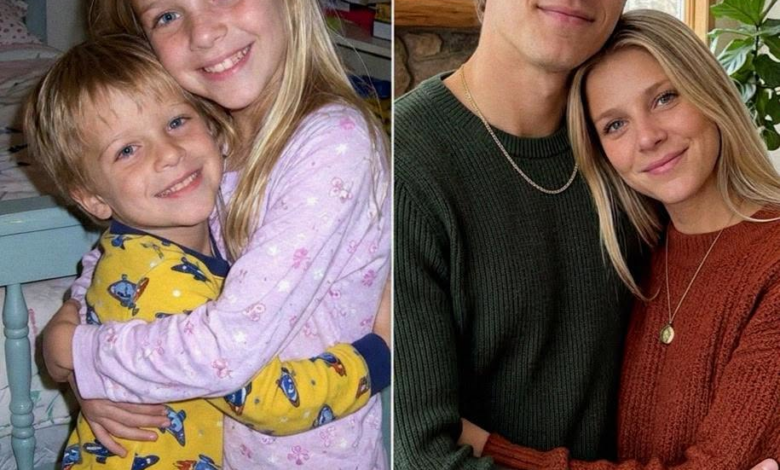
I was eleven when my father decided he no longer wanted to be our father.
My brother Jamie was five.
Our mother had died two years earlier, and Jamie still slept with the hallway light on because he was afraid Mom might come home and not know where his room was.
Then Dad met Claire.
She hated everything about us.
If Jamie left a cup by the sink, she complained. If we interrupted a movie, she acted like we’d ruined her life.
One night, I heard her tell Dad:
“I didn’t sign up to raise someone else’s kids.”
Dad quietly replied, “They’re my kids.”
“Then choose,” she said. “It’s either them or me.”
I waited for Dad to tell her to leave.
He didn’t.
Two months later, social services took Jamie and me into care.
Dad didn’t fight for us.
Eventually, his parental rights were terminated.
For years, we moved from one foster home to another. Every time someone promised stability, I waited for them to change their minds.
When I turned eighteen, I petitioned to become Jamie’s guardian.
“You’re eighteen,” the social worker said. “You don’t have much.”
I looked through the glass at Jamie.
“I have him.”
After months of paperwork and home visits, I got custody.
We lived in a tiny apartment. I worked two jobs while Jamie learned not to ask for things.
Once, I found him throwing away a permission slip for a $40 school trip.
“So?” I asked.
“It costs forty dollars. We need groceries.”
I looked at him.
“No. You’re going.”
I worked an extra Saturday.
Years passed.
I finished college. Jamie went to college. Eventually, I bought a small house.
The first night there, Jamie looked around and asked, “So nobody can make us leave?”
“Only the bank.”
He laughed.
For fifteen years, Dad was barely a memory.
Then one morning, someone knocked on my door.
It was him.
His shoes were cracked. His jacket was torn. He looked exhausted.
“Things went bad with Claire,” he said.
She had taken the house, the savings, and most of what he owned.
“I’ve been sleeping wherever I can,” he continued. “I just need help.”
I thought about Jamie at five.
I thought about being eighteen and calculating whether we could afford milk.
Then I said, “Okay. I’ll help you.”
His face relaxed.
“But there’s one condition.”
“What?”
“You do exactly what I ask today.”
Twenty minutes later, I drove him to our old neighborhood.
Mrs. Parker still lived there—the woman who used to take care of us when Dad was never home.
When she opened the door and saw my father, she went silent.
Then she said, “Well. That took a while.”
She brought out an old cardboard box.
Inside were our school papers, birthday cards, photographs, Jamie’s first baseball glove—and a faded red toy truck.
“Jamie carried this everywhere,” she said.
Then she pulled out several envelopes.
Dad stared at them.
“What are those?”
“Letters.”
“To who?”
“You.”
Mrs. Parker explained that she had written to him for almost two years after we entered care.
“I gave you the caseworker’s number. I told you Jamie couldn’t sleep. I told you your daughter kept asking whether you’d called.”
Dad shook his head.
“I never got them.”
Mrs. Parker looked straight at him.
“I delivered four of them myself. You opened the door twice. Claire opened it once. The fourth time, you saw me through the window and didn’t answer.”
Dad said nothing.
For fifteen years, part of me had wondered whether Dad had simply lost us.
Now I knew.
He had been given a way back.
He just hadn’t taken it.
But there was one more thing.
Mrs. Parker was moving and needed help packing.
I looked at Dad.
“She showed up for us. Today, you show up for her.”
We spent the entire day moving boxes and furniture.
At one point, Dad stood in the room where Jamie used to sleep.
“I told myself you were better off,” he whispered.
“Claire wanted another life.”
“And you wanted Claire,” I said.
He lowered his head.
“Yes.”
Then he admitted the truth.
“I convinced myself another family could give you more.”
I looked at him.
“Jamie thought you left because of him.”
Dad froze.
“He thought he cried too much. Needed too much. Cost too much.”
Dad’s face crumpled.
“He was five.”
“I know.”
That evening, I took Dad to my house.
Twenty minutes later, Jamie walked in.
He saw Dad at the kitchen table and stopped.
“No.”
“Jamie,” I said.
“I’m leaving.”
“Jamie, I’m sorry,” Dad whispered.
Jamie raised one hand.
“No speech.”
Dad stopped.
“I just want one answer,” Jamie said.
“What position do I play?”
Dad opened his mouth.
Nothing came out.
Jamie nodded.
“You don’t know me enough to say sorry earnestly.”
He walked away.
I still helped Dad.
I bought him dinner, basic clothes, and paid for one week at a rooming house.
“But you said you’d help,” he protested.
“I am helping you stand up,” I said. “I’m not carrying you.”
I gave him job listings, bus routes, and the address of an employment center.
Weeks later, he called.
“I got a job.”
“Doing what?”
“Maintenance at an apartment complex.”
“Good.”
There was a pause.
“I found Jamie’s baseball schedule. Could I attend one game?”
I asked Jamie.
He shrugged.
“Whatever.”
Dad came Saturday.
He sat several rows away and watched the entire game without approaching us.
Afterward, Jamie stopped near the field.
He picked up the game ball and tossed it toward Dad.
Dad caught it awkwardly.
Jamie pointed toward the field.
“Shortstop.”
Dad stared at him.
Jamie nodded once.
“That’s what I play.”
Then he walked away.
It wasn’t forgiveness.
Maybe it never would be.
But for the first time in fifteen years, my father knew something about his son because he had stayed long enough to learn it.