9 injured including newborn child in ambulance rollover crash
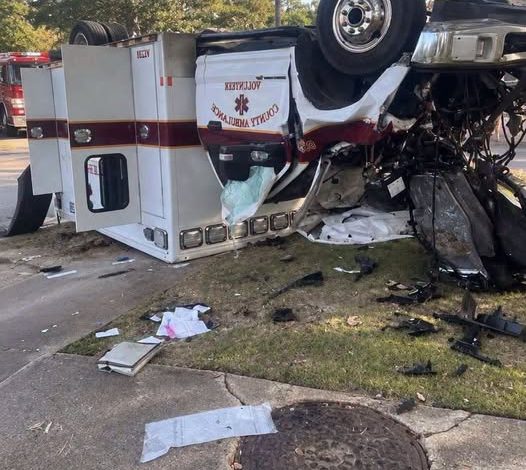
A devastating accident occurred late last night when an ambulance carrying a newborn and several passengers overturned on a busy highway. According to local officials, nine people were injured in the crash, including the infant, medical staff, and the driver. The vehicle was reportedly en route to a nearby hospital when it suddenly lost control and flipped multiple times before coming to a stop on its side.
Emergency responders quickly arrived at the scene to rescue those trapped inside. Witnesses described a chaotic scene, with flashing lights and paramedics rushing to provide immediate medical attention. The newborn, along with two nurses, was taken to the hospital in stable condition, while others sustained moderate to serious injuries.
Authorities are currently investigating what led to the crash. Early reports suggest that slick road conditions and possible speeding may have contributed to the accident. The ambulance’s black box data and dashcam footage are being reviewed to determine the exact cause.
This heartbreaking incident serves as a sobering reminder of the risks faced by emergency responders every day. Even vehicles designed to save lives are not immune to danger on the road. Thankfully, all victims are expected to recover, and the community has come together in support of the medical team and family affected by the terrifying accident.
Emergency responders quickly arrived at the scene to rescue those trapped inside. Witnesses described a chaotic scene, with flashing lights and paramedics rushing to provide immediate medical attention. The newborn, along with two nurses, was taken to the hospital in stable condition, while others sustained moderate to serious injuries.
The investigation must separate the conditions present on the highway from the factors that actually caused the ambulance to overturn. A wet surface may affect a vehicle’s movement, but its presence alone does not establish the sequence of the crash. The same caution applies to early suggestions about speed. Recorded information and the physical evidence need to be considered together before investigators can reach a firm conclusion.
For the newborn’s family, the journey to receive medical attention became a second emergency. The report that the infant and two nurses reached the hospital in stable condition offers a measure of reassurance amid the disruption. Stable condition, however, is only one part of the picture. The other people injured in the rollover also required assessment, and the range of injuries described underscores how differently passengers can be affected in the same collision.
Rescue work at an overturned ambulance involves more than moving the vehicle out of traffic. Responders must assess those inside, coordinate access, and keep approaching vehicles away from the working area. The medical equipment and confined interior that normally support treatment can become additional complications after a vehicle lands on its side. Clearing a safe route for replacement transport is part of restoring the original mission of getting people to care.
The account ends with an expectation of recovery for everyone injured, even as the cause remains under examination. Those are separate developments: a hopeful medical outlook does not resolve the questions about the crash, and the continuing investigation does not diminish the importance of that hopeful news. For the staff and family involved, the immediate concern remains the recovery of the people who were inside the ambulance.