21-YEAR-OLD WOMAN FATALLY SHOT WHILE BOYFRIEND WAS ‘PLAYING’ WITH REVOLVER — THEN A SECOND TRAGEDY UNFOLDED
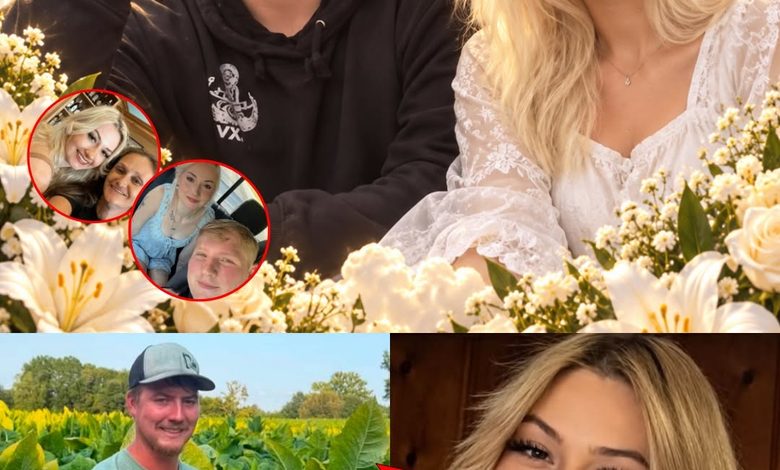
A young couple who had reportedly been talking about getting engaged were both dead within hours after what police described as a preventable tragedy involving a revolver inside a Fairbanks, Alaska, home. CloeRae McBrayer, 21, was fatally shot after police say her boyfriend, 22-year-old Landon Lowrance, pointed the firearm at her while “playing” with it. Moments later, as a friend desperately called 911, the situation took another devastating turn.
The incident unfolded on the night of September 16, 2026, at a residence on Bentley Drive in Fairbanks. At approximately 9:12 p.m., the Fairbanks Emergency Communication Center received a call from a man reporting that his friend had accidentally shot his girlfriend. The friend remained on the phone with emergency dispatchers while officers rushed toward the home.
The woman was CloeRae, a young Alabama native who had moved to Alaska and was preparing for a new chapter in her life. Her boyfriend was Lowrance, a 22-year-old man whose place of duty was reportedly at Fort Wainwright. What investigators believe happened inside the home would leave two families confronting losses that nobody had expected.
According to Fairbanks police, Lowrance had been handling a revolver before the shooting. Investigators said he was “playing” with the firearm and pointed it toward CloeRae. The revolver then fired, striking her.
Deputy Chief Richard Sweet later said investigators believed there had been a single round in the revolver’s chamber. Authorities had not determined whether Lowrance knew the weapon was loaded when he pointed it at his girlfriend. But police stressed that the uncertainty did not change the fundamental safety rule that a firearm should always be treated as loaded.
Another heartbreaking detail later emerged. CloeRae was reportedly on the phone with another person at the moment she was shot. An ordinary conversation was suddenly interrupted by an event that would end her life.
The friend inside the home immediately called for emergency help. According to police, he told dispatchers that Lowrance had accidentally shot his girlfriend. As the 911 call continued, however, the emergency was not over.
Dispatchers could reportedly hear a disturbance occurring in the background. The witness attempted to intervene as Lowrance obtained access to another firearm. Despite the friend’s efforts to stop him, police said Lowrance shot himself.
By the time officers arrived, they were confronted with two critically serious scenes inside the same residence. CloeRae was found dead. Lowrance was still alive but critically injured.
Emergency personnel transported Lowrance to Fairbanks Memorial Hospital. Medical teams attempted to treat his injuries, but he later died. Within a short period of time, two young lives had ended.
Police questioned the friend who had called 911. Investigators said he was not believed to have been involved in either shooting. His role, according to authorities, was that of a witness who had tried to summon help and prevent the situation from becoming even worse.
For investigators, the first task was determining exactly what had happened before the revolver discharged. Police ultimately said the evidence indicated that Lowrance had been handling the weapon and pointing it at CloeRae when it fired. They described her shooting as accidental.
But “accidental” did not mean unavoidable.
Fairbanks police emphasized afterward that the tragedy could have been prevented through basic firearm safety. Deputy Chief Sweet reminded the public that every firearm should always be considered loaded. A gun should never be pointed toward another person except in a legitimate defensive situation.
Those rules exist precisely because nobody can safely rely on an assumption that a firearm is unloaded. A magazine may have been removed while a round remains in a chamber, or a person may misunderstand the condition of a weapon. With a revolver, a cartridge remaining in one chamber can still turn careless handling into a fatal event.
In this case, investigators believed there was one round in the revolver. Whether Lowrance knew about that round remained unclear in the initial investigation. What was clear was that CloeRae was directly in the firearm’s path when it discharged.
The consequences were immediate and irreversible.
For CloeRae’s family in Alabama, the news was almost impossible to comprehend. She was only 21 and had been building a future that her relatives believed was filled with possibility. She had recently been accepted to the University of Alaska Fairbanks and planned to pursue a career in teaching.
Her mother, Amanda Hooper, described her daughter as the “All-American Girl.” CloeRae had participated in pageants while growing up and had played volleyball and softball as well as cheerleading. Family members remembered her as outgoing, loving and deeply devoted to the people around her.
Her mother described CloeRae as the sunshine of their family. Friends and relatives said she had a personality that naturally drew people toward her. She was remembered as someone who brought energy into a room and cared deeply about her family and friends.
CloeRae also had creative ambitions. Her family said she had long been interested in cosmetology, fashion and design. Even as a child, she enjoyed cutting and reworking clothing to create things of her own.
But more recently, she had begun looking toward teaching. Her acceptance to the University of Alaska Fairbanks represented the beginning of that path. At 21, she was still deciding what shape her adult life would ultimately take.
Her relationship with Lowrance had also become serious.
According to her mother, CloeRae met Lowrance through a mutual friend. She initially traveled to Alaska to visit him before eventually deciding to move there. She told her mother that she believed he was a good person.
Their relationship had progressed to the point that marriage was being discussed. CloeRae’s older sister said the family had been planning their wedding. Her mother said the couple had been talking about getting engaged around the same period in which the tragedy occurred.
Those plans make the events of September 16 even more difficult for her family to understand.
Instead of celebrating an engagement, they were suddenly making arrangements to bring CloeRae home to Alabama. Friends and members of the community organized fundraising efforts to help transport her remains back to her home state for burial. Support poured in as news of her death spread.
Her mother was left struggling with one particularly painful detail: CloeRae was reportedly afraid of firearms.
She questioned why Lowrance had been playing with a gun when her daughter was frightened of them. It was another question surrounding a night filled with decisions that could no longer be undone. Whatever the explanation, the revolver had been pointed at CloeRae and fired.
Investigators have not suggested that Lowrance deliberately shot his girlfriend. Police described her death as the result of an accidental shooting. But they also made clear that treating a firearm casually can have fatal consequences regardless of a person’s intention.
A gun does not know whether someone believes it is unloaded.
It does not distinguish between a joke and a threat.
And once a trigger is pulled with a live round positioned to fire, intention cannot reverse what follows.
That reality is at the center of what happened to CloeRae.
Only seconds may have separated an apparently casual moment from a fatal injury. The revolver was pointed in her direction, the weapon discharged, and a young woman with plans for college, teaching and marriage was gone. The friend inside the home was suddenly forced to call emergency dispatchers and explain what had happened.
Then came the second crisis.
Police say Lowrance obtained another firearm after CloeRae was shot. The witness reportedly attempted to stop him physically. But before officers could arrive and intervene, Lowrance shot himself.
That sequence transformed one fatal shooting into a tragedy involving two deaths.
Lowrance was taken to Fairbanks Memorial Hospital in critical condition. He later died from his injury. Authorities subsequently investigated both shootings while awaiting findings from the state medical examiner.
Police treated the witness as an important source of information. He was interviewed by detectives and was not suspected of participating in either shooting. His 911 call also gave investigators a near-immediate record of the chaotic moments following CloeRae’s shooting.
For CloeRae’s mother, grief did not translate into anger toward Lowrance’s parents. She publicly expressed sympathy for his family, recognizing that they too had lost a child. She said what happened was outside their control.
Her words highlighted the complicated grief surrounding the case.
One family lost a daughter after police say her boyfriend accidentally shot her.
Another family lost a son after he took his own life moments later.
And a witness was left with memories of desperately trying to stop events that unfolded faster than help could arrive.
The tragedy also created painful questions that investigators may never be able to answer completely. Did Lowrance believe the revolver was empty? Why was he pointing it toward CloeRae in the first place? What was happening in his mind after realizing she had been shot?
Police could investigate the physical evidence, interview the witness and reconstruct the sequence of events. But Lowrance’s death meant some answers disappeared with him. His intentions and assumptions in the moments before the revolver fired may never be known with certainty.
Authorities were nevertheless able to emphasize what should never have happened.
A firearm should not have been treated as a toy.
It should not have been pointed at another person.
And nobody handling a gun should assume it is unloaded without following proper safety procedures.
The fact that investigators believe there was only one cartridge in the revolver illustrates why those rules matter. A firearm does not need to be fully loaded to be deadly. One round is enough.
Police said it remained unclear whether Lowrance knew that round was present. But firearm safety rules are specifically designed to make that knowledge irrelevant. If every gun is treated as loaded and never pointed at another person, a mistaken belief about its condition is far less likely to become fatal.
Deputy Chief Sweet used the tragedy to remind the community of that principle.
His message was straightforward: treat every firearm as loaded at all times.
That means even after someone believes they have unloaded a weapon, the gun should still be handled with the same caution. The muzzle should remain pointed in a safe direction, and a finger should remain away from the trigger unless the person intends to fire.
Those basic principles cannot change what happened in the Bentley Drive home.
They cannot give CloeRae the college experience she was preparing to begin.
They cannot restore the engagement her family believed was approaching.
And they cannot undo the second shooting that ended Lowrance’s life.
For CloeRae’s relatives, the focus has increasingly turned toward remembering who she was rather than allowing the circumstances of her death to define her entire story. Family members described her as bright, outgoing, free-spirited and deeply loving. Friends remembered someone whose presence could brighten the people around her.
Her grandmother described her simply as a good kid.
Her sister remembered a young woman with an independent personality who knew what she wanted.
Her mother remembered the sunshine of the family.
Those descriptions offer a very different picture from the clinical language of a police report.
CloeRae was not merely “the victim” in an accidental shooting.
She was a daughter, sister, granddaughter, girlfriend and friend.
She was a young woman preparing for college and considering a career working with children.
She had grown up in Alabama surrounded by people who expected her to return home for visits, holidays and milestones for decades to come.
Instead, those loved ones were raising money to bring her home for a funeral.
The University of Alaska Fairbanks also reached out to support her family. Her mother expressed gratitude for the assistance offered during a moment when she was facing the possibility of traveling thousands of miles under circumstances no parent wants to experience.
The response from CloeRae’s hometown community was similarly strong. Donations were made to help cover the cost of returning her remains to Alabama. Friends, relatives and strangers shared messages honoring the young woman her family said had brought happiness to those around her.
The support could not remove the family’s grief.
But it reminded them that CloeRae’s life had mattered to people far beyond the room where she died.
For investigators, meanwhile, the case remained open while the state medical examiner completed its work. Police continued reviewing the evidence surrounding the shootings. Authorities had already said they believed CloeRae’s death was accidental and Lowrance’s death was self-inflicted.
The broader circumstances, however, continued to raise questions.
There is a natural tendency after a tragedy like this to search for a complicated explanation. People wonder whether there had been an argument, whether something happened earlier that night or whether the relationship was troubled. But police reporting has not established those explanations.
CloeRae’s own family described the relationship as serious enough that an engagement and wedding were being discussed. Her mother said she knew her daughter loved Lowrance and believed Lowrance loved CloeRae. That made the outcome even more incomprehensible to those who knew them.
Sometimes a tragedy does not require an elaborate chain of events.
Sometimes it begins with one reckless decision.
Police say Lowrance pointed a revolver at CloeRae while handling it as though it were something to play with. There was a live round inside. The weapon fired.
Everything that happened afterward flowed from that moment.
CloeRae was fatally wounded.
A friend called 911.
Lowrance obtained another firearm.
The friend tried to stop him.
Lowrance shot himself.
Police arrived to find one young woman dead and one young man critically injured.
Within hours, both were gone.
For two families, September 16 became a date that would forever divide their lives into before and after.
CloeRae’s family had been discussing her future — school, teaching, an engagement and eventually a wedding. Instead, they were forced to confront the sudden end of all those plans. The future they had imagined for her disappeared in seconds.
Lowrance’s family was left facing its own devastating loss and the knowledge of the events police say preceded it.
The witness was left having experienced both shootings from terrifying proximity.
And Fairbanks police were left with a tragedy they publicly described as preventable.
That word may ultimately be the most important part of the case.
Preventable.
Not because anyone could reverse the events after the revolver fired, but because basic firearm safety is intended to stop precisely this type of event before it begins. If a weapon is always treated as loaded and never pointed at another person, the chance of an accidental discharge becoming a fatal shooting is dramatically reduced.
CloeRae’s death therefore carries a warning that is painfully simple.
A firearm is never something to “play” with.
A person should never rely on the belief that a gun is unloaded.
And one careless moment can permanently alter the lives of everyone in a room.
For CloeRae’s mother, however, those lessons come far too late.
She had expected her daughter to continue building a life in Alaska. She expected conversations about school, careers, relationships and eventually marriage. Instead, she received the kind of phone call every parent fears.
Her daughter was gone at 21.
The young woman her family called their sunshine would never attend the university program she had been preparing for.
The wedding her sister said they were planning would never happen.
And the boyfriend she had planned that future with was gone too.
The investigation may eventually clarify additional details about the revolver, the second firearm and the exact sequence inside the Bentley Drive home. The state medical examiner may provide formal findings that complete the official record. But no investigative report can change the fundamental facts of that night.
Two young people died.
One family lost a daughter after a gun was pointed at her during what police described as “playing.”
Another family lost a son moments later.
And the friend who called 911 could only watch as an ordinary night turned into a tragedy that could not be undone.
CloeRae McBrayer was just 21 years old.
She had moved thousands of miles from Alabama, found love, been accepted to college and was beginning to imagine the next chapter of her life.
Instead, one round inside a revolver ended all of those plans — leaving behind grieving families and one devastating question about how a moment of reckless handling could cost two young people their futures.