My Husband Died After Becoming an Organ Donor—Then His Doctor Handed Me a Box He Had Hidden Until the End
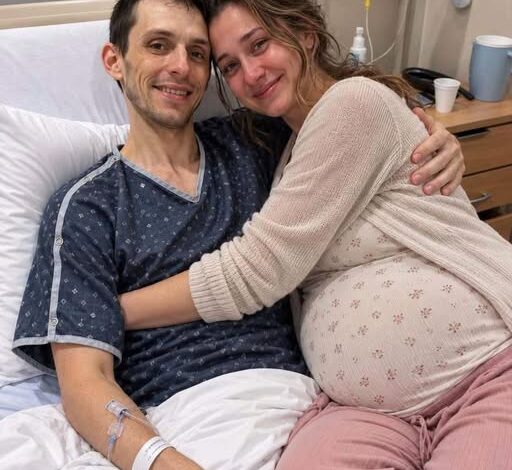
My husband Mark knew he might not live long enough to meet our daughter.
One evening, while we sat on the porch, he placed his hand on my pregnant stomach.
“If my organs are healthy enough when the time comes,” he whispered, “I want to donate them.”
I tried to change the subject.
But he looked at me seriously.
“If I can’t watch our daughter grow up, maybe I can still give someone else more time with the people they love.”
I promised I would respect his wish.
I never imagined how important those words would become.
As Mark grew weaker, he started having private conversations with his doctor. Whenever I asked what they were about, he simply smiled.
“Something for later.”
I assumed he was preparing something for our baby.
Then Mark died with my hand in his.
The world suddenly became silent.
I honored his decision to become an organ donor, believing that was the final thing I could do for him.
But as I was leaving the hospital, his doctor called my name.
He was holding a small wooden box.
“Mark gave me this several weeks ago,” he said. “He made me promise not to give it to you until after he was gone.”
My hands began to shake.
Inside was a letter with my name written in Mark’s handwriting.
The first line broke me:
“My love, if you’re reading this, then I didn’t get the chance to meet our daughter.”
He had written letters for her.
One for her first birthday.
One for her first day of school.
One for when she was afraid.
One for her graduation.
And one for the day she fell in love.
Then I found a photograph of Mark beside an old oak tree, along with notes about his family history.
He had spent months collecting stories, names, photographs, and memories so our daughter could know where she came from.
But at the very bottom of the box was one final sealed envelope.
It was addressed to me.
Inside was a message explaining the truth behind his final decision.
Mark knew someone connected to his family was desperately waiting for a transplant. He wanted me to understand that his decision to become a donor was deeply personal—but he also knew that organ allocation would be determined through established medical and legal processes.
He wasn’t trying to choose who received his organs.
He simply wanted his final act to possibly give another family more time together.
Weeks later, our daughter was born healthy.
I held her in my arms and thought about everything Mark would never see.
But then I remembered the box.
The letters.
The memories.
And I realized he had already found a way to be part of her life.
Years passed.
Every birthday, we opened one of his letters together.
When she turned eighteen, I finally gave her the last one.
She read it quietly.
Then she looked at me through tears.
“Mom… Dad really wrote all of this for me?”
I nodded.
She pressed the letter against her chest.
“He knew me before he even met me.”
I couldn’t speak.
I just hugged her.
I still have that wooden box.
Mark’s final wish wasn’t really about death.
It was about what could continue afterward—a life, a memory, a story, and perhaps more time for another family.
And most importantly, a daughter who would always know that even though her father couldn’t stay, he spent his final days making sure she would never doubt how deeply he loved her.