11-YEAR-OLD GIRL DIES AFTER HIDDEN BRANCH PIERCES HER CHEST DURING DAY OUT WITH FRIENDS
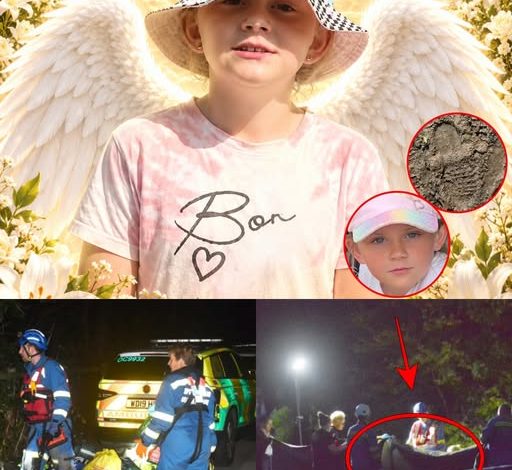
An ordinary summer outing with friends ended in an almost unimaginable tragedy when 11-year-old Lilly Angel Rodgers suffered a catastrophic chest injury while playing on mud flats. Lilly had been laughing, crawling through the mud and sliding down a bank with two friends when she struck a sharp branch or root hidden completely beneath the surface. More than a year later, an inquest revealed just how extraordinarily unlikely — and ultimately unsurvivable — the accident had been.
Lilly, from Newton Abbot in Devon, died on August 16, 2025, after spending the previous night at a friend’s house. The following day, she joined two friends, their mother and the woman’s partner for a trip to Wacker Quay near Torpoint in Cornwall. It was an area the children knew well and where they had played many times before without anything remotely similar happening.
There was no obvious warning that the place where they were playing concealed a deadly danger. According to evidence heard at the inquest, the adults were preparing a barbecue and made sure the children remained where they could be seen. At one point, the mother specifically called them closer so they would stay within her line of sight.
The three children were roughly 50 meters from the shore, enjoying exactly the kind of messy outdoor adventure many children would love. They rolled around in the mud, pretended to be starfish and crawled “commando-style” across the surface. Nothing about those moments suggested that within seconds their afternoon would become a desperate medical emergency.
Eventually, the children began sliding headfirst down a muddy bank toward a channel in the River Lynher. To them, it was simply another game in a familiar place where they had played before. But beneath the mud was an object none of them could see.
As Lilly slid forward, her chest came down onto a sharp branch or root concealed beneath the surface. The object penetrated through her ribs and approximately seven centimeters — nearly three inches — into her chest. In an extraordinarily unlucky trajectory, it severed one of her pulmonary arteries.
The injury was catastrophic almost immediately. Lilly reportedly managed to stand, grab her chest and gasp before collapsing face-first into the mud. Her friends realized something was terribly wrong and began screaming for help.
Those screams alerted the adults nearby. The mother and her partner rushed toward the children while another adult also came to help. Emergency services were contacted, beginning a rescue operation made significantly more difficult by Lilly’s location on the mud flats.
Getting medical help to an injured child is normally measured in minutes, but the terrain created a major obstacle. Lilly was unconscious in an area where emergency personnel could not simply drive an ambulance directly to her. The same mud that had moments earlier been part of the children’s game now complicated every effort to save her.
A paramedic managed to reach Lilly, but rescuers faced a terrible practical problem. High-quality CPR could not be effectively performed while she remained in the difficult mud-flat environment. Lilly first had to be moved somewhere rescuers could properly work on her.
The Coastguard became involved and a search-and-rescue helicopter was used in the operation. Crews worked to get Lilly away from the mud flats and back onto dry land. According to evidence presented at the inquest, the process took approximately 40 minutes.
Once Lilly reached solid ground, rescuers were finally able to carry out meaningful CPR. Every possible effort was made to give the 11-year-old a chance. She was then transported to Derriford Hospital in Plymouth for further emergency treatment.
But the damage inside Lilly’s chest was devastating. Despite everything done by the people who rushed to help her, doctors could not save her. The little girl who had been playing with friends only a short time earlier was pronounced dead.
For those who witnessed the accident, the suddenness was almost impossible to comprehend. There had been no obvious dangerous behavior immediately beforehand and no visible sharp object that someone could simply have removed. The branch or root that caused the injury had been hidden beneath the mud.
More than a year later, the circumstances surrounding Lilly’s death were examined in detail during an inquest. The hearing sought to establish how she died and whether anything suspicious or preventable had contributed to what happened. The medical evidence revealed just how devastatingly precise the injury had been.
Consultant pathologist Dr. James Garvican explained that the wound extended approximately seven centimeters into Lilly’s chest. The object had entered between her ribs and damaged a pulmonary artery, one of the major blood vessels carrying blood between the heart and lungs. That injury caused catastrophic internal bleeding.
But perhaps the most haunting evidence involved the exact position of the wound. According to the pathologist, a difference of only around half an inch could have produced a dramatically different outcome. Lilly had been struck in an extraordinarily specific and dangerous location.
Had the branch entered approximately half an inch to one side, it likely would have glanced off her ribcage. In that scenario, the injury might have amounted to little more than bruising and a scratch. A tiny difference in the direction of Lilly’s slide could therefore have changed everything.
Had the object entered approximately half an inch in the opposite direction, it might still have penetrated her chest. Even then, according to the medical evidence, it likely would not have damaged the vital structures that were struck. Instead, the hidden branch followed precisely the path capable of causing a fatal injury.
Dr. Garvican described the injury as unsurvivable. That conclusion is significant because it addresses an inevitable question after any tragedy involving a difficult rescue: whether reaching Lilly sooner could have changed the outcome. The medical evidence indicated that the internal damage was so severe that her life could not realistically have been saved.
There was another detail that may offer at least a small amount of comfort to those who loved Lilly. The pathologist said she most likely lost consciousness immediately. He believed she would not have been aware of the prolonged rescue efforts or the CPR performed on her.
Her medical cause of death was recorded as penetrating chest trauma. Senior Coroner Andrew Cox considered the evidence surrounding the outing, the supervision of the children and the nature of the hazard. He ultimately concluded that Lilly’s death was an accident.
The circumstances did not suggest that the children had knowingly entered an obviously lethal area. They had visited the location before, and the adults were keeping them within sight. According to evidence presented at the hearing, there had reportedly not been another comparable incident at the site in approximately four decades.
That history helps explain why nobody could reasonably have anticipated what was hidden beneath the mud that afternoon. The children were doing something they had apparently done before without serious incident. Even an adult standing nearby could not have seen a branch buried beneath the muddy surface.
The tragedy was therefore not the result of one obvious dangerous decision. Instead, it required an extraordinarily unlikely combination of circumstances to occur at exactly the same moment. Lilly had to slide along one particular path, encounter one concealed object and be struck at one devastating angle.
A few inches in either direction might have meant she simply stood up covered in mud and continued playing. A slightly different angle might have left her with a painful injury but allowed her to return home. Instead, the branch entered at the precise point where it could sever a major blood vessel.
That detail makes Lilly’s death particularly difficult to process. Children fall, slide, climb and get muddy every day, and most of those adventures end with dirty clothes, minor scratches and stories to tell their parents. Nothing about Lilly’s game appeared capable of producing such catastrophic consequences until the accident had already happened.
Her friends were suddenly transformed from playmates into witnesses to an emergency. One moment they were pretending to be starfish and crawling through the mud together. The next, they were screaming for adults to help Lilly.
For the adults, there was equally little time to understand what had happened. Their immediate focus became reaching Lilly and getting emergency assistance to her. Yet the difficult terrain meant that even trained rescuers faced conditions that prevented normal treatment.
Mud flats can be deceptively challenging environments during an emergency. Ground that children can crawl or slide across recreationally may make it extremely difficult to position medical equipment or perform chest compressions effectively. Moving an unconscious patient through such terrain adds another layer of difficulty.
That is why the Coastguard helicopter became such an important part of the response. Lilly needed to be transferred from the mud to a stable location where medical teams could properly work. The rescue took time, but the later medical evidence showed that the delay was not what made her injury fatal.
For Lilly’s loved ones, that distinction may matter deeply. After a sudden death, families can spend years asking whether something could have been done differently. Could somebody have reached her sooner, spotted the branch or chosen another place to play?
The inquest evidence painted a different picture. The danger was concealed, the injury was extraordinarily precise and the resulting internal damage was considered unsurvivable. There was no simple intervention that investigators identified as something that obviously should have prevented the tragedy.
The adults had also taken steps to supervise the children. The mother had specifically called them closer so they would remain visible while the barbecue was being prepared. The fact that an accident happened while adults were watching demonstrates how quickly an invisible hazard can turn an ordinary activity into an emergency.
Supervision can reduce many childhood risks, but it cannot make every environment completely predictable. An adult can see a child running toward a road, climbing dangerously high or approaching deep water. A sharp object buried underneath thick mud is fundamentally different because the danger may not be visible until contact occurs.
The coroner’s conclusion reflected that distinction. Lilly’s death was ruled accidental, with nothing suspicious identified in the circumstances. It was, in the most literal sense, a freak accident.
The word “accident,” however, can sound almost too small for what happened. For Lilly’s family, it meant losing an 11-year-old girl who had begun that day expecting nothing more than time outdoors with friends. For the children beside her, it meant witnessing something they could never have expected.
It also meant that a familiar beauty spot would forever carry a different meaning for everyone involved. A place associated with playing in the mud, laughter and barbecues became connected to the worst day of a family’s life. The ordinary details of the afternoon are precisely what make the tragedy so haunting.
There had been a sleepover the night before. There were friends excited to spend another day together. There were adults preparing food nearby while the children played.
Then came one slide down a muddy bank.
Lilly could not see what was beneath her. Neither could her friends or the adults watching them. The branch or root was concealed until the instant it penetrated her chest.
Within seconds, the entire atmosphere changed. The laughter stopped, children screamed and adults rushed toward the mud flats. Emergency responders were called into a rescue operation nobody had expected to undertake.
The helicopter, paramedics, hospital staff and others involved did everything they could after Lilly was injured. But according to the pathologist, the decisive damage occurred at the moment the branch severed her pulmonary artery. From that point, her injury was unsurvivable.
That finding also means Lilly’s death should not be viewed simply as a story about a 40-minute rescue. The difficult extraction was part of what happened, but medical evidence indicates that faster access would not have reversed the catastrophic injury. The defining factor was where the concealed object entered her chest.
There is something especially cruel about the measurements discussed at the inquest. Half an inch sounds insignificant. It is smaller than many everyday objects people hold in their hands without thinking.
Yet for Lilly, approximately half an inch could have represented the difference between a bruise and a fatal injury. Her path across the mud placed her in exactly the wrong position at exactly the wrong moment. The probability may have been extraordinarily small, but the consequences were absolute.
The case is also a reminder that natural environments can contain hazards that are impossible to identify from the surface. Branches, rocks, discarded objects and uneven terrain may be hidden beneath mud or shallow water. Places visited safely many times can change because of tides, weather, erosion or objects shifting beneath the surface.
That does not mean every outdoor adventure should be treated with fear. Lilly and her friends were engaged in the kind of childhood play that countless families enjoy safely. But her story demonstrates why unfamiliar surfaces can sometimes conceal risks that are impossible to judge simply by looking at them.
For parents and caregivers, the lesson is not that every accident can be prevented. The evidence in Lilly’s case strongly suggests otherwise. Sometimes terrible events happen despite supervision, familiarity and immediate attempts to help.
For Lilly’s family, there can be no lesson powerful enough to compensate for what they lost. She was only 11 years old, with an entire adolescence and adulthood that should have been ahead of her. Instead, her life ended because of a hidden object nobody knew was there.
The inquest could provide facts, measurements and a formal conclusion. It could establish that her death resulted from penetrating chest trauma and that the circumstances were accidental. It could explain why rescuers could not save her.
What it could not do was return Lilly to the people who loved her.
More than a year after that August afternoon, the details finally provided a clearer picture of how such an improbable tragedy became possible. There was no sinister explanation waiting to be uncovered and no single obvious act of negligence identified by the coroner. There was simply a concealed branch, a child sliding through the mud and a difference of less than an inch that changed everything.
Lilly Angel Rodgers had gone out that day to enjoy herself with friends. She had slept over, traveled to a familiar place and spent the afternoon laughing and getting covered in mud. Nothing about the beginning of that day suggested her family would soon receive the worst news imaginable.
Her final moments were not defined by fear, according to the medical evidence. She most likely lost consciousness almost immediately and would not have been aware of the desperate rescue efforts happening around her. For a grieving family, that may be one small comfort within an otherwise devastating story.
The coroner ultimately called what happened an accident.
The medical evidence showed just how unbelievably narrow the margin had been.
And for everyone who loved Lilly, one heartbreaking thought remains impossible to escape: half an inch in either direction, and that summer afternoon might have ended very differently.