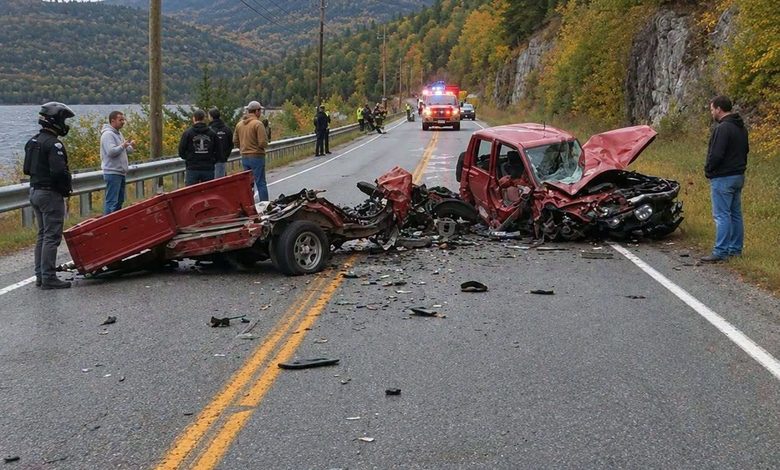
A severe crash occurred just minutes ago on the Sa road ᅠᅠㅤ
A normal Friday afternoon shattered in an instant. Sirens, screams, and breaking glass ripped through one of Manhattan’s busiest corridors as a car suddenly jumped the curb and tore into pedestrians. Two lives ended before help could arrive. Three more dangled between hope and loss. A 61-year-old driver in cuffs. No clear motive. No simple explanation. Just an ordinary street, turned crime sce… Continues…
In the stunned quiet after the chaos, the sidewalk became a map of lives interrupted. Shoes left behind, spilled coffee, a crushed phone still buzzing beneath police tape. Strangers who had thrown themselves forward to help were gently moved aside as paramedics took over, their calm urgency a stark contrast to the shock in the crowd’s eyes. For those who walked away uninjured, a new unease settled in: the realization that safety on a familiar corner is never guaranteed.
As detectives reconstructed the seconds before impact, families waited in fluorescent hospital corridors, clinging to updates that came in fragments. The driver’s fate, the cause of the crash, the legal outcome—all of it felt secondary to the brutal simplicity of what had happened. Two people were gone forever. Others would measure time as before and after that afternoon. On a city block built for hurry and routine, grief now lingers in every passing siren.
Emergency crews closed the area while investigators documented tire marks, vehicle damage, traffic signals, and surveillance footage. Those details can show whether the driver lost control because of speed, distraction, a medical emergency, mechanical failure, or another cause. Witness statements are useful, but they must be compared with physical evidence before authorities can establish a reliable sequence.
The driver’s arrest does not by itself answer the question of criminal responsibility. Prosecutors will consider the available evidence and decide whether charges involving reckless driving, impairment, negligence, or another offense are supported. The driver is entitled to due process, while the victims’ families deserve a careful investigation that does not rush past unanswered questions.
For the injured, survival may begin a long period of treatment and rehabilitation. Traumatic injuries can affect mobility, employment, and emotional health long after the street reopens. Families may also face immediate financial pressure as they travel to hospitals, miss work, and arrange care.
The crash will likely prompt a review of street design. Barriers, curb placement, vehicle speed, pedestrian space, and signal timing can influence the severity of a collision. Changes cannot undo the loss, but a transparent safety review can identify whether the location needs stronger protection.
Public attention often fades once traffic resumes. The people involved do not have that option. Their lives remain divided by a few violent seconds, and the investigation must keep their experience at the center while authorities determine how the vehicle left the road and whether the disaster could have been prevented.
Authorities should also release updates carefully, correcting early information when necessary and avoiding speculation about motive. Clear communication helps witnesses come forward and allows residents to understand road closures without spreading rumors. The final account should rest on the completed investigation, not the confusion of the first minutes.