I Was Cleaning Under My Son’s Bed When I Saw THIS… Can You Guess What It Was?
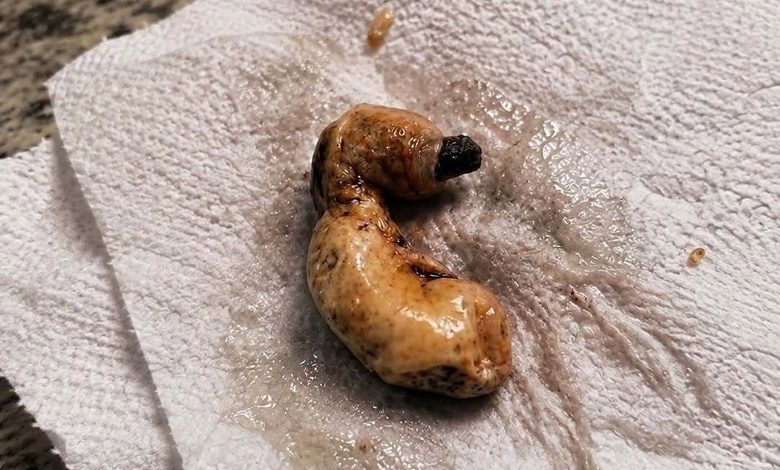
I think it’s alive.
Those four words can flip a harmless blur into a lurking threat. Hearts race, eyes narrow, and suddenly every curve, shadow, and glint feels sinister.
The mind starts hunting for danger, stitching a story from noise. Fear sharpens, spreads, and feeds on itself. What was once meaningless becomes terrif…
A single suggestion can hijack perception.
When someone whispers, “I think it’s alive,” the brain doesn’t calmly evaluate; it scrambles to confirm. Curves morph into limbs, smudges into wounds, shadows into watching eyes.
This is top-down processing at work: belief pulling reality into its shape. Pareidolia—our talent for seeing patterns in chaos—joins in, gladly turning random textures into faces, bodies, and threats.
Fear supercharges the effect. Under tension, attention narrows and the brain becomes biased toward danger, preferring a false alarm over a missed threat.
In groups, one person’s shock becomes everyone’s story; online, a single dramatic comment can ignite thousands of imaginations. The object itself rarely changes—only our interpretation does.
Behind the illusions lies a sobering truth: what feels like certainty is often just suggestion, emotion, and expectation, masquerading as fact.