“Little Star Lost: The Story of King Supa Dixon and a Community in Mourning”
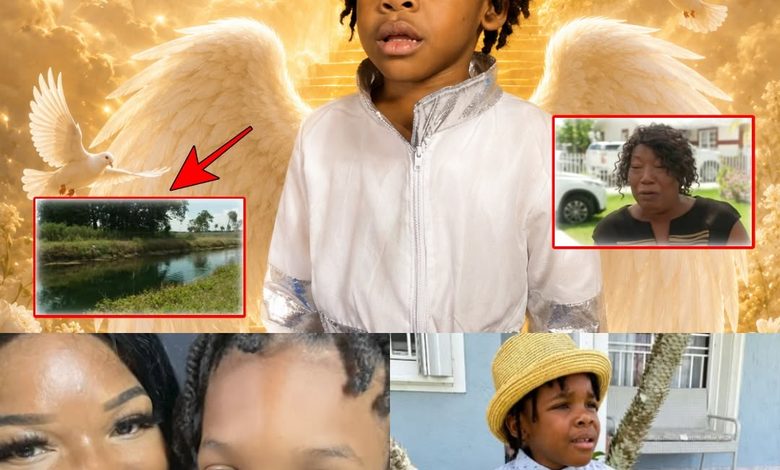
King Supa Dixon was a bright and joyful child, his laughter echoing in the hearts of those who knew him. On a warm, quiet afternoon in South Miami‑Dade, a devastating turn of events plunged his family and the community into heartbreak.
What began as an ordinary day ended in a tragedy that would leave an entire community reeling.
Just moments after arriving home from school on Tuesday, King wandered away, his curiosity leading him down a path no one could have predicted.
A young boy exploring his surroundings might have seemed innocent, but within those few steps lay the beginning of a nightmare for his loved ones.
His family, still adjusting backpacks and lunchboxes, never expected the day to take the tragic turn that followed.
King was diagnosed with autism, a condition that brought unique challenges and special joys to his life. Those who loved him described a boy who was endlessly curious, deeply affectionate, and drawn to the things that made his heart soar — music, games, astronauts, fruit, and above all, the ocean.
His fascination with the natural world was infectious; children and adults alike couldn’t help but smile when King talked about rockets or the waves at the beach.
Neighbors recalled seeing King skip stones at the park and dance to the beat of songs only he truly felt. He had a way of lighting up even the most ordinary moments with his bright eyes and eager grin. In conversations with his family, King’s enthusiasm was always at the forefront — a reminder to live fully and fearlessly.
It was that very sense of wonder that led him away from the safety of home. He wandered down toward a nearby canal near Southwest 142nd Avenue and 284th Street, an area just a short distance from his Leisure City residence. What happened next unfolded with heartbreaking swiftness.
Deputies from the Miami‑Dade Sheriff’s Office were alerted by a frantic 911 call reporting a missing child. Within minutes, law enforcement and rescue crews were combing the neighborhood, calling out his name with urgency and fear. Flashes of red and blue lit the streets and pathways as search teams fanned out in every direction.
The atmosphere was tense with worry, neighbors stepping outside to look, their eyes scanning every corner. Parents held their own children close, whispering prayers under their breath. The community that had once greeted the afternoon with calm now found itself gripped by alarm and dread.
Locals joined the search — some with flashlights, others with blankets or bottles of water, all hoping to offer help in any way possible. A mother near the canal whispered to her tearful daughter that everything would be okay, though she too felt the gravity of the moment pressing down on her heart.
Another neighbor, voice trembling, recited prayers into the humid air, urging divine intervention.
Then, tragedy struck. King was found in the water of the canal, unseen but not unfelt, like a light that flickered out before his time.
His body was discovered not far from where he had last been seen walking — an unimaginable moment that would haunt the memories of many. The rescue team immediately performed life‑saving measures as best they could on the spot.
Within minutes, an air ambulance was called to the scene, its blades beating like frantic heartbeats against the sky.
King was carefully loaded and flown to a nearby hospital, a blur of sirens and urgency. But despite the efforts of medical teams, the news that followed shattered all hope: King did not survive.
Word spread quickly through the community and across social media, where messages of sorrow and disbelief poured in. Parents held their children a little tighter; friends dropped to their knees in prayer.
The quiet that followed was heavy, weighted with the kind of grief that steals breath and leaves silence in its place.
Messages of support poured in for King’s family from all corners of South Florida.
Many spoke of his vibrant spirit and kind heart, refusing to let his memory fade. “Gone too soon” became a refrain heard again and again, a phrase that felt too small for a loss so immense.
At the hospital, King’s family gathered, surrounded by loved ones, friends, and compassionate strangers who offered comfort the best they could.
Tears mixed with whispered prayers, and hands were clasped with the desperate hope that grief might somehow be eased. But no words could fully capture the depth of anguish felt by those who knew him best.
In the days that followed, the Miami‑Dade Sheriff’s Office confirmed that their Homicide Bureau was investigating the circumstances surrounding the drowning.
While the loss of King was being treated as a tragic accident, authorities were determined to understand how a seven‑year‑old child could wander unnoticed into danger. Questions lingered as detectives retraced King’s steps, interviewed neighbors, and reviewed every piece of evidence available.
The investigation brought attention to the canal, an area of concern for neighbors due to its proximity to homes and lack of barriers.
Some residents expressed frustration that more couldn’t be done to prevent children from accessing such dangerous areas. Others pointed to the infrastructure of the neighborhood, calling for more attention to safety measures that protect curious young minds like King’s.
At a vigil held in his honor, neighbors gathered with candles and flowers, their faces painted with sorrow and remembrance.
A gentle breeze carried the flickering lights across the pavement as people shared stories of King’s laughter and kindness. Each memory was a tribute — a way to hold onto a moment of joy amid grief.
Friends spoke of his love for music — how he would hum or dance to the rhythm of songs he adored. Many recounted how he would talk endlessly about astronauts and rockets, his eyes lighting up with every space station or shuttle launch he saw on television.
His favorite fruit, that sweet and simple joy, was shared among those who came to honor him, a tribute to a boy who delighted in life’s simplest pleasures.
Family members posted photos on social media — King smiling with siblings, King wearing his favorite shirt, King mid‑laughter with joy that seemed boundless. The caption under each image was a testament to love that would never fade, a reminder that even in loss, his life mattered.
Reaction after reaction poured in — hearts, praying hands, crying faces — symbols of collective grief and support.
A local church opened its doors for those seeking solace, offering a space to mourn, to reflect, and to find comfort through shared faith. Priests and pastors welcomed families, neighbors, and even strangers, encouraging them to speak, to weep, and to remember.
Many lit candles at the altar, their flames a symbol of hope that even in life’s darkest moments, love continues to shine.
As the sun set over South Miami‑Dade, the community continued to hold King’s memory close. Murals and drawings appeared on fences and sidewalks, created by children who saw King as a friend or classmate. Scribbled hearts, stars, and rockets filled the spaces where grief met creativity, turning pain into a tribute of color and meaning.
Parents spoke about the importance of watching their children with a renewed vigilance, their hearts still shaken by the unexpected loss that had occurred just streets away. Conversations turned to ways families could protect one another, whether through neighborhood watches or simple walks together after school. The sense of togetherness grew stronger, a shield woven from collective concern and compassion.
Despite the shock and sorrow, there was also a powerful sense of unity. People came together, not just to grieve, but to support one another with a compassion that only deep loss can inspire. Schools offered counseling resources, neighbors volunteered to help with everyday tasks, and community leaders pledged to explore safer solutions around waterways and open areas.
King’s story spread beyond the boundaries of South Miami‑Dade — his life remembered not for how it ended, but for the joy and curiosity he carried within him. Strangers who never met him shared prayers, lit candles in distant cities, and held moments of silence in his honor. His memory became a reminder of the precious fragility of life and the powerful role community plays in both joy and sorrow.
Every conversation about King carried his spirit forward — his love for music, his fascination with astronauts, his wide, innocent smile.
Those who knew him best held onto those moments like treasures, intangible but deeply precious. In school hallways, playgrounds, and homes, children asked questions about the little boy who had become more than a neighbor — he became a symbol of youthful wonder and a reminder to cherish every moment.
His family, in grief, found ways to honor his legacy. They created a foundation in his name to support families affected by similar tragedies.
Plans were made to install safety barriers along local canals and to promote awareness campaigns about child safety — efforts rooted in love, resilience, and hope that no family would endure the same pain without support.
In every step taken to remember King, the community found strength — not in turning away from loss, but in facing it together. They carried his memory like a lantern, guiding them to a place where compassion, remembrance, and action joined hands. Grief, though heavy, became a shared journey — one that widened the circle of love rather than narrowing it.
As weeks turned into months, the pain of losing King softened but never disappeared. His family continued to speak his name with reverence, their voices echoing a love that time could not erase. On warm afternoons when the breeze rippled through trees, neighbors still remembered how King’s laughter might have sounded in those moments.
Community members still gather at the site where his life was tragically lost, leaving flowers, drawings, and notes — tangible reminders that a young boy mattered beyond measure. King’s story remains a testament to the human spirit — the way communities rise in unity, the way memories become legacies, and the way love perseveres through grief.
His life, though brief, inspired countless acts of kindness, compassion, and advocacy — ripples of goodness reaching far beyond the borders of South Miami‑Dade.
In remembering King Supa Dixon, those who loved him continue to honor not just a life ended too soon, but a life that taught others to love more deeply, watch more closely, and cherish every heartbeat.
And in every whispered memory, every candle lit at sunset, every shared prayer, King lives on — not just in hearts broken by loss, but in hearts strengthened by love.