ILLINOIS MOTHER AND TODDLER DIE AS PEORIA COUNTY INVESTIGATION CONTINUES
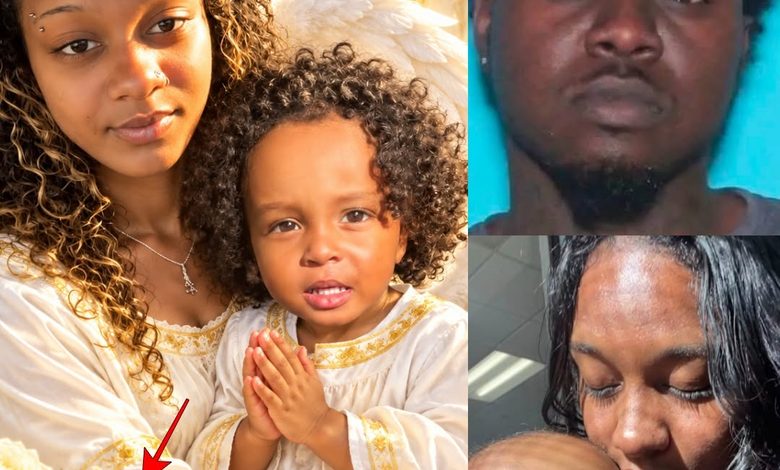
A devastating investigation in Peoria County, Illinois, has left a 20-year-old mother and her 2-year-old son dead, while a 24-year-old man remains in custody as authorities work to determine exactly what happened. The victims have been identified as Heaven Wood, 20, and her young son, KJ Duncan-Wood, 2. What began as a response to a vehicle fire soon developed into a far more disturbing case involving a fatal shooting, a crash, and the death of a toddler.
Deputies were first called early Friday, September 25, after reports of a vehicle fire in the 3500 block of Yorkshire. Firefighters and law enforcement officers responded to the scene, where the vehicle was found heavily damaged by flames. At that moment, responders did not yet know that the fire would become connected to another scene nearby.
As investigators began working through the circumstances surrounding the burning vehicle, authorities carried out a welfare check at a nearby home. Inside, they found Heaven Wood suffering from multiple gunshot wounds. She was rushed for medical treatment but was later pronounced dead at a Peoria hospital.
The discovery immediately transformed the case into a homicide investigation. Detectives began looking for connections between the wounded woman, the burning vehicle, and anyone who may have been involved in the events leading up to both scenes. The fact that the incidents occurred within such a narrow period of time raised urgent questions that investigators are still working to answer.
After firefighters were able to extinguish the blaze, authorities made an even more heartbreaking discovery. Two-year-old KJ Duncan-Wood was found dead inside the vehicle. The child’s death added another layer of tragedy to a case that had already shaken the community.
According to the coroner, KJ suffered severe smoke inhalation and was believed to have died shortly after the fire began. That finding indicates that the toddler was alive when the fire started, making the circumstances even more painful for those following the investigation. Officials have not publicly released every detail about how the child came to be inside the vehicle.
Investigators said the vehicle appears to have been driven away from the shooting scene before it crashed. Authorities have not said publicly exactly who was driving at every stage of the incident, nor have they disclosed all of the evidence recovered from the vehicle. It also remains unclear whether the fire was intentionally started or whether it began as a result of the crash.
Those unanswered questions are central to the ongoing investigation. Detectives must reconstruct the timeline minute by minute, determine who was present at each location, and establish what happened before, during, and after the shooting. Until that work is complete, some of the most important details remain unresolved.
A suspect identified as 24-year-old Jeremiah Duncan was taken into custody shortly after noon on Friday. Authorities said he was carrying a knife at the time and had suffered serious burns. He was taken for medical treatment at an undisclosed facility and remained under supervision while recovering.
Prosecutors are expected to file formal charges, but the exact charges had not yet been announced in the information available at the time of reporting. That distinction is important because being taken into custody does not itself establish guilt, and the allegations will ultimately have to be addressed through the legal process. Investigators have continued gathering evidence while prosecutors review the case.
Officials have also not confirmed publicly whether Duncan was KJ’s father. Although some online discussions have connected him to the child, authorities have not verified that relationship in the information released so far. Any claims about paternity should therefore be treated cautiously unless confirmed by investigators or family members.
The case has also been described in connection with a custody dispute, though the full background of that dispute has not been publicly detailed by authorities. Domestic and custody-related conflicts can involve complicated histories that are not immediately visible from the first reports of a tragedy. Investigators will likely examine communications, court records, witness statements, and other evidence to understand whether an ongoing dispute played a role.
For Heaven Wood’s loved ones, however, the legal details cannot begin to capture the enormity of what has been lost. At just 20 years old, she was a young mother whose life ended suddenly and violently. Her family is now grieving both her death and the death of her little boy.
KJ was only two years old. At that age, a child’s world is usually filled with familiar voices, favorite toys, routines, and the comfort of people who care for them. The circumstances surrounding his death are especially difficult because he had no ability to understand or escape the danger around him.
Cases involving young children often have a profound effect on the wider community. Even people who did not know the family personally can feel shaken by the loss of a toddler, particularly when the child’s final moments appear to have involved smoke, fire, and fear. For those closest to KJ, the grief is beyond measure.
The coroner’s finding that KJ likely died moments after the blaze began gives the public a painful glimpse into what happened, but it does not answer every question. Investigators still need to determine how the crash occurred, what caused the fire, and whether anyone deliberately created the conditions that led to the child’s death. Those conclusions require forensic evidence, witness interviews, and careful reconstruction of the scene.
Likewise, Heaven’s death raises its own set of investigative questions. Detectives will need to determine the sequence of gunfire, identify the weapon or weapons involved, and establish whether there were any witnesses. They may also examine phones, messages, surveillance footage, and prior interactions between those involved.
In major criminal investigations, what appears obvious from early reports can sometimes change as evidence develops. That is why responsible reporting requires separating what authorities have confirmed from what is still being investigated. In this case, the confirmed facts are already devastating enough without adding speculation.
Heaven Wood was found with multiple gunshot wounds and later died. Her 2-year-old son was found dead inside a burned vehicle after firefighters extinguished the flames. A 24-year-old man was later taken into custody with serious burns and is expected to face formal charges.
Beyond those facts, there are still important unknowns. Authorities have not publicly confirmed whether the vehicle fire was intentionally set, whether Duncan is the child’s father, or what precise sequence of events connected the shooting scene to the crash. Those gaps will likely be addressed as the investigation progresses and court proceedings begin.
The involvement of a possible custody dispute has drawn particular attention because such conflicts can sometimes become dangerous when emotions escalate. However, investigators have not yet released enough information to determine exactly what role, if any, the custody issue played. It would be inappropriate to assume motive until law enforcement or prosecutors publicly establish one.
What is clear is that a young family has suffered an irreversible loss. Heaven’s relatives are now facing the painful task of preparing to bury a daughter, sister, friend, or loved one while also mourning a child. No legal outcome can restore either of the lives that were lost.
The deaths also leave questions for the community about warning signs, intervention, and how families caught in high-conflict domestic situations can be better protected. Those broader questions often emerge after tragedies like this, but they should not overshadow the individual people at the center of the case. Heaven and KJ were not merely names in a report.
Heaven was 20 years old, at the very beginning of adulthood. She should have had years ahead of her to grow, work, raise her child, build memories, and shape the life she wanted. Instead, her story now ends in circumstances that investigators are still trying to fully understand.
KJ was just beginning his own life. At two years old, his future should have consisted of birthdays, first days of school, family photographs, and ordinary childhood milestones. The fact that those moments will never come is one of the most heartbreaking parts of this case.
For investigators, the next phase will involve building a detailed timeline. They will likely compare witness accounts, physical evidence, medical findings, and digital records to determine what happened in the hours leading up to the shooting and fire. Prosecutors will then decide which charges are supported by the available evidence.
If charges are filed, the case will move into the court system, where allegations must be proven under established legal standards. Evidence may be challenged, witnesses may be called, and new facts may emerge over time. Until then, the public should avoid treating unverified claims as established truth.
The presence of serious burns on the suspect may also become part of the investigative timeline. Authorities have not explained publicly exactly how or when those injuries occurred. Forensic analysis could potentially help determine whether the burns are consistent with the vehicle fire or another event.
The knife reportedly found with Duncan at the time of his arrest is another detail investigators will examine. Authorities have not stated whether the knife is believed to be connected to either death. Its presence is therefore notable but should not be interpreted beyond what officials have actually confirmed.
Similarly, the fact that Heaven suffered gunshot wounds does not automatically establish every element of the case. Investigators must still prove who fired the shots, under what circumstances, and with what intent. Those determinations are essential before the legal process can move forward responsibly.
This is also why early headlines can sometimes create confusion in developing cases. Phrases such as “killed during a custody battle” or “baby dies after father flees” may sound definitive even when key relationships and motives have not yet been officially established. Careful language protects both accuracy and the integrity of the investigation.
At the same time, there is no need to minimize the seriousness of what has happened. A 20-year-old mother is dead from gunshot wounds, and her 2-year-old son died in a burning vehicle. Those realities alone make this one of the most heartbreaking cases to emerge from the area.
The surrounding community will likely feel the impact for a long time. Neighbors who saw emergency vehicles, first responders who worked the scenes, relatives who received devastating calls, and friends who knew the victims are all now living with memories connected to that day. Tragedies like this rarely end when the crime scene tape comes down.
For first responders, scenes involving children can be particularly difficult. Firefighters entered a burning vehicle not knowing what they would find, while deputies later had to manage multiple scenes tied to the same investigation. The emotional toll on emergency personnel is often unseen but can be significant.
Hospital staff also became part of the chain of events when Heaven was brought in with life-threatening injuries. Despite medical efforts, she was pronounced dead. That moment marked the beginning of a new reality for the people who loved her.
The coroner’s office then faced the painful responsibility of determining how KJ died. Severe smoke inhalation was identified as a key factor, and officials said he likely died very shortly after the fire began. Those findings may eventually play an important role in any criminal charges related to the child’s death.
One unresolved issue is whether the fire itself was accidental or deliberate. If investigators determine that the blaze was intentionally set, that finding could significantly affect how prosecutors frame the case. If it resulted from the crash, the legal analysis could be different.
Authorities will also need to establish whether the crash happened during an attempt to flee, as has been suggested in preliminary reporting. That detail may influence the timeline and any charges involving reckless conduct, child endangerment, or other offenses. Again, however, prosecutors must rely on evidence rather than assumptions.
The role of any prior custody proceedings could also become relevant. Court filings, if they exist, might provide context about earlier disputes, protective orders, or concerns raised by either parent or family members. Investigators may review those records, but none of that should be presumed until it is publicly confirmed.
For now, those who knew Heaven and KJ are left with grief rather than answers. Friends may remember Heaven’s personality, the way she cared for her child, and the ordinary moments that made up her life before her name appeared in news reports. Family members may remember KJ’s smile, his voice, and the small habits that made him uniquely himself.
That is how both of them deserve to be remembered. Their lives should not be reduced to the most violent moments connected to their deaths. Behind every headline were real people with relationships, routines, hopes, and people who loved them.
The online response to cases like this can quickly become intense. Social media users often try to piece together timelines, relationships, and motives before investigators have completed their work. While that impulse is understandable, speculation can cause additional pain and may spread misinformation that is difficult to correct later.
The most respectful approach is to rely on official updates and verified reporting. When authorities confirm new details, those facts can be added to the public understanding of the case. Until then, uncertainty should remain uncertainty.
There is also a broader lesson in the way this tragedy has unfolded publicly. Domestic violence and custody conflicts can become extremely dangerous when threats, control, or escalating behavior are present. People involved in high-risk situations may need support from law enforcement, courts, advocates, family, or crisis services before violence escalates.
That broader context, however, should never be used to assume facts that have not been established in this specific case. Each investigation has its own circumstances and evidence. The priority remains understanding exactly what happened to Heaven and KJ.
In the days ahead, formal charges may provide more clarity. Prosecutors may outline what they believe occurred and identify the evidence supporting those allegations. Court documents could also reveal details that have not yet been made public.
Until that happens, the public record remains incomplete. It is possible that some details now circulating online will turn out to be accurate, while others may not. That is why patience and caution matter.
What does not require speculation is the grief surrounding the two deaths. Heaven Wood was only 20, and KJ Duncan-Wood was only two. Their lives ended in circumstances that no family should ever have to endure.
For loved ones, there will be no simple way forward. Funerals, legal proceedings, media attention, and ongoing investigation can all prolong grief rather than allowing it to remain private. The family will likely need support long after the headlines fade.
Communities often respond to such tragedies with vigils, fundraisers, meals, messages, and other acts of care. Those gestures cannot undo what happened, but they can remind grieving relatives that they are not alone. In moments of profound loss, even small acts of compassion can matter.
Heaven’s death is also a reminder of how young many victims of domestic violence can be. At 20, she was still at an age when many people are only beginning to build independent adult lives. Losing her so early leaves an enormous absence.
KJ’s death is perhaps even harder to comprehend. A two-year-old child depends entirely on adults for safety, protection, and care. When a child dies amid adult conflict, the loss feels especially cruel because the child had no control over the circumstances.
Investigators will now carry the responsibility of seeking accountability based on the evidence. Prosecutors, if they file charges, will carry the responsibility of presenting that evidence in court. The justice system must move carefully, because the stakes could not be higher.
For the public, the responsibility is different. It is to remember the victims, avoid turning unconfirmed theories into facts, and allow the legal process to establish what can actually be proven. That approach honors both truth and the people whose lives were lost.
Heaven Wood and KJ Duncan-Wood should be remembered first as mother and son. Their final moments may be the reason the public now knows their names, but those moments do not define the entirety of their lives. The people who loved them will remember far more than any police report ever could.
As the investigation continues, more details may emerge about the shooting, the vehicle crash, the fire, and the suspect’s alleged actions. Those developments may provide answers to some of the questions now surrounding the case. But no explanation will make the outcome less heartbreaking.
Two lives are gone. One family is grieving, a community is searching for understanding, and authorities are trying to determine the full truth. For now, that is the story that deserves to be told with care.
Rest in peace, Heaven Wood and KJ Duncan-Wood. May those who loved them find strength, support, and comfort as the investigation and legal process continue. 🕊️🕊️