My Parents Left My Kids Alone While I Was in Surgery — So I Changed Everything
I woke up after spinal fusion surgery with fire shooting through my lower back, numbness in my legs, and fourteen missed calls from my 68-year-old neighbor, Martha.
Her first message said:
“Harrison, your kids are on my porch. Your parents left two hours ago.”
My son Wyatt was seven. My daughter Harper was five.
My parents had promised to watch them while I was in surgery. Instead, they drove away, leaving my children alone outside a locked house.
Martha had seen their SUV leave and assumed they were taking the kids somewhere. An hour later, she heard crying and found Harper on the steps while Wyatt held her hand, trying to keep her calm.
My seven-year-old had followed the emergency plan I had taught him better than the adults responsible for him.
When I called my father, he barely sounded concerned.
“Where are my children?”
“Oh, relax, Harrison.”
“Why did you leave them alone?”
My father sighed.
“Your brother needed his suit fitted.”
Preston, my 26-year-old younger brother, had always been the family favorite. My parents had spent years protecting him, funding his businesses, and treating every problem he created as an emergency.
Apparently, his $1,000 custom suit was more important than my children’s safety.
When I got home, Martha was still there. Wyatt had made Harper a sandwich.
I hugged them carefully.
“I’m sorry,” I whispered.
Wyatt looked at me and said, “It’s okay, Dad. I took care of her.”
“No,” I told him. “You should never have had to.”
That night, I found a photo on Preston’s social media. He was wearing the expensive suit while my parents sat beside him at the tailor’s shop, drinking champagne.
The timestamp was exactly when my children had been left alone.
That was the moment I stopped trying to earn my parents’ approval.
I changed the locks, removed my parents from the children’s emergency contact list, updated our estate plan, removed them from medical and guardianship roles, and made Chloe’s sister the children’s guardian if anything happened to us.
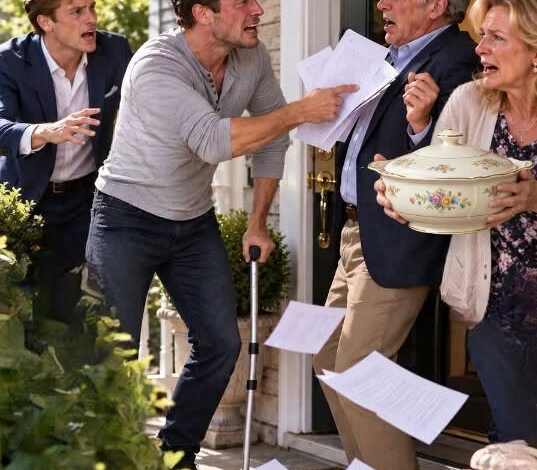
When my parents showed up for their usual Sunday dinner, Mom tried using her old key.
It didn’t work.
I opened the door and told them:
“You are no longer authorized to pick up my children.”
Mom cried.
Dad called me cruel.
Preston told me I was overreacting.
I handed my father the trespass notice.
“You left a seven-year-old and a five-year-old alone. My children’s safety comes before your son’s suit.”
Then I closed the door.
For the first time, I didn’t feel guilty.
Months later, my back was healing. Wyatt and Harper were happy again, and Martha had become the person we trusted in an emergency.
I still loved the parents I wished my parents had been.
But I finally understood something:
Love doesn’t automatically create trust. Trust is earned by what someone does when vulnerable people depend on them.
Martha showed up when it mattered.
My parents didn’t.
And sometimes protecting your family means finally closing the door on the people who were supposed to protect you.