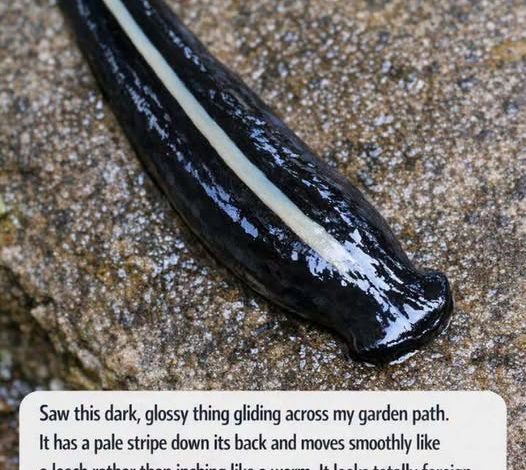
Saw this dark, glossy thing gliding across my garden path. It has a pale stripe down its back and moves smoothly like a leech rather than inching like a worm. It looks totally foreign. What is it?
That glossy stranger on your garden path may be more than a curiosity.
With a pale stripe and an unnervingly smooth glide, it looks nothing like the familiar creatures beneath your flowers. But before you touch it or move it elsewhere, there is a crucial question to answer about this unexpected visitor and what its arrival means for gard…
The likely visitor is the blue garden flatworm, Caenoplana coerulea, an Australian native introduced to other regions through transported plants and soil.
Its dark, shiny upper surface, pale central stripe, and blue underside offer useful identification clues. Tiny beating cilia carry it across a film of mucus, creating that startling glide.
It hunts small invertebrates, including woodlice, millipedes, and snails; describing it primarily as an earthworm predator confuses it with other introduced flatworms. Its ecological effects require locally informed assessment.
Finding one calls for care, not panic. Photograph it clearly, record the location and date, and ask a local wildlife or biosecurity service to confirm identification.
Avoid barehanded handling, cutting it, or relocating it elsewhere. Inspect pots and soil before moving plants, and avoid indiscriminate pesticide use. Where the species is nonnative, report the sighting and follow official management guidance.
A careful response helps protect the garden without harming its other inhabitants.