Warning Issued Over Online Challenge Linked to Team USA Star Alysa Liu
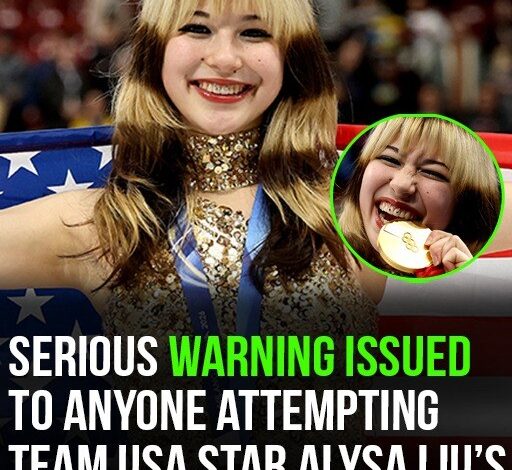
If you followed even a fraction of the 2026 Winter Olympics, you likely saw Alysa Liu’s name scrolling across your ticker with rhythmic frequency. But for those watching closely, the story wasn’t just about the technical points hitting the scoreboard; it was about the quiet, undeniable force of a comeback years in the making.
What unfolded on the ice this February was more than a mere athletic competition. It was the cinematic culmination of a journey defined by perseverance, a redefined relationship with the spotlight, and a 20-year-old’s hard-won sense of identity. On February 19, Liu delivered a performance that married technical precision with a rare emotional gravity, signaling to the world that she was no longer just a prodigy—she was a master of her own narrative.
A Historic Return to the Top
In the women’s singles competition, Liu was the picture of composure. Her execution of elite-level triples and complex combinations spoke to a maturity that far outstripped her years. When the final tallies flashed across the arena, the result was a milestone: Olympic Gold.
The achievement carried the heavy weight of history. Liu became the first American woman to secure an individual Olympic gold medal in figure skating in more than twenty years—ending a drought defined by near-misses, heartbreaks, and the relentless dominance of global rivals.
However, the luster of the medal was deepened by the shadows Liu had escaped. Only a few years prior, after a meteoric rise through the junior and national ranks, Liu stunned the skating world by walking away in 2022. Citing exhaustion and burnout at mid-teens, she made a choice that few elite athletes dare to make: she prioritized her humanity over her trophy case. In a sporting culture that often equates success with a relentless, singular pursuit, Liu’s hiatus was an act of radical self-preservation.
The Architecture of a Comeback
Returning to competition in 2023, Liu didn’t seek a loud redemption arc. Instead, she focused on what observers called a “steadier footing.” She recalibrated her training environment, partnered with sports psychologists, and traded the pursuit of perfection for a more durable foundation of balance. Her 2026 victory was not a product of luck; it was earned through years of incremental growth and the rebuilding of a love for the sport that had once been smothered by expectation.
Yet, as is the nature of the modern Olympic cycle, the public’s lens soon drifted from the technical to the personal. Amid the strobe lights of the medal ceremony, a specific detail caught the internet’s collective eye: two tiny silver studs visible above Liu’s upper teeth.
Known as a “smiley” piercing—named for the way it reveals itself predominantly when the wearer grins—the jewelry became an instant viral sensation. Social media was quickly bifurcated. One camp saw a champion expressing a fierce, independent individuality; the other was fueled by curiosity, particularly after it surfaced that Liu had once mentioned piercing it herself with her sister’s help.
The Intersection of Expression and Health
While fans celebrated the “smiley” as a symbol of Gen Z autonomy, the medical community entered the conversation with a more cautionary tone. Dental professionals and oral surgeons utilized the viral moment to highlight the physiological stakes of oral jewelry.
Experts emphasized that the mouth is a unique environment teeming with bacteria, making infections more likely than with ear or nose piercings. Beyond infection, the risks discussed by specialists included:
- Enamel Erosion: Metal rubbing against teeth can lead to chips, cracks, or thinning of the protective enamel.
- Gum Recession: Sustained contact with the gingival tissue can cause permanent recession that often requires surgical intervention to repair.
- DIY Hazards: Professionals underscored the danger of non-sterile, “at-home” procedures, which significantly spike the probability of complications.
These interventions were framed not as a critique of Liu’s character, but as a necessary public health “pause” for a young audience prone to imitation. The goal was informed decision-making over judgment.
The Enduring Narrative
Despite the digital firestorm over a few millimeters of silver, the core of the story remained Liu’s unprecedented athletic feat. The piercing didn’t diminish the gold; if anything, it humanized the champion. It served as a vivid reminder that these athletes are individuals navigating the messy terrain of identity under a global microscope.
Liu, for her part, handled the dual narratives with the same grace she showed on the ice. She didn’t lean into the controversy or defend her aesthetic choices; she simply let her skating speak.
In the weeks following the Games, Liu’s journey has become a touchstone for a broader cultural conversation regarding athlete mental health and the right to self-definition. Her smile—radiant and distinctly her own—reflected a young woman who knows exactly who she is.
Ultimately, the lesson of the 2026 Games may be one of balance: celebrating the bold expressions of the individual while maintaining a deep respect for the physical vessel that makes such greatness possible. Alysa Liu showed us how to win, but more importantly, she showed us how to return to ourselves.